The Change: Tales of Downfall and RebirthFrom Roc
As soon as a lot more, reviewing behavior will certainly consistently offer valuable perks for you. You may not should spend sometimes to read the e-book The Change: Tales Of Downfall And RebirthFrom Roc Just adjusted aside numerous times in our spare or complimentary times while having meal or in your office to check out. This The Change: Tales Of Downfall And RebirthFrom Roc will reveal you new point that you could do now. It will aid you to boost the top quality of your life. Event it is merely an enjoyable e-book The Change: Tales Of Downfall And RebirthFrom Roc, you can be happier and a lot more enjoyable to appreciate reading.
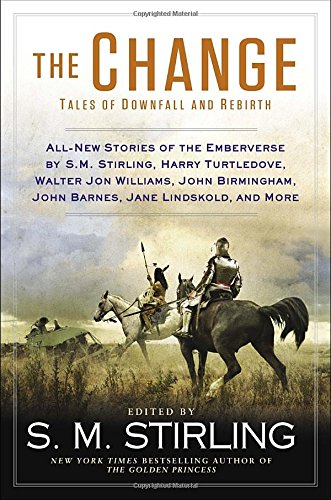
The Change: Tales of Downfall and RebirthFrom Roc

Read and Download Ebook The Change: Tales of Downfall and RebirthFrom Roc
ALL-NEW STORIES OF THE EMBERVERSEby S.M. Stirling, Harry Turtledove, Walter Jon Williams, John Birmingham, John Barnes, Jane Lindskold, and more...“[A] vivid portrait of a world gone insane,”* S. M. Stirling’s New York Times bestselling Novels of the Change have depicted a vivid, utterly persuasive, and absorbingly unpredictable postapocalyptic wasteland in which all modern technology has been left in ashes, forcing humankind to rebuild an unknowable new world in the wake of unimaginable—and deliberate—chaos. Now, in this startling new anthology, S. M. Stirling invites the most fertile minds in science fiction to join him in expanding his rich Emberverse canvas. Here are inventive new perspectives on the cultures, the survivors, and the battles arising across the years and across the globe following the Change.In his all-new story “Hot Night at the Hopping Toad,” Stirling returns to his own continuing saga of the High Kingdom of Montival. In the accompanying stories are fortune seekers, voyagers, and dangers—from the ruins of Sydney to the Republic of Fargo and Northern Alberta to Venetian and Greek galleys clashing in the Mediterranean.These new adventures revisit beloved people and places from Stirling’s fantastic universe, introduce us to new ones, and deliver endlessly fascinating challenges to conquer, all while unfolding in a “postapocalyptic landscape that illuminates both the best and the worst of which our species is capable,”** “a world you can see, feel, and touch.” ***Contributors to The Change: Tales of Downfall and Rebirth IncludeIntroduction: The Change as Setting and Secondary World by S. M. StirlingHot Night at the Hopping Toad by S. M. StirlingRate of Exchange by A. M. DellamonicaTight Spot by Kier SalmonAgainst the Wind by Lauren C. TeffeauThe Demons of Witmer Hall by M. T. ReitenBernie, Lord of the Apes by John Jos. MillerThe Seeker: A Poison in the Blood by Victor MilánGrandpa’s Gift by Terry D. EnglandFortune and Glory by John BirminghamThe Venetian Dialectic by Walter Jon WilliamsThe Soul Remembers Uncouth Noises by John BarnesTopanga and the Chatsworth Lancers by Harry TurtledoveThe Hermit and the Jackalopes by Jane LindskoldThe New Normal by Jody Lynn NyeA Missed Connection by Emily Mah TippettsDeor by Diana Paxson*Statesman Journal (Salem, OR)**Science Fiction Weekly***Otherwhere Gazette
The Change: Tales of Downfall and RebirthFrom Roc - Amazon Sales Rank: #459271 in Books
- Brand: Roc
- Published on: 2015-06-02
- Released on: 2015-06-02
- Original language: English
- Number of items: 1
- Dimensions: 9.25" h x 1.88" w x 6.38" l, 2.04 pounds
- Binding: Hardcover
- 640 pages
The Change: Tales of Downfall and RebirthFrom Roc Review Praise for S.M. Stirling and his Novels of the Change“Absorbing.”—San Diego Union-Tribune“[A] richly realized story of swordplay and intrigue.”—Entertainment Weekly“Nobody wrecks a world better than S. M. Stirling, and nobody does a better job of showing that people remain people, with all their high points and low, in the wreckage.”—Harry Turtledove, New York Times bestselling author of Supervolcano: Things Fall Apart“Vivid…Stirling eloquently describes a devastated, mystical world that will appeal to fans of traditional fantasy as well as post-apocalyptic SF.”—Publishers Weekly (starred review)“Stirling is a perfect master of keep-them-up-all-night pacing, possibly the best in American SF, quite capable of sweeping readers all the way to the end.”—Booklist (starred review)
About the Author S. M. Stirling is the New York Times bestselling author of many science fiction and fantasy novels including the most recent novels of Emberverse The Golden Princess, The Given Sacrifice, A Meeting at Corvallis, The Protector's War, and Dies the Fire. A former lawyer and an amateur historian, he lives in the Southwest with his wife, Jan.
Excerpt. © Reprinted by permission. All rights reserved.
NOVELS OF THE CHANGE BY S. M. STIRLING
ROC
INTRODUCTION
The Change as Setting and Secondary World
There are a number of perils you can encounter when building a fictional world, particularly if you intend to set a number of stories in it. Running out of story you really want to tell, which induces boredom, is one—Arthur Conan Doyle eventually desperately tried to kill off Sherlock Holmes, whose fame was obscuring the historical novels that he felt (with some justification, they’re very good) were his best work. Edgar Rice Burroughs’ reputation would probably be much higher if he’d written only the first three or four books in his Tarzan and John Carter of Mars series, though more with the former than the latter. Africa was wall-to-wall Lost Races and Lost Cities by the 1940s, and you’d think some would show up from the cabins of the Imperial Airways planes flying over it by then.
Which brings up another potential problem: simply running out of space, even if you want to continue and have stories to tell.
Patrick O’Brian ran into this problem with his wonderful Aubrey-Maturin series, set during the Napoleonic Wars; eventually he was reduced to unofficially splitting the year 1813 into, as it were, 1813a and 1813b—sort of alternate history versions of the penultimate year!
The wars against Napoleon spanned more than a decade; if you throw in the beginning of the struggle against Revolutionary France it covers a full generation—around twenty-five years, with one short truce. Men like Stephen Maturin and “Lucky” Jack Aubrey would have spent their entire adult careers in the period between the fall of the Bastille and Napoleon’s exile to Saint Helena, and by the end of it most of their subordinates would have been born into the wars. That’s more than enough for a series of books!
What tripped O’Brian up was simply that he didn’t anticipate how many books he would be writing with this (quite large) cast of characters, and so passed over a good many years as he skipped between the time periods of the earlier books.
I took this lesson to heart when starting the novels of the Change, what some call the Emberverse. It tied into another desire, that of making a world that felt ample. Even if you’re worldbuilding for a single novella, it should feel “big,” not fading into nothingness beyond the tight frame, not “thin.” The characters should be aware of an entire universe around them, full of people and things going about their own business. Look at our own world, even in this age of globalization when there’s scarcely a city on the planet where you can’t ask directions or order lunch in English. How vast and varied and interesting it is, both in terms of nature and of how human beings live on it and with each other!
Many of the great fantasists—Le Guin, Howard, Tolkien, Martin—have achieved this feeling of having an entire world that exists on its own, with the narrative taking place in only part of it. Howard was one of my early influences; I spent a hot cross-country trip in the late sixties dripping watermelon juice on the Lancer Conans as my family drove an un-air-conditioned car from New Jersey to Los Angeles.
He achieved it by using what was supposedly, like Tolkien’s Middle Earth, the remote past of our world. Even the maps of the Hyborian Age and Middle Earth are similar, if you look carefully. Both Tolkien and Howard did glorious mashups (the concept is older than the term) of historical cultures in their antediluvian worlds. Tolkien has late-medieval Gondor, Anglo-Saxon riders of Rohan, largely Nordic Dwarves, Regency English yokel hobbits, vaguely Middle Eastern and Central Asian Easterlings and Corsairs, plus the totalitarian nightmare of Mordor, with its pollution and its population known by their file-numbers. Howard went completely berserk, and had high-camp-medieval Aquilonians, English longbowman Bossonians, ancient Egyptians in Stygia, Afghans in (where else?) Afghulistan, and something close to nineteenth-century Zulus and Sudanese on the “Black Coast.” Not to mention Vikings, Cossacks, Bedouin, archaic-Semitic more or less Assyrians and Babylonians in the cities of Shem with their ziggurats and brass idols, seventeenth-century buccaneers, eighteenth-century pirates, Turks, Renaissance Spaniards, and Picts who are pretty much Iroquois as seen by the frontiersmen of the Mohawk valley with the odd demon and giant snake thrown into the slumgullion for flavor.
Conan, of course, was essentially pre-Christian Irish, and cheerfully chopped up an entire multicultural host of opponents without fear or favor.
Taking the planet Earth (geographical amplitude and variety) and historically attested cultures (human, ditto) solves the most basic problem of worldbuilding; it’s extremely hard to come up with an entire world and its inhabitants and be convincing, to avoid thinness and sameness as everything takes on the cast of your own mind. Not to mention your own limitations with regard to geography and ecology. Hence the multitudes of one-note planets in science fiction; desert world, ice world, and so forth, often inhabited by races who have only one “hat” or trait. Super-logical, super-emotional, super-aggressive, you name it! As the saying goes, worldbuilding is good occupational therapy for lunatics who think they’re God, and a lesson in the almost paralyzing complexity and interconnectedness of reality.
This has become the Stock Fantasy World; an ancient or parallel Earth with historically based cultures. This can be done well (Westeros) or badly (I shall not specify, and let the libel lawyers starve). It has the virtue of giving you an unlimited canvas; after all, our own Earth is the “worldbuilding project” of endless mimetic fiction.
Another possible setting is the post-apocalyptic wasteland, where a “new future past” creates analogues to historical settings; Andre Norton was fond of this and did it very well.
Which brings me to the world of the Change.
When I set out to do the Nantucket trilogy (beginning with Island in the Sea of Time) I knew that I’d eventually return to the world Nantucket left behind when it was plunged into 1250 BCE. And that as that ancient world received the technology of the late twentieth century when a community of thousands of Americans from 1998 was dumped into its midst, so the world left behind would be denied the high-energy-density technologies. Electronics and electricity; heat engines of all kinds; and the electrochemical and high-pressure, high-energy chemical processes dependent on them.
That gave me the big world—ours—to work with, rendered even bigger by the sudden removal of fast communications and travel. Naturally, losing the technological basis of the great world-machine in 1998 would cause unimaginable chaos and destruction, comparable to a full-scale global thermonuclear exchange at the peak of the Cold War in immediate devastation and removing the possibility of reconstruction on the same basis.
Old cultures and nations would crash and new would, eventually, be born. That basic story has been told many times in science fiction, and generally with more of a time gap is the basis of a fair bit of fantasy as well—The Dying Earth by Vance, for instance, or Alyx Dellamonica’s new Stormwrack series that begins with Child of a Hidden Sea. Even the specific removal of higher technology isn’t entirely original to me, of course: Steven Boyett’s Ariel is a lovely example, though more overtly fantasy. Dragons lairing in the Great Smoky Mountains, anyone?
But what sort of new cultures would arise in the wake of this particular apocalypse I’d come up with? Here I got hints from my subconscious, in the way I usually do when contemplating new books—scenes and characters spontaneously appear; one of them was Juniper Mackenzie sitting by a campfire in front of her Romany wagon, and somehow I knew she was a witch (in the strict sense, that is, a Wiccan). Inspiration . . . but inspiration is cheap. It’s being able to connect the dots that’s important.
The Change is not a random disaster, cataclysmic though it is; it’s not an asteroid hitting the earth, and it’s not something like nuclear war or ecological collapse that we might do to ourselves. It’s precisely tailored to remove certain possibilities. And it involves what is, as far as any human being can tell, a deliberate alteration in the fundamental laws of nature.
A disaster like that wouldn’t just have physical consequences; it would have cultural and ideological-religious ones. Modernism, scientistic-materialist naturalism, would be shot through the head for any but the most fanatical of its devotees, most of whom would perish with the great cities anyway. Technology wouldn’t necessarily be reduced to a medieval level; there’s nothing to prevent people from using McCormick reapers, water-powered machine tools and antiseptic surgery in areas that preserved some cultural continuity. But the structures of belief based on the scientific and industrial revolutions, at least the more overt and conscious ones, would be dead as the dodo because their basic presumptions would be discredited. The invariability of natural law, for instance.
Human beings need ideas, though. We don’t live in the natural world alone; we live in a world of shared perceptions, assumptions, beliefs. You can’t make sense of the raw data of experience without some inner framework of ideas, a theory of how things work. It seemed to me that people in the situation I’d postulated would often fall back on the past, on the ways of their ancestors. To a certain extent that would be inevitable, because the material underpinnings of our high-modernist, post-modernist world had been traumatically removed.
But as a character in an upcoming Change book notes, “History cannot be completely undone, even by the Change, nor can the past be truly brought back even if you wear its clothes.”
Groups of survivors—often coalescing around some charismatic obsessive leader and his immediate followers—would think they were returning to the ways of their ancestors. What they would actually be creating would be new societies based on myths, stories and legends about the past. A group of Wiccans might call themselves a Clan and adopt Gaelic terminology and wear kilts (an eighteenth-century invention by the way), but they wouldn’t be much like a group of pre-Christian Celts. A knight of the SCA might contrive to build a kingdom with (ferroconcrete) castles, knights in plate armor made in hydraulic presses and a feudal-monarchical structure, but it wouldn’t be much like eleventh-century Normandy. Too much memetic technology has developed in the interim. Isolated ranches in the American West (or estancias in Argentina or stations in Australia) might think they were reverting to a more recent heroic past of bold pioneers, and traumatized English survivors led by Guards officers might think they were reestablishing a myth of Deep England; they’d be just as wrong, though more subtly so, beneath the chaps and the smock-frocks.
This has happened before. The ghost of Rome haunted the Western world for a thousand years and more, with everyone who could trying to appropriate its manna by emulation—it’s not an accident that we are governed by a Senate from a marble building with domes and columns. That doesn’t mean we’re actually Romans, and for that matter the Holy Roman Empire of the German Nation was neither Holy, Roman, nor an Empire, and a lot of its population weren’t Germans.
And the people who survived the Change would be inescapably modern no matter how disillusioned with the formal ideological superstructure of modernity, often in ways that they weren’t conscious of. Though . . . what would their children and grandchildren, raised in a world where a mile was once more a long way, be like? Here insert a glyph of authorial hands being rubbed together in glee.
Throw in the Supernatural (in a Clarkean sense) and you’ve got what I decided would be a background as big and varied as the real world. It would have an array of cultures as colorful as anything in pulp fiction . . . not least because in some cases they were half-deliberately based on pulp fiction and half-remembered historical novels and bad movies. Why not? Charlemagne’s Empire was based on equally bogus memories of Rome. As a bonus, they would usually be more psychologically accessible to modern Western sensibilities than something more genuinely archaic, for the real thing is always alien and often outright repulsive to many.
They would build their castles from our ruins, and conduct their wars and Quests along the crumbling line of our roads. The ancient past that gradually became half-understood myth—was Jurassic Park fiction or fact?—would be our present. Instead of sending a single individual or small group through a “portal” to another world, I could send the whole world to another world.
I had my own Hyborian Age, my own Middle Earth, but accessible through Google Maps! Including a society founded by a mildly insane Tolkien fangirl who thinks that she and her friends are the Dúnedain Rangers amid the Douglas fir and redwoods . . .
The rest, as they say, is histories. The novels of the Change, or Emberverse (what comes after Dies the Fire but embers?) have been far and away my most popular work. The setting gives a stage interesting enough and big enough for a large number of stories I’ve found fun to write, especially when combined with my cunning trick of giving all the protagonists descendants.
Herein are some other authors who’ve found the world of the Change a fun canvas on which to paint, ranging from seeking fortune and adventure in the ruins of Sydney to Venetian and Greek galleys clashing in the Mediterranean. Enjoy!
Hot Night at the Hopping Toad
by S. M. Stirling
CORVALLIS CHANGE YEAR 41/2043 AD
Órlaith Arminger Mackenzie threw the letter down on the table and buried her hands in her long strawberry-blond hair, squeezing her eyes shut for a moment. That didn’t help, since the image she was trying to banish was inside her head.
The Hopping Toad tavern just after the early sundown of November was a good place to have a private conversation, mostly because it was so crowded; the noise level was such that you could barely hear someone sitting across from you unless you leaned close and shouted, which the mostly young clientele were doing on every subject under the sun. Often waving their arms and hammering mugs and cups on the battered tables in accompaniment or shaking a finger—or in one case she could see, a half-eaten sausage on the end of a fork—under someone’s nose. The Faculty Senate election provided a lot of the material, just as if it were really important.
The gaslights on the walls were turned down for the same thrift’s sake that had shunned incandescent mantles, until everything was a sort of wavering umber shadow. Between crowds, noise and dim light even a five-foot-eleven blond princess just turned eighteen could be at least quasi-anonymous as long as she didn’t set out to attract attention. Which would have required stripping naked and dancing on the table. Plus a lot of Corvallans were stubbornly republican and went out of their way to be unimpressed by royalty, even though the city-state had been part of Montival since the beginning.
The heir to the High Kingdom felt free to half-shriek at her best friend.
“No, Herry, no! Tell me you’re not banging my annoying jerk of a little brother!” she moaned.
“I’m not banging Prince John, Orrey,” Heuradys d’Ath said agreeably, folding the letter and tucking it back into a pocket in the long sleeves of her houppelande.
The words went with a charming smile. Heuradys was two years older, just a hair shorter and a trifle more full-figured than the Crown Princess; her birth mother was a notable beauty and her father a big ruggedly handsome man, and both showed in face and build. Her dark mahogany hair, amber eyes and pale slightly freckled complexion were unlike either of them.
“You aren’t? He’s talking about your tits in that letter, woman, that he is!”
“I’m not doing it right here and now, am I? And he’s using much more elegant terminology than tits. Rose-tipped pearls is sort of a sweet, poetic way to say I’m so horny, really. Besides, you’re my liege-lady and you told me to say that I wasn’t. So say it I must, regardless.”
“You mean you actually did?”
“Yup. And a good time was had by all.”
“Euuuw!” Órlaith struggled to find words. “Herry . . . euuuw. He’s sixteen! He’s a virgin!”
“He’s a sixteen-year-old boy, which means he’s a penis with feet. I’m only three years older —”
“Four!”
“OK, four. And he was a virgin.”
“He’s Catholic!”
“They do it too, you know, they just feel guilty afterwards. As I remember it—”
She cast her eyes upward in an obviously false searching of memory.
“—you lost yours at that Beltane festival in Dun Juniper when you were sixteen. Diarmiud Tennart McClintock, wasn’t he? Everyone has to start somewhere, and there’s nothing written in the stars saying the boy has to be the older one.”
“Beltane . . . that was a sacred rite,” Órlaith said a little weakly; it was among her more pleasant memories.
“All acts of love and pleasure are sacred rites.”
Órlaith had to nod at that, for it was simple truth for her variety of the Old Faith. Heuradys was of a slightly different branch, but the principle held.
Perhaps my repulsion is illogical. Still and all, it’s mine.
Heuradys went on: “It’s amazing Johnnie made it to sixteen and three months; he is a prince, after all. I’d have expected some calculating Court lady or ambitious servant girl to kick his legs out from under him long before this. Probably he knew I wasn’t after anything; he’s no fool, your little Johnnie. And cute, and charming, and he has a really good singing voice, and he isn’t intimidated by me, which is a nice change, and I really like him as a person. But I’ll stop the banging if you want me to.”
“Yes! Yes!”
“All right then, my liege. I hear and obey.”
Heuradys half-rose and made a parody of a northern Court bow, doffing her chaperon hat. Its circular roll-edged form and dangling liripipe were markers of her new status as a knight, as were the discreet little gold spurs on her half-boots. Then she pushed it to the back of her mahogany curls and leaned back, waving her beer mug to attract a server.
They were drinking the excellent house premium brew, Guaranteed Tenure Ale—whose official slogan was Three Mugs and Set for Life—a richly amber-colored beer with taste like toasty caramel to start and a bitter, herbal finish.
“Mind you, I was going to stop anyway. That’s why I showed you the letter, so that you could help me let him down easily.”
“Why didn’t you say so!” Órlaith said in relief.
She also made a note to switch to the lighter small-ale called Sophomore after dinner. Being grown-up meant you had to make your own decisions on things like that and stick to them, rather than just taking what was brought to the High King’s table with a score of eyes on you.
“Because it’s so much fun making you run around in circles waving your hands in the air and screeching in horror,” Heuradys said, grinning and wiggling her eyebrows for a moment. “And now you’re so relieved you’re in a cooperative frame of mind. He is still a bit callow for anything unbrief. ’Twas one of those impulsive things in a hayloft. Over a stable at Kore Manor.”
Technically Heuradys had three manors on Barony Harfang up there in County Campscapell in her own name—in what had once been called the Palouse—as part of her inheritance, but two were still empty rangeland, and Kore was only a small village and modest newly built country house. She’d been taking an interest in the land for some years now, and getting to know the people her mother—both her mothers—had working on the new settlement. Also the hunting and hawking were good there.
“Not a hayloft, that’s a cliché. Stop, for the love of Lady Flidais of the White Deer!” Órlaith begged. “No more details!”
Heuradys smiled in a heavy-lidded way. “Callow, but there’s something to be said for frenzied untutored enthusiasm, though, this absolute panting thrashing eagerness to get—”
“Euuuw! I so did not want that image in my head, that I did not! John cooties!”
“Well, he’s your brother,” Heuradys said generously. “It would be odd if you thought he was attractive.”
“How would you feel if I was sleeping with Lioncel or Diomede?”
“Surprised; they’re both extremely married and very Catholic. And I assure you no sleeping was involved.”
She grinned, continuing the teasing: “Cliché? It was classic—prickly alfalfa hay and a smelly horse-blanket, a mad grapple, clothes raining down into the stalls . . . All right, all right, sorry, no more.”
Órlaith made a sound of revulsion that was half laughter and drank more of her beer. She was in jeans, canvas-and-leather shoes—what Corvallans called sneakers, for some reason—and a roll-topped sweater, with her academic robe thrown over the back of her chair. That was standard garb for studying at the University, the city-state’s ruling institution and pride and joy; she was attending for a few semesters, as much for the experience and of course for politics as anything. Not trying for a degree; only a minority of students did that anyway, and she didn’t have anything like enough time. It had been deeply interesting . . . for a while. Especially the course on post-Change ecological trends, and she’d worked doggedly on law and finance though they bored her like augers.
But city living wore on you, she found, even when you could walk to green fields and woods in a half-hour. It helped that she could spend the weekends outside the wall at the Finney steading. They were prominent Corvallan yeomen and old guest-friends of the Mackenzie chieftains, a link that went back generations, even before the Change.
The tavern was a long L-shaped room crowded with tables to the extent that getting to the jakes at the rear required dancing skills. The day’s selections were chalked on a board over the flickering fire of the hearth in the middle of the longer wall, and though the tables nearest it must be sweating half the customers howled close it! whenever someone went through the outer door and let in a blast of the cold damp. There were even patrons on the dais where musicians sometimes played. That had a small brass plaque on the wall behind it, reading:
Lady Juniper Mackenzie, first Chief of the Clan Mackenzie, was performing here at the time of the Change, 6:15 p.m. March 17th, 1998, beginning the long friendship between the Clan Mackenzie and the People and Faculty Senate of Corvallis.
Which made it a family affair, since Juniper was her grandmother, mother of her father the High King; Corvallans were a little old-fashioned and still used the ancient calendar even after most folk had shifted to the Change Year count for everyday use—currently it was the tag-end of CY 41. Though from what she’d heard from Juniper only the location, name and floor plan remained of the pre-Change hostelry. Half of the other patrons in the taproom were in student garb too, though some of the jeans and robes were patched; the air was thick with the scents of beer, wine, mulled cider, hot chicory drinks and herbal teas, damp wool—it was raining outside, as it did most of the Black Months of winter in this part of Montival—moderately clean humanity and cooking.
The rest of the crowd wore wildly varied garb from all over the High Kingdom and beyond; Corvallis was a center of trade and manufacture as well as education. There were plenty of Mackenzie kilts and plaids since the dùthchas of the Clan was just on the other side of the old Highway 99, and rather fewer of the baggy Great Kilt (and tattoos) worn by their McClintock cousin-rivals whose stamping-ground was in the hill country south of dead Eugene. Benedictine robes marked a warrior-scholar-monk from Mount Angel, a Rancher from the eastern plains flaunted gaudily embroidered and embellished fringed leathers, the picturesquely uncomfortable archaic jacket and tie some Boiseans still favored marked the self-declared heirs of the ancient Americans, and brown Bearkiller quasi-uniforms ostentatiously drew attention by their grim understated modest practicality. Indian garb of several varieties identified various autonomous tribes; some of it was stuff she knew they took out only for festivals and impressing outsiders with their authenticity. Plus plenty of variations on the rough and rather shapeless linsey-woolsey homespun that was what most folk actually wore.
Quite a few were from the north-realm, the Protectorate as the lands of the Portland Protective Association were known. The old border was only about fifty miles north up the navigable Willamette River and the railway, and trade and traffic were lively within Montival under the High King’s long peace. Most of those were merchants or artisans or the rougher types who crewed riverboats, though, and unlike them Heuradys d’Ath was in the nobility’s full fig.
In her clothes-conscious case that meant skintight claret hose, loose-sleeved white silk shirt closed at the wrists with sapphire-threaded ties, a thigh-length black doeskin jerkin edged with gold thread and a long fawn-colored houppelande coat of superfine merino wool with amber ties and long dagged sleeves revealing a pale gold lining. A jeweled Associate’s dagger gleamed on the tooled leather belt looped over the back of her chair that also held a severely plain long sword with sweat-stained rawhide bindings on the hand-and-a-half hilt.
“Did you have to show up in Court dress?” Órlaith asked.
It was attracting a few hostile glances, since not everyone had forgotten the old wars against the Association in the days of the first Lord Protector of the PPA, her maternal grandfather. Who had been, she had to admit, by all accounts an all-around murderous evil tyrant bastard, if also a great man and mighty conqueror. It wasn’t everyone who could claim that their grandfathers had killed each other in battle . . .
“Court dress? Nonsense,” Heuradys said loftily. “This is afternoon dress suitable for informal social activity. For court dress I’d be wearing that white-work shirt and the sea-green houppelande my lady-mother just finished. It’s trimmed with embroidery three inches deep! And a plume in the hat, and those really dumb shoes with dagged tops and upturned toes and bells that look like a quarter of a jester’s hat, not these fetchingly tooled half-boots. And this year parti-colored hose is back. Except when I was going girly in a cote-hardie, of course. My lady-mother and her tirewomen came up with this absolutely heavenly rose-and-azure concoction for me to wear at the Twelve Nights balls this Yule, the two-peak headdress has these tails of woven silk and feathers; I’ve got to show it to you. Stunning, if I say so myself.”
“That does sound interesting,” Órlaith said.
The Royal household would be keeping this Yule in Portland, and the thought of the round of balls and masques and routs suddenly seemed attractive. It would be the first time she’d done that as more or less an adult.
“Though you are such a clothes horse,” she added quellingly, while making a mental note to consult Lady Delia about her own dresses.
“Given my parents, I come by it honestly.”
Lord Rigobert de Stafford, Count of Campscapell, was noted for dressing elegantly, as well as having been a famous warrior in his day. Lady Delia de Stafford had been a leader of Associate women’s fashion for decades and a legendary beauty. Though her other, adoptive mother . . .
“Tiphaine d’Ath giving a damn about clothes? Pigs will fly, lead will float, water will burn . . .” Órlaith said.
“With my lady my mother as her Châtelaine she doesn’t have to. Mom sees that it all happens without her noticing.”
She was getting some curious glances too. Few Portlander aristocrats attended Oregon State University even now; they tended to go to the Protectorate’s own college in Forest Grove, or to Mount Angel. And what she was wearing was emphatically male clothing up north, and women knights were rare. Not hen’s-teeth rare, but uncommon, more than one in a hundred but much less than one in ten even now.
The waitress bustled up holding two mugs and balancing plates on her arms with an acrobat’s ease. She was young and slim and darkly pretty, about their age, and in Corvallis wasn’t necessarily poor; there was a tradition here of people from respectable backgrounds working at humble tasks while they were young. Ways of thinking about rank varied even more than local styles of dress in Montival’s many lands, from the Clan Mackenzie—which, apart from the Chief didn’t have much distinction of rank—to the Protectorate, which had a great and intricately detailed deal of it, to Corvallis, where there was a bewildering combination of money and academic status. Understanding such things first-hand was one reason she’d been spending time living in as many communities as possible. Lately Órlaith had been doing some of that living on her own; her parents worried, but they were also determined not to raise her completely enclosed in a bubble of State.
“One bacon cheeseburger done medium-rare with onion and pickled tomato, side of onion rings, one beer-battered fish and chips, two pumpkin pie with whipped cream,” the server said.
“Ah, Demeter of the Shining Hair be thanked, I’m starving,” Heuradys said to her cheerfully, touching a finger to the foam to flick a tiny drop aside as a libation to the face of the Mother she had named. “My gratitude, O servant of the Good Goddess.”
She tossed a small silver coin in the air and added: “No change.”
The server snapped it up neatly as a trout rising to a fly; it was nearly half again the bill. The lordly unconcern with pennies was typical enough of the northern nobility, but most Associates would have crossed themselves and used the prayer that started Bless us O Lord through these thy gifts, they being largely Catholics. The server caught the gesture and phrase, looked at Heuradys sharply, and then turned her eyes to catch the arms embroidered on her jerkin in a small heraldic shield over the heart.
There were a hundred and seventy-odd barons in the Protectorate and several thousand knights with their own blazons, but the d’Ath arms of sable, a Delta Or on a V Argent, were distinctive and well known even outside the lands where heraldry prevailed. Tiphaine d’Ath had been Grand Constable of the Association during the Prophet’s War back around the founding of Montival, and Marshall of the High King’s Host for the last decade. The latter position had involved a lot of traveling outside the Association lands.
Heuradys went on to Órlaith as she applied mustard:
“I like the way they’ve done this, with the onion slice in the cheese so it melts in and caramelizes.”
She shrugged her coat over the back of the chair, tied back her sleeves and tucked the brown linen napkin into the neck of her jerkin—even the daughter of a Count, a Countess and a Baroness wouldn’t risk that much imported silk—and took an enormous but careful bite, mumbling something on the order of damn that’s good through it.
“I told you it was the best student hangout in the city. But you just like the name of the place,” Órlaith said; she’d sent a message up the heliograph line to Forest Grove yesterday.
“I’ve always liked the word ‘toad.’ It has a . . . resonance. Toad . . . toad . . . toad.”
Órlaith chuckled: “Remember that first winter you were at Court, we were staying at Dun Juniper that Yule, and Grannie Juniper told The Wind in the Willows to all the kids in the Hall? You went around muttering toad, toad, toad for days and hopping now and then. I liked Badger and Rattie better,” she added reminiscently.
“All right, but toad is still a noble word,” Heuradys said. “And Toad of Toad Hall was a knight-errant.”
“I thought he was a self-absorbed idiot with his head in the clouds, that I did.”
“What I said. Even if he was from England and not La Mancha. But I meant it about the food. I caught the Portland-Corvallis train at Forest Grove and they stopped for lunch so-called just north of Larsdalen, while they switched the horses. The soup was vile and still too hot when they blew the all-aboard whistle. I think they just dump it back into the vat and sell it over again to the next lot of captives.”
“It’s a scam the West Valley Railway Company runs, that it is, the black disgrace of the world,” Órlaith agreed; she had a Mackenzie lilt to her speech, though not as strong as some. “Fell and evil sorcery: they wave a potato over boiling water while chanting chickenchickenchicken and call it soup.”
Órlaith made the Invoking pentagram over her own plate and recited the Mackenzie blessing:
Harvest Lord who dies for the ripened grain—
Corn Mother who births the fertile field—
Blessed be those who share this bounty;
And blessed be the mortals who toiled with You
Their hands helping Earth to bring forth life.
She dug in. The Willamette River swarmed with sturgeon ten feet long or better and weighing hundreds of pounds each, and the Hopping Toad’s cook—she owned the place and ran it with her children and grandchildren—did them a treat. The flesh under the thick crunchy brown batter was moistly firm and almost meaty, much less fragile and flaky than most fish. They ate in companionable silence for a few minutes, if you could call not contributing to the background roar that.
“Good to have you back, Herry,” Órlaith said at last.
“Nice to be back, Orrey. I know the last thing you needed while you were winning hearts in Corvallis playing student was an Associate knight hovering in the background.”
“Truth. They make a great noise about how cosmopolitan and sophisticated they are here, but they can be as parochial as any dun in the dùthchas or manor up north, that they can. Or Mormon village or back-country ranch over the mountains, even.”
They chatted for a while, Heuradys filling in the latest doings in the north and greetings from her mothers, father, siblings, numerous nieces and nephews, and all their connections. After a while Órlaith chased down the last of the Hopping Toad’s own proprietary spicy ketchup with a final fry, took the first forkful of pumpkin pie and held it before her lips in anticipation while she watched her friend thread her way back to the jakes.
I wish there was someone I could bet with, she thought, as the young knight passed a table where they had a platter of thirst-inducing fish tacos and a whole tall gallon pitcher of Dean’s Downfall between them, a dark amber brew that was dangerously smooth and fatally easy to drink fast, especially when a jalapeno hit your tongue.
She grinned while she waited, remembering the first time she’d come in here on a crowded night. Nobody with any sense whatsoever tried it with the staff—you did not want La Abuela Montoya coming out of the kitchen with a frying pan in hand—but with an anonymous out-of-towner there was always some arsehole with one too many in them who thought they could pat or pinch . . .
A confused flurry of movement, a yelp . . .
Yup, she dislocated his thumb when he grabbed, she thought, taking the bite of pie and suppressing a giggle—she was getting too old for those. Just precisely the same move that I used, so it is. Now is that a different arsehole, or the same one showing an inability to learn from experience? To be sure, Herry has an outstanding rump and the hose show it off.
The similarity wasn’t an accident. Heuradys had spent a lot of time over the last eight or nine years at the High King’s court, as a page and then a squire; she and Órlaith had had the same unarmed combat instructors. She hadn’t even paused in her stride as her left hand did a quick grab-lock-twist-pull on the man’s right; the perpetrator yelled loud enough to carry over the background while two of his friends—possibly his friends, they were laughing—held him down and a third popped the thumb back into place, which would reduce the pain from agonizing to merely bad. Just putting a dislocation back didn’t make it all better, of course. The overstretched tendons still had to heal, which could take weeks if you were lucky.
When Heuradys came out again the server who’d waited on their table stopped to talk to her for a moment, smiling and standing with a sort of three-quarter-on hipshot posture. Órlaith couldn’t hear what was said—that would have been impossible at five feet, much less thirty. The body language was fairly unmistakable, and more so when the server wound up and tried to deliver a roundhouse slap to the face. The Associate simply pivoted and pulled her head out of the way, then administered a gentle two-fingered nudge to a precisely calculated spot on the back that sent the other woman staggering while she slid past and returned to the table.
“And what was that after being about?” Órlaith said innocently, looking at her friend’s exasperated expression.
“That insolent churl grabbed my—”
“No, I meant the slap that did not hit, but which was meant with all her heart, so.”
“The Three Spinners and their pervy sense of humor. Mostly people get slapped for making propositions, not politely declining to meet someone after the tavern closes. Why, why, why do people always assume I’m interested in girls that way?”
Órlaith snickered unsympathetically. Turnabout is fair play.
“Because of your scandalous choice in clothing? Hose on a woman . . . why, it’s unnatural, so it is!”
Heuradys groaned. “Oh, I expect that sort of bullshit up in the Protectorate . . .”
Órlaith nodded. She’d run into the same assumption herself in the north-realm, though it didn’t bother her nearly as much.
“But here?” Heuradys went on disconsolately. “The only skirts you see here are on Mackenzies and McClintocks of both sexes.”
“Some Corvallan women wear them on formal occasions; forbye they know that people in the Protectorate don’t regard it that way. And don’t be calling the kilt a skirt, woman, if you want to get out of here alive,” Órlaith said. “And then there’s your parents, all three of them, the which is not much of a secret. I think the lass recognized your blazon and her mind sprang into bed, also to a conclusion, so.”
“That’s not hereditary,” Heuradys grumbled. “Nor obligatory just because you’re entitled to wear the d’Ath arms. And my lady-mother and Auntie Tiph are the most absurdly monogamous people I know, anyway—all One True Love for them; I doubt there was ever any picking up barmaids.”
“That we remember. But you can never tell about parents; they start out as folk younger than us, you know. And now we’ll have to worry about her spitting in the beer. You should have agreed to meet her.”
“Hey! Some sacrifices I’m not going to make even to get my liege-lady guaranteed un-spat-in Guaranteed Tenure. Anyway, isn’t that a philosophical puzzle . . . you know, like the tree in the forest with nobody to hear? Is there spit in your beer if you don’t see it put there?”
Órlaith waited until her friend was drinking before replying: “I didn’t say you actually had to show up. We could bolt before your virtue was threatened.”
Heuradys choked, sprayed a little beer onto her empty plate, coughed and then wheezed: “No fair!”
“Now you teasing me is funny, but me teasing you . . .”
“Oh, all right,” Heuradys said, and laughed as well.
They both stopped when a tall young man in student garb who looked as if he played the local head-butting game forced his way through the crowd to stand by their table, looming over them in a halo of curly dark hair and beard. The man with the injured thumb trailed him, and one or two others—it was difficult to tell in the dense-packed gloom who was with whom. The waitress who’d tried to slap Heuradys was hovering behind them, looking amused but a little frightened as well.
“Yes, goodman?” Heuradys said politely, since his glare was directed at her, laying down her fork and glancing up at him.
Or reasonably politely; that was how a noble who was being formal but not ultra-snooty addressed a commoner in the north-realm. The young man was already scowling and clenching his fists. Now he ground his bared teeth in a way that would have been audible in most places. Órlaith carefully laid her hands flat on the table, and brought her right foot forward with the ball pressed firmly to the floor and her knee cocked. It just looked like an interested position, but you could come out of it like a released catapult spring if you had to.
Out of the corner of her eye Órlaith saw two people dressed like Mackenzies who’d been sitting and very slowly sipping one mug of Sophomore each all evening and playing a desultory game of fidhcheall. Now they put the mugs down and packed up the board and pieces on the table between them. They actually were Mackenzies, named Dobharchú and Sionnach—Otter and Fox respectively—but they were also members of the High King’s Archers, the Crown’s premier guard regiment. The Archers provided plainclothes bodyguards for her; they were under orders to be as inconspicuous as possible and do what she told them, but they’d interpret that in light of their first priority, which was keeping her safe. Dobharchú fished in her sporran as Órlaith watched and then kept that hand in her lap, which meant she’d put on her weighted brass knucks.
Their swords were peacebonded, as all bladed weapons over four inches long had to be inside the city wall of Corvallis, which meant a length of lead wire and a crimped seal wrapped around the guard and sheath. You could pull it apart with a quick jerk, but you’d better have a very good reason for doing that.
Sionnach just clenched fists like small kegs and scowled; he was a mountain of a man with a burst-mattress brown beard tied in two plaits dangling down his plaid, and looked as if he could twist horseshoes straight with his bare hands anyway, which in fact she’d seen him do as a joke at a Lugnasadh festival. His nickname was Sionnach Tréan, Strong Fox.
“This isn’t some goddamned fief full of serfs, northerner,” the young man said to Heuradys.
Which was a little unfair, since serfdom had been abolished in the north-realm after the Protector’s War, before anyone involved here had been born. On the other hand, the man had probably never been to the Protectorate, and had a mental picture of it based on old stereotypes, which had been exaggerated even in her grandfather’s day. Most people didn’t travel much. Plus he was flushed and weaving a little. Dean’s Downfall could sneak up on you unawares. Alcohol removed inhibitions, which turned the passively imbecilic into the all-too-active moronic.
“You can’t go around bullying and molesting anyone you please here. Stay away from Shelly . . . from my girlfriend!”
Heuradys ate the forkful of pie, looked at the rest and sighed. When she spoke her tone was as reasonable as you could be when you had to half-bellow. It was difficult not to sound angry when you shouted.
“Goodman, nothing would make me happier than staying away from her. She tried to hit me. After I declined to meet her when the Hopping Toad closes to . . . ah . . . become better acquainted, she said.”
“You lie!” the man blurted.
Then he looked a little apprehensive as well as very angry and slightly drunk. Giving a knight the lie direct was a killing matter in the Protectorate; for that matter, calling someone a liar was pretty serious in most places. You couldn’t live like a human being without your reputation, and letting it be put in doubt by unchallenged slander was intolerable. Corvallis was a little different, being a great city with upward of forty thousand people, where a bit less depended on face-to-face dealings and reputation and trust and rather more on formal contracts. But Corvallis was also an urban island in a rural world, and he knew he’d gone too far.
The law of the city-state might forbid dueling, but even here a magistrate probably wouldn’t do anything beyond levying a modest fine if Heuradys simply beat the stuffing out of someone who called her a liar to her face. As long as no killing or crippling was involved, of course, since this was a painfully law-abiding and peaceable town on the whole.
Heuradys rose to her feet. She was an inch taller than the young man, whose eyes widened as he realized it. He was probably thirty pounds heavier but she moved like a cougar and suddenly looked as dangerous as one, as the last trace of lazy good humor fled from her face. He had the height and heft and beef for a pikeman, certainly, and if he had any war-training it would be how to march in step while carrying a pike. Not the intensive study of generalized mayhem that a knightly family’s resources and tradition gave their children.
“Excuse me, goodman, but what was that you said?” she enquired politely. “It’s very noisy in here. I probably misheard you?”
Ah, most excellent, Herry—you’ve given him a path to retreat. My parents are not going to be happy if there’s a sordid drunken brawl over a barmaid . . . regardless of who’s in the right or was actually drunk.
“I said I believe Sherry, not you!” the man said, not notably backing down.
Which was gallant, or gallantly inebriated, but stupid. There were times when she suspected that men suffered a brain shutdown when their voices broke and didn’t start it up again until they passed thirty, like millwork with a crowbar shoved into the gears. Throw in booze or jealousy, and you had a bonfire on legs.
“Then you’re thinking with your dick,” Heuradys said crisply.
She reached out with deceptive casualness and gave his nose an emphatic tweak.
“Which isn’t what it’s for,” she added. “Go away and sober up, you silly person, before you get blood on my good shirt.”
The Corvallan howled and clapped his hands to his face in reflex as red leaked between his fingers; knight training with long sword and heavy shield made your hands strong. Heads were turning as he roared, wound up and swung a wild haymaker—few could have heard what went on, but that was body language loud enough to catch the eye and carry over the white waterfall blur of sound. Most of those who’d noticed just looked, mugs and forks and spoons suspended; others bolted out the door, surged backward or came forward depending on the degree of their curiosity, boldness, sobriety or taste in entertainment.
Some people liked brawls. As her mother was fond of saying, whatever happened to the wheat or barley there was never a failure in the annual crop of fools.
She saw two men who looked as if they were members of the northern Guild Merchant glance at each other and then pour the last of their bottles of wine into their glasses and gulp them down . . . before they grasped the bottles by the necks and held them down by their sides, inconspicuously ready to leap up and whack heads. They might or might not dislike the aristocracy at home, and might or might not consider a shindy in a pub fun, but they’d probably pitch in regardless to keep a fellow Portlander from being mobbed. Órlaith felt a stab of dismay, like a splash of cold water in the gut.
Oh, Mom and Da will so not appreciate a sordid brawl that turns into a mass punch-up over who was born where, with me taking sides since I’m certainly not going to leave Herry in the lurch, that they assuredly will not. And someone might get really hurt if that happens. There are enough old quarrels in Montival as it is, sure.
Heuradys swayed aside and ducked slightly, and the punch slid over her head. Órlaith wasn’t worried about Heuradys d’Ath losing a fight with a single half-drunken tavern bruiser. The duck continued as she sank into a twist and then uncoiled into a blow with doubled knuckles up under the young man’s short ribs, putting the strength of gut and legs as much as arm and shoulder behind the pile driver impact. The whole process took about a second and a half, and ended in an audible meaty thud.
Nicely done, Órlaith thought; you had to be an expert yourself to see how elegantly it had been managed.
“Urk!”
He started to double over. That turned into a pitch backward as Heuradys heel-hooked him, combining it with a shoulder-thump that sent him turning and falling facedown into the arms of his friends.
Thus neatly immobilizing them all, and making a brawl less likely, so. Very nice, Herry.
Their shouts turned to cries of disgust as he began to vomit copiously. Órlaith started to smile in relief despite the sharp acidic stink; there was something inherently comic about a man throwing up . . . on someone else. His friends, or acquaintances, dropped him to the sawdust-strewn brick floor with a limp thump. For a fraction of a second she thought the whole thing was about to teeter over into fits of laughter, as folk relaxed and grins spread.
Then the server leapt screeching over the man, throwing herself at Heuradys with clawed hands outstretched like an illustration from a book dedicated to proving men had no monopoly on folly. While she was still in the air the light went out as someone threw a tankard of beer at the nearest gaslamp. In the same instant there was a c-thuk sound, exactly what you’d expect from a hard head-butt.
Órlaith surged up, ready to vault over the table and come down beside Heuradys. It wasn’t completely dark, the fire still cast a red glow and the more distant lamps were still on, but that was mostly blocked by people who’d also leapt to their feet. There was a confused buffeting and thrashing, and things bumped into her. A bottle crashed somewhere, there was a clang of pewter plates hitting the floor, and the noise rose from its temporary lull to a crescendo. Arms closed around her like winch-drawn cables, and she nearly stamped a heel down to break bones in a foot before she realized it was Strong Fox.
He swung her hundred and fifty pounds around as easily as if she were a moss-stuffed doll, putting his own broad back between her and any danger.
“Let me go, you great ungainly bachlach!” she shouted.
She heard Herry calling the war-cry of her House: “D’Ath! D’Ath!”
Which sounded exactly like Death! when you yelled it, which was pretty much the point.
She struggled frantically. It was futile, as long as she couldn’t do anything really harmful to him; Sionnach weighed more than twice what she did, every inch of it muscle when it wasn’t massive bones. And his oath was to her father, not her; where her wishes clashed with the High King’s orders, there was no contest at all. There was another sound, a panting grunt and a crunch, which was probably Dobharchú slugging someone with her knucks.
Then light flared up, from a Tillman lamp raised high in the hand of one of the Montoyas.
Everyone froze, even the people who were lifting stools or bottles over their heads; one man stood single-footed, with the other drawn back to deliver a really satisfying kick to a set of prostrate ribs. Heuradys was leaning back against the table, her nose dripping blood. The waitress named Shelly was lying at her feet, with a knife protruding from her back just beside her left shoulder blade. As they watched she gave one last twitch and went limp, and nobody who knew practical anatomy doubted for an instant what nine inches of razor-edged steel was going to do when it was put there. The young man who’d tried to punch Heuradys crawled forward, vomit still streaking his beard but tears running down into it.
“Shelly!” he said, and began to sob, raw racking open-mouthed sounds. “Oh, Shelly, don’t be dead! Please!”
Everyone was looking at the dagger; it was a double-edged weapon, nine inches in the blade. The d’Ath arms were engraved on one side of the bolster, the Lidless Eye of the PPA on the other, and a ring of rubies set into the silver pommel. It was, without question or doubt, the Associate dagger of one Heuradys d’Ath. Broken lead peacebonding wires dangled from the empty sheath on the belt looped over the back of her chair.
“Police!” a harsh voice shouted from the doorway, and a whistle shrilled. “Nobody move!”
One of the first out of the Hopping Toad must have gone straight for the authorities.
* * *
Oh, shit, Órlaith thought.
Shelly’s self-defined boyfriend—he turned out to be called Tom Dayton—was sitting glaring murder at Heuradys, surrounded by his three former tablemates, tears still trickling down his somewhat cleaner face. Occasionally it would contort with overwhelming grief; she would have felt more sorry for him if he hadn’t been trying to pin a murder on her best friend.
Could he have done it himself? she wondered. That’s real sorrow, but it wouldn’t be the first time a jealous man went insane. And he may have thought the former Shelly was his girlfriend, but I suspect she had a different view of the matter, so.
The possibly-friends had tried to sidle out but the constables had at least listened to Órlaith long enough to put a stop to that; two of the blue-uniformed peace officers were standing at the door with their catchpoles making an X across it and more were at the kitchen doors, the rear entrance, and the stairs to the upper story of the tavern.
Heuradys was holding a wet cloth full of ice to her nose. There was a constable right next to her, too, though she hadn’t been formally arrested or cuffed yet.
And Police Chief Simon Terwen was stooping over the body, leaning on a chair to avoid stepping in the blood whose raw metallic stink filled the air, dictating technical-sounding details to an assistant who took them down in shorthand on a ring-bound pad. There was a modest pool of it around the dead girl’s head, but not the flood there would have been from a slit throat or cut-open belly. A photographer had taken a picture with a flash of magnesium powder as well as a sketch-artist dashing off several more; Corvallis had all the latest and best, including a ceremonial barrier of yellow linen ribbons to keep the curious out of a crime scene. He turned and looked at them, shrewd blue eyes in a lined face, clean-shaven and with short-cut white hair.
Whoever had run for the police had probably mentioned Órlaith’s name; there must be a hundred people or even more in the Corvallis city police force, but its commander had shown up only minutes later. Everything was very quiet now, with the crackling of the fire in the hearth the loudest sound. She looked up and saw brightly interested black eyes peering through the balustrade of the staircase beside the hearth, and then a protesting juvenile yelp as the child was pulled away by one ear.
“I don’t think we can rule out foul play,” the policeman said dryly, examining the angle of the knife.
Heuradys made a gurgling sound. Behind her, Otter and Fox looked at each other. Órlaith turned her head and hissed to them:
“No. I’m not in physical danger, so don’t even think about just rushing me out. The Ard Rí wouldn’t thank you for that.”
Both bodyguards glanced at each other again; then Otter shrugged and they relaxed. The policeman—he’d been one even before the Change, though very junior—acknowledged the byplay with a flick of his eyes.
“It’s not the first time I’ve found members of your families standing over a body scratching their heads,” he said. “Your grandfather Mike Havel, for one, Your Highness. That was just before the Protector’s War.”
The Bear Lord, she thought; the first ruler of the Bearkillers. Her father’s father, though on the wrong side of the blanket.
He turned his gaze to Heuradys. “As it happens, that was one your mother killed, Lady d’Ath.”
Uh-oh, Órlaith thought.
Tiphaine d’Ath had been an assassin for Sandra Arminger in her youth, and a duelist at home, before a military career conventional only by contrast. It wasn’t mentioned much these days, but part of that sneaking and throat-slitting had been done here in Corvallis, in the run-up to the Protector’s War—or the War of the Eye, as most people called it. As part of a set of intrigues by Sandra Arminger which nearly kept the city-state out of the coalition which stopped her dreadful husband from overrunning the whole Willamette.
OK, if I absolutely have to, I could ask Da to issue a pardon . . .
“I honor my lady my mother above all others, save of course my other parents and the Crown,” Heuradys said carefully. “However, I am not Baroness d’Ath.”
“I’m aware of that,” he said. He glanced from her to the corpse. “Including aspects that make this less simple than it appears. Let’s get it straight.”
Yes, let’s, by the Powers! Órlaith thought. Then: I need to get this settled. I need to get it settled quickly, if I can—before things drag through the Corvallan courts.
Her parents wouldn’t interfere with the judicial process. The Great Charter of Montival forbade—the monarchs could hear an appeal from a death sentence, but they couldn’t intervene in ordinary criminal matters in any autonomous realm. Couldn’t, and wouldn’t try. Corvallis was one of the autonomous realms, a founding-member of the High Kingdom, not a Crownland where the High King appointed the judges.
Not that Da would interfere there either.
Terwen ran through the events as the various witnesses had recounted them, referring to his binder for details. Some of those were extremely fanciful.
“Sword?” Heuradys said. “I’m supposed to have used a sword? What, and then stuck a knife in the wound?”
“Eyewitness testimony,” the police chief said dryly. “I’ve heard a great deal of it, and it tends to have more to do with what people see in their heads than with their eyes. A hint, my lady: if you’re guilty, get an eyewitness. If you’re innocent, rely on circumstantial evidence. Now—”
Eventually, after he’d summarized:
“And that’s when you got that nose, Lady d’Ath?” he said.
“Exactly,” Heuradys said. “Sort of an involuntary flying head-butt.”
She pronounced it eggsacly, since her nose was swelling shut. Then she went on:
“I saw the hands coming for my face and did a double-knife block.”
She mimed it, putting her palms together like the Christian gesture of prayer and then turning both hands up and out, blocking with the bladed edges of her palms.
“She ran her forehead right into my nose. And then I couldn’t see anything for a second, because my eyes teared up, and besides it was very dark when that gaslamp went out.”
Most of those present nodded automatically. If you got a hard smack on the nose your eyes ran; that was uncontrollable reflex.
“The impact knocked me backward against the table.”
The furniture was plain but very sturdy, heavy planks spiked to thick uprights.
“I could feel her falling; she grabbed at me and then gave a sort of jerk and fell away. Then the lamp came on. And she had my dagger in her back.”
“You—” Tom Dayton began surging to his feet.
“Shut up,” Terwen said without looking around, frowning.
“You can’t talk to me that way! My father—”
“Is a tenured member of the Economics Faculty,” the police chief said. “Words can’t express how much I don’t care, sonny. Do you think I mind if they retire me a year early?”
He frowned again, looking at the dagger which was the only hard evidence.
And he as much as said he discounts nearly everything except hard evidence, Órlaith thought. Wait a minute, he said that if you’re innocent you should rely on the circumstances. Think, woman, think the way you would if you’d just walked in on this and didn’t know anybody and hadn’t heard the names. Think the way you would if you were out hunting and looking for sign.
She breathed deeply and cleared her mind; there was a trick to that. Mackenzie priestesses had taught her, and the monks of the Noble Eightfold Path at Chenrezi Monastery over the mountains when she and her parents stayed there on a State visit. Breathe, imagine a pool of calm water, close your eyes, let the breath out and all emotion with it. No attachment, be pure floating consciousness.
They came open and she looked at the body as it was, without the overlay of speculation and her mind talking to itself.
Heuradys took a deep breath of her own. Órlaith knew she was about to do something—probably to confess, to get her liege out of the hot water. She thought desperately, and then . . .
“Silent Sentry Removal!” she burst out.
Everyone looked at her. She went on hurriedly: “My aunt Ritva was giving us lessons. We were visiting her down at Stath Ingolf, in the new settlements in Westria.”
A stath was what the Dúnedain Rangers called their steadings, and the Rangers did special operations in wartime. Her aunts Ritva and Mary had been legends at it in the Prophet’s War; they’d gone with her father on the Quest to Nantucket, too.
“We asked her why she said she’d always used a garrote and not a knife, and she explained how difficult it is to stab someone in the heart from behind, not just the ribs, but the angles reaching across your body because the heart is on the left. And if you just cut their throats, it’s loud and messy. The kidney is better—”
About a third of the hearers nodded unconsciously at that, too.
“—but still not quiet unless you can control the mouth or throat too, and if you can do that you might as well strangle them.”
Heuradys had been white-faced and focused within herself. Now she looked around at Órlaith, her mind visibly starting to work again.
“Yes?” Terwen said politely.
He’s not a warrior, Órlaith thought. But he’s probably seen a lot of dead bodies, sure and he has.
“You ken . . .” she said, and mimed drawing a dagger.
Then she slowly played out the ways you could stab someone in the heart from behind. The ones who knew what she was talking about looked on with keen interest. All the methods required the point approaching the target from an angle. Perfectly possible, with a long knife and if you were strong and quick, but the knife in the unfortunate Shelly’s body stood straight out at ninety degrees, thrust with the flat of the blade parallel to the ground.
The only way an ordinary assailant could do that was with a backhand stab, and even then you’d have to be at exactly the right place.
“And at the right height,” Órlaith went on. “Look, this girl, Shelly, she’s what, five-six? Something like that. Herry . . . Lady d’Ath . . . is my height pretty much, maybe an inch less. And the position isn’t right. Shelly ran right into her, headfirst. And Herry . . . Lady d’Ath . . . is very strong and quick, but to reach back, get the knife, then turn Shelly around, stab her without slanting the blade, and then turn her around again so she could fall flat on her face . . .”
“Interesting,” Terwen said slowly.
“Her prints will be on the knife!” Dayton blurted.
“Of course they will be!” Heuradys snapped. “It’s my knife. I clean and wipe my sword and dagger every evening and touch the hilts a dozen times a day even if I don’t draw!”
“So you think someone else grabbed the knife and stabbed Shelly Hiver in the back?” Terwen said.
“Someone behind her to begin with. Someone who knows how to use a knife, and who’s quick-thinking enough to douse the light with beer . . . I hope nobody thinks Herry . . . Lady d’Ath . . . did that.”
Tom Dayton started to go purple. Órlaith extended a hand.
“Not him—he’s too tall anyway. There was just time to reach over, grab the knife, stab and let her fall before the lamplight came on. Someone about the same height as the girl. And—”
A thought occurred to her. “Someone left-handed. Or using their left hand.”
She looked at the cluster of young men beside Tom Dayton. One of them was a little under average height, though broad enough to be a bit squat, with big hands and long arms. His right hand was looking painfully swollen . . .
“That’s the one!” Órlaith said. “He’s the one who groped Lady d’Ath, and she dislocated his thumb. Look for his prints on the knife!”
The young man didn’t waste any time on protests of innocence; he just turned and dashed for the front door and the police there poised their catchpoles. His hand came out of his pocket and twitched as he did, and a blade gleamed—flick-knife, prompting a yell of warning from several people. Where he thought he was going at night with the city gates locked shut she didn’t know; she was too conscious of the warm flux of relief in her gut.
Sionnach moved very quickly for such a big man; he picked up a globe-bellied wine flask from a table, hefted it and threw fast enough to make it blur through the shadows. It cracked into the man’s back, and he staggered with a cry of despair. The hesitation was just long enough. One of the officers at the door darted out her catchpole like a frog’s tongue striking, and the open-end of the Y-fork whacked home on his neck. The spring-loaded catch snapped closed, but the man grabbed the pole with his hand and rammed her into the wall beside the door. The other catchpole darted forward in the instant that took, and the constables both twisted to bring the choking pressure to bear.
“Drop it!” the one he’d run into the wall wheezed. “Do it now!”
After an instant the man went to his knees as the intolerable leverage of the long poles made his thick neck creak. His face turned dull purple, mouth moving in silent curses or snarls.
“Drop it or we’ll snap your spine!” the constable snarled.
He did a moment later, and several more closed in, nightsticks ready. One smacked him on the side of the head by way of precaution, while another grabbed his wrists and the third put the cuffs on—they were pre-Change and snicked home with reassuring solidity.
“You have the right to remain silent, you backstabbing asshole, not that it’ll do you any good,” the first constable said as she loosened her catchpole. “You have the right to get your teeth kicked in back at the station if you give us any more trouble. You have the right to be hung by the neck until dead after a fair trial when the jury hears about this.”
The man revived enough to start heaving and shouting as the constables dragged him out; the constable hammered the end of her catchpole into his back above the kidneys with evident satisfaction.
“Told you,” she said. “C’mon, make more trouble, give me an excuse.”
The whole thing faded into the rainy night as they pulled him out and four picked him up to throw him headfirst into the Black Maria, which was waiting with its horse standing droop-headed and drowsy and indifferent as the vehicle rocked on its springs. The door swung shut again.
Terwen nodded to his technician, who worked the dagger loose carefully by the ends of the guard and carried it over to a table where his instruments and magnifying glass were ready.
“Nice smooth ivory, sir,” the young man said. “I should be able to lift a good set of latents from this.”
Tom Dayton was sitting down again, looking stunned. He grimaced and wiped the back of his hand across his eyes as two more of the constables lifted Shelly Hiver’s body onto a stretcher and covered her face. Then he turned towards the Associate knight.
“Sorry,” he said gruffly. “I, uh, I shouldn’t have said that.”
Órlaith looked at her friend. Heuradys made a half-leg of acknowledgement, then took the man’s hand for a brief shake.
“No offense,” she said briskly. “You were honor-bound to take your leman’s part. And when you saw my knife, that was a natural assumption to make.”
He nodded, started to speak, then blinked and turned away to follow the body. Terwen stood aside, giving unspoken permission for the man to leave, then touched him on the shoulder.
“Dayton, we’ll need you to make a statement. I’d think back on how you fell in with that crowd, if I were you. I don’t think they had your best interests at heart, and they weren’t just hanging around for free drinks, either.”
Dayton shambled out. Two of the Montoya family came in and scattered buckets of sawdust on the floor; that would absorb most of the blood overnight. The rest would make a stain . . . but that would probably just be something to make an interesting story. Heuradys sat with a slight thump, exhaling a long breath and rubbing a hand across her forehead before she gave Órlaith a slight significant inclination of the head:
Thanks and quick thinking!
Órlaith raised a hand. Then she closed her eyes for a moment and made the sign of the Horns.
Go in peace to the Summerlands, Shelly Hiver, she prayed sadly.
Everyone died, but it was a shame to do it so young, and for such a reason.
Make your peace with the Guardians, and rest in the land where no evil comes and all hurts are healed. Be you reborn through the Cauldron of Her who is Mother-of-All, by whatever name you call on Her.
Terwen sat down facing them, straddling one of the chairs and resting his arms on the back.
“That was quick thinking, Your Highness,” he said. “I won’t say you saved your friend here from the noose, but you certainly saved a lot of unpleasantness all round. You’ll both have to stay in the city until we’ve taken your statements, but assuming the prints match it’ll all be over in a couple of days as far as you’re concerned. Josh Burgen has been in trouble before, so we’ve got his on file. I suspect he’s part of a hijacking ring, for that matter, which would account for his cultivating Dayton. Dayton blabs when he’s drunk, and, pardon my French, he gets led around by the dick even more than most men his age.”
“And it would account for the churl’s being able to use a knife like that,” Heuradys said thoughtfully.
Terwen nodded. “We may be able to make him rat out his accomplices—maybe he thought your friend was here to investigate him.”
“Thank you, Chief Terwen,” Órlaith said, trying for her mother’s friendly dignity.
He smiled. “Either of you ever think of taking up my line of work? I haven’t seen many cases settled so quick and neat. I’m sure your parents would consider a year or two of it valuable experience . . .”
Startled, Órlaith shook her head violently, and Heuradys made a small choked sound of revulsion. “By all the Powers, no! Not that I don’t . . .”
“. . . you don’t appreciate the job we do, yeah,” Terwen said. “Policemen do hear that occasionally.”
“My father says he’d rather be a farmer, too, and I believe him,” Órlaith said impulsively.
The man looked even more tired than being in his sixties warranted. And of course that was old. Her grandmother Juniper was spry enough in her seventies, but such was rare.
“Yeah, I could see that.”
He looked out at the rain streaking the diamond-shaped panes of a window.
“I bought a farm down on the southern border about six years ago, one of my grandsons and his family run it for me. It’s got a nice little vineyard and some cherry trees; I call it Uncle Vanya’s Place. Next August I’m off there for good, going to sit in the shade and quietly decompose . . .”
“I’m glad you hadn’t retired yet, Chief Terwen,” Órlaith said sincerely.
Because I might not have been able to do this with someone more hasty or more dense, so.
Then she found herself yawning. “C’mon, Herry. My couch is your couch.”
Rate of Exchange
by A. M. Dellamonica
Alyx Dellamonica
I am a recent transplant to Toronto, Canada, having moved there in the spring of 2013 after twenty-two years in Vancouver. In addition to writing, I study yoga and take thousands of digital photographs. I am a proud graduate of Clarion West, and teach writing through the UCLA Extension Writers’ Program.
My latest novel, Child of a Hidden Sea, was released in June of 2014 and is the first in a new trilogy set on a seafaring world called Stormwrack. My first, Indigo Springs, won the Sunburst Award for Canadian Literature of the Fantastic. I have several novelettes available online, particularly at Tor.com, where there are two prequels to Child of a Hidden Sea and my infamous “baby werewolf has two mommies” urban fantasy, “The Cage.” You can find the full details at my Web site, alyxdellamonica.com.
Alternate history is one of my favorite SF subgenres, and I have always been intrigued by Huon Liu, but the real inspiration for “Rate of Exchange” came when I read S. M. Stirling’s The Given Sacrifice. The story of the Last Eagle Scout and his people intrigued and excited me, and having a chance to peer into their future was nothing short of candy. In terms of the geography of the Emberverse, I had called dibs on setting a story in Northern Alberta, where I grew up. All I had to do was find a way to bring a young Scout and Huon Liu into the familiar, if often implacable, terrain of my childhood.
The totem marking the pass to the Fortress of Solitude was an enormous man with skin the color of cream, clad in blue and red and with a big “S” emblazoned on his chest.
If not for his size, Finch might have believed him real. The blue of his eyes blazed with lively intensity as they bored down into hers, and his cape rippled in the wind in a way that made him seem as a-thrum with life as any cub or grown adult. His jet-black hair was real—horse, perhaps?—braided in long strands, bound with beads and feathers. The illusion was so perfect she thought she saw him tilt a brow . . . but then her pinto danced sideways and she saw the old man on the platform, putting a finishing lick of red paint on one red boot.
“Like him?” he asked, scampering down an old metal ladder and rubbing his paint-smeared hands.
If her liege lord Huon Liu was surprised at the casual, friendly sounding address, he hid it well. The previous year, they had come to this appointed meeting laden with gifts. The bordermen accepted the offerings, then refused to admit them into the Cree Alliance territory north of Drumheller. The year before that, the Baron told Finch, the mission had simply been told: “What, no gifts?” before being sent on their way.
“The workmanship on this totem is extremely fine,” he replied now. “Better than I’ve ever seen. But I wonder . . .”
A canny glance from the craftsman.
He was the oldest spry man Finch had ever seen. She had drawn a portrait of the Last Eagle Scout when he was days from his end, tucked into bed and gasping for every breath. Despite the deep lines on his face and the close-cropped gray bristles on his skull, this elder seemed light-limbed, bursting with the energy of a just-grown boy.
“Yes?”
“I believed the Man of Steel tale was more central to the people south of here,” the Baron said.
Delighted guffaw. “Supes was from Kansas, all right. But he keeps his fortress up where the snow flies. So, you bring us anything worth having?”
The Baron gestured, and Finch nudged her pinto forward. She had a wrapped tiger skin bound around the offerings, making an attractive but somewhat awkward bundle. They had paused at the last bend in the trail to arrange it in her arms, so the cat’s head rested atop, painted eyes slit, teeth bared.
“The Queen Mother sends greetings and gifts to the Cree Alliance,” the Baron said. Inside was a gold necklace, twelve extremely fine arrowheads, a fine wool scarf and a Sawridge Nation beadwork collection, ancient leather goods, intricately decorated, that had been salvaged by Sandra Arminger from a museum in Seattle, decades before. The Drumheller folk had sent word that their return would be appreciated.
Finch raised the striped pelt so the whole party could see it before passing it down to the man. She was conscious that the tiger’s eyes were nothing, in terms of craftsmanship, to the lifelike gaze of this Supes looming above her.
Cold air rushed to chill her legs, where the fur had rested.
“Kitty, kitty,” the man crooned, bending his ear to its mouth, as if listening. Then he bowed, so deeply he was almost bent double, and intoned the words, “My name is Lester Pica, and I am an alcoholic.”
Huon didn’t hesitate to reply: “Huon Liu, Third Baron Gervais of the Portland Protective Association, holding from Mathilda, the Lady Protector.”
“Charmed.” The old man’s gaze slid to Finch. “And you?”
“I am Rita, called Finch, a Scout of forty badges, bearer of the Falcon, of the Explorer Patrol of Birdsong troop, Eyes of the Council of Troops of the Morrowland Pack.”
Lester straightened, stroking the tiger pelt between its ears: “A gift of cat, then, from a bird?”
“Carried by a bird to a bird,” Finch replied, for pica meant magpie, and bird lore was one of her forty.
“May we always outmaneuver our hunters.” The old man grinned into the tiger’s face. “C’mon, then. You want to go to the Winter Hoedown, Baron, I’ll be your sponsor.”
* * *
Finch’s people were those who had fallen from the sky during the Change, into a forest the Baron’s folk called Yellowstone. They fought to prove worthy of their territory, learning to survive under the guidance of the Last Eagle Scout. The Morrowland Pack allied with King Artos late in the war with the CUT, and afterward Finch had traveled to Montival to cement the alliance. Her mission: to explore, seek out unknown knowledge, and to learn new skills the Scouts might pass to their cubs in turn.
Sending their Eyes so far from home, even to serve a kind man such as Huon, had been a difficult choice for the Pack. Bright thought she shouldn’t go.
“Morrowlanders keep to themselves,” he had argued. “A Scout is trustworthy! Is there any need for such a people as we to engage in diplomacy? To learn the art of espionage?”
Finch had, as yet, no answer.
Now she rode north with Baron Gervais and his party, three men-at-arms, and a groomsman.
“We don’t run things top down like all you do,” Lester was telling him. “Cree Alliance holds Councils for its member tribes: The Night’s Watch, Wood Buffalo Insulin Collective, Sawridge Band, Wood Cree, the Twelvesteppers—that’s my folk. There’s Tar Sandies and Hockey Knights, the Kip Kelly Rodeo, Doubledoubles, Wranglers, Riggers, Zambonis, these Alberta Wheat Pool bastards out of New Kiev—”
He seemed, somehow, to realize Finch was searching for that town—New Kiev—within her remembrance of the northern maps she had studied. “Lloydminster, that is.”
He misses nothing. “Thank you.”
“You can get acquainted at the Hoedown with some of the Council. Make friends, do some minor horse swapping. You got serious business to discuss—and being as you’ve come up here and rung our bell all polite three years running, I figure you got serious business—”
“Yes,” the Baron said, and his diplomat’s mask slipped a little, revealing a glimpse of the concern beneath. “Very serious.”
“It’s the whole Council decides.”
“Is it a majority vote?”
“Hell no. Mother Winter, she demands unflinching unanimity of purpose.”
“Consensus, you mean?”
“Yep.”
Finch mulled that over. Huon had come, in part, to see if the Cree knew anything about the Haida raids on the western coasts of the expanding Montival territory, and to investigate a trade in the high quality insulin their hosts refined from pig pancreases. Both items that might qualify as minor horse swapping.
The other matter, though, their primary reason for coming . . .
Could any people reach consensus on treason?
As the afternoon wore on, weather smothered even Lester’s inclination to talk. Wind played them, driving ice flakes aslant into the faces of horses and riders alike, poking cold fingers into the gaps in their furs. The riders leaned into their mounts, curling inward to hoard body heat. The horses huddled close, plodding along remnants of old highway from the days of the ancients.
The people of the North were said to be aimless nomads, ill-directed, squabbling tribes, but Finch saw signs of forest management here. Along the road, the trail was fifty feet wide, kept free of trees; the clearing provided browsing for deer and caribou. She saw signs of their passage, here and there, among the humps of snow: spoor, cropped grass, even a splash of blood surrounded by wolf tracks. Farther on, a pair of ribs breached the snow, gnawed clean and reaching skyward like fingers.
The road was the quick and easy way up toward the fortress, but there would be others. Whenever the wind broke enough to allow her a look around, Finch scanned the likely ambush sites, finding high points aplenty and, once, a concealed platform, well constructed and maintained, within an especially tall tree. Invaders would do themselves no favors by taking the easy route.
Not so disorganized, then, not this close to the border with Drumheller. For no good reason, this pleased her.
A gust drove her back into her wraps. Tucking her head, Finch imagined how she might draw Lester. How to capture both age and vitality, not to mention that canny expression? Would she render him with the red Supes paint on his hands, or would that simply make him look blood-drenched?
They passed through a checkpoint—the sentries seemed surprised that Lester had sponsored them—and camped, dining on buffalo stew and preserved sugar beets the party had brought up from Drumheller. At dawn they abandoned the highway for the forest, riding for five hours along an ever-narrower forest trail to Gregoire Lake, the Hoedown site.
Lester said: “These oil towns were real shitholes ’fore the Change, but the people who live here now put up a good gathering. You’ll stay in the Twelvestepper wigwam.”
“We’re grateful for your hospitality,” said the Baron.
“Lake’s got whitefish and walleye and northern pike. Perch, too, though there’s a fish I never saw the point of. Use up more life getting ’em than comes back to you in the eating.”
“We must take what comes our way,” Finch said, perhaps out of turn.
The comment had thrown her back to a memory of an especially harsh winter, elder Scouts dividing a small kill among the cubs, deciding who was most in need of the meat. A mouthful for her, for Bright. Two for a littermate who had not, in the end, survived.
“Sometimes,” Lester agreed. “Trick in life’s knowing when to throw something back so it can fulfill another purpose.”
That, Finch thought, was aimed at the Baron.
Gazing ahead, she saw an expanse of wind-burnished ice: Gregoire Lake, presumably. Its far shore was lined with blue spruce, trees dusted silver by recent snowfall. Totems circled its banks: carvings of bears, hawks, fish, and deer. A red-clad soldier on horseback, both of them upside down, stared across the ice with comical, if strangely lifelike, despair. Nearby a stack of white hats, each the height of a girl and all bereft of heads, stood out luminous, bright even against the snow.
Small camps had sprouted along the shore and on the ice itself, clusters of dwellings made of buffalo hide and sapling, the occasional strip of ancient material: fiberglass, aluminum, copper pipe. One wigwam featured, as its roof, a weather-scarred blue canoe.
The Fortress of Solitude loomed up from the center of the water.
It was a spiky bloom of icicles, a circular stockade of enormous proportions, set on a small island a mile from shore. A silvery glint within its radiating spines led Scout to guess that, within, they might find old steel skyscraper beams. It glittered and sparkled, dripped and bristled. In fair weather, you would have to paddle out to it, within plain sight of the grizzly totems who towered above its walls, not to mention the sentries and archers’ towers.
In winter’s chill, one could walk right to its open gate, over the sturdy ice.
“Council meets here, on the longest night,” Lester said. “You’ve time to chat up people ’fore that. Come on, Huon, I’ll take you to meet Chief Jane.”
They dismounted, and he showed them where to unsaddle. The groomsmen and the youngest of the warriors stayed behind to brush and stable the horses. Huon spoke to them, quietly, getting them settled.
“All right, Finch?” He was giving her a chance to break from the party, to rest if she wished.
She shook her head, accompanying him and his men-at-arms out onto the lake. The ice muttered as they passed, taking their measure.
They found Chief Jane and a handful of warriors behind a wall of snow blocks, five feet high and curved into the wind. Two of her people were working an old steel screw into the ice, grinding away to make a hole. A third was scooping up the wet, ground ice created by the screw and smearing it on their windbreak, making it thicker and stronger.
Three fur-swathed figures sat around another hole, fishing.
Chief Jane was wide-shouldered, blond, and motherly. Her hair was parted in the middle and divided into snow-dusted braids that hung to her chest.
“Janey,” Lester said. “Got some folk to meet you.”
“Trifling with yo ne gi, Old One?” she asked, neither friendly nor unfriendly, just curious.
“Don’t feed me that ’ware the white man crap, honey pie. Your grandma was South African, old Boer through and through.”
“Chatter-chatter, Magpie.” She put out a hand and said, to Huon. “Yo ne gi these days means outsider. No offense.”
“We’re certainly that,” the Baron said, bowing before introducing his followers.
Formality didn’t impress her. “You fish?”
“Finch?”
She brightened. “I can net, cast, and angle; I can tie a lure made of feathers and bark. I can spear—”
A bark of laughter, from Lester. “Catch us a perch, little bird?”
Finch borrowed a pole and bait from a stranger whose only visible feature, within his drapes of fur, was a row of stylized coyote tattoos, drawn in arches above a striking pair of smoky gray eyes. She set up with him and two others around the new hole in the ice, happy to listen and learn as Jane made a place for the Baron by their fire, a scavenged metal box set on a tripod above the ice.
For a long time, the conversation circled aimlessly, like hawks on an updraft, casual wanderings as the two became acquainted. Jane asked about Montival and the High King, then told a long story about the annual buffalo hunt, which had gone well, a few weeks earlier.
Conversational warm-up was not the way of the Morrowlanders. A Scout is direct. Finch had been pondering the necessity of it ever since she joined the Baron’s service; the nature of diplomacy, how one might frame a badge around what some called small talk.
Bright would have said, Let the outsiders keep their gabble, their give and take. Morrowland is a small world, with no need for such things.
But Bright had wanted her to stay. Or wanted her to want to stay.
She had landed a sizeable pickerel and thrown back a young walleye by the time Huon got to business: “A few years ago, when we were at war with the Church Universal and Triumphant, there was an attempt on the life of Órlaith, King Artos’ heir. The assassins got into Castle Todenangst. They could never have done it, but one of the kitchen staff left a storage room window open for them, and poisoned a guard.”
“Did the girl survive?” Jane asked.
“The assassination was unsuccessful and the baker fled,” he said. “Lady d’Ath has learned he is living among your people. His name is Charles Frayne.”
“’Spoze you want him back.” She scratched the back of her neck, then asked Lester. “This about who I think?”
Lester looked as if he’d dozed off by the fire. “Chuckwagon Charlie.”
“You know him?” the Baron said.
“He’s engaged to the princess of the Kip Kelly Rodeo.”
“He’s well liked,” Jane added. “Reckoned a nice guy. He makes these crab-apple turnovers, ohmuhgawd—”
“He’s—” He paused for a breath, to master his feelings; Finch saw it only because she’d been watching. “We are engaged in tracking down the last of the CUT magi. He might be one.”
“So you’re here to see if you can rope him from out the Hoedown?”
“The six of us, kidnap him?” The idea that they could take on the entire gathering Cree nation was preposterous. “I’ll request he be given up to face justice.”
“Allie Sawchuk, the rodeo princess, sits on the Council. She’s a fair bet to be the next Grand Chief.”
Consensus, Finch thought. They won’t give him up.
“We can only ask,” Huon said. His tone was still light, hiding feelings that, Finch knew, ran deep.
Jane sucked her teeth. “The famed Lady Death—it’s her house you mean?”
He nodded. “The one she was in charge of guarding, at least. She had to dash up the stairs and take care of it . . . personally. I was there.”
“Kind of an insult, breaching her walls?”
“Indeed.”
“Maybe you could never hope to kidnap Charlie, but an arrow might cut him down easy enough. We’ve heard about your Montival longbows.”
Huon shook his head. “We want him, but not enough to risk war. And speaking of our longbows—” They eased gracefully back to minor issues, trade and weapons exchanges.
By now, Finch had landed a third fish, a pickerel as long as her forearm. She cut it open, throwing the guts to an eager, fox-faced dog before bringing the rest to the fire. When Jane gestured—go ahead—she set it out on the grill. One of the others rolled out a cake of flatbread batter beside it.
Lester, she saw, had got into her saddlebag and was leafing through Finch’s sketchbook, a gift from the Queen Mother and her most precious possession.
“This your king, then?” he asked.
She had drawn Rudi Mackenzie, Artos the first, standing tall on a hill with the Sword of the Lady drawn and half-raised.
Finch nodded, more interested in the smell of roasting pickerel and the bread dough. Nevertheless she named the portraits as he leafed through them: Lady d’Ath, the Baron’s sister, the Queen and the Queen Mother, various people of the court.
“And this?” A Scout, in formal dress, short pants and badges all present and correct.
“Nathan, called Bright.”
“Boyfriend?”
“No,” she said, forcefully, her tone icing over that inner voice that said her feelings for Bright should run a deeper course.
Lester, who missed nothing, clucked sympathetically.
That night, rather than shelter with the Baron and his men, she dug a sleeping trench in a snowdrift, uphill from the main camp, and lined and covered it with pine branches. A single gap left in the nest allowed her to watch the camps, to see people come and go.
Near midnight a brawl broke out, four agile young-looking shadows from two different camps coming together, seemingly by design, to circle, shout taunts, and then thrash one another. It was a short fight, as fights often were. After, they clasped hands before limping in separate directions.
Newcomers roused her twice, riding in on the southern trail, speaking to the sentries before setting up shelters of their own. Later, Bright came to expel her from a pleasant dream with bitter words: You care for me, but you do not burn.
She woke aching and annoyed—with him for demanding, with herself for failing to want him as she should. Lester was slinking across the ice; she watched as he disappeared.
As the moon sank into the trees, the fox-faced dog she’d fed that afternoon nosed its way into her shelter and curled against her chest, a welcome companion and bringer of warmth.
Later, the sky clouded and the cold eased; a warm wind licked down from the west. Snow glistened, melting just enough to form an icy skin over the drifts.
The smell of roasting buffalo teased through Finch’s pine screen well before dawn. Drumsong rolled across the ice from the forest as people lit fires: voices singing in languages she didn’t understand rose and fell in something that sounded like a lamentation.
One couldn’t wait for the sun, not at the ebb of the year, not so far north. Finch walked the edges of the camp in the predawn darkness, the dog at her side. She caught the eye of a lithe young man, familiar only because of the coyote tattoos arching over his eyes. Her fishing companion. He was clad today in a quilted coat and a fur-lined hat.
He had a well-constructed face: smooth red skin, strong nose, straight teeth, and eyes the color of smoke.
He offered her a place at his mother’s fire, and a skewer of roasted buffalo. “You came with Lester Pica.”
“Does that surprise you?”
He nodded.
“Why?”
“The Old One’s partial to the rodeo folk. This thing with your baker; they’ll be angry he’s helping you.”
She ate the meat and then, as the weather was clear and dry, opened her satchel and took out her book. Taking up an ancient charcoal crayon, she began to draw, sketching the lines of the camp, the porcupine shadow of the Fortress, the shadows of totems on the far bank of the water.
“I’m Raki,” the young man said.
“Finch.”
“Do you sing?”
She nodded; of the five music badges, she had four.
Raki cast an admiring gaze over her picture. Feeling strangely shy, Finch tore it free and rolled it, holding it out. “It’s not waterproof.”
“I won’t get it wet, then.” An ember of flirtation within those smoky eyes drew a smile from her—then his mother called, and he darted off with a wave.
Feeling strangely moody—homesick, she supposed—Finch circled back to the Twelvestepper wigwam. The Baron and his men were up, dressed, and armed.
“Did our Scout see anything interesting?” Huon asked.
“They socialized all night, off and on. Chief Jane had more visitors than most.”
“People asking our business here.”
“Yes,” she agreed. “Lester crossed the lake; he went into the Fortress, and later into the woods near the Hat totem.”
“And made it back for breakfast.” The old man popped out from behind the shelter with a delighted caw at having surprised them. “Lotta folks arrived last night.”
“The Kip Kelly Rodeo?” Huon asked.
“Rough riders always run late.” Lester shook his head. “C’mon, want you to meet Chief Lundy.”
The Lundies were bards, singers of songs from both before the Change and since, keepers of stories and, thus, a useful source of information. They had arrived pulling travois laden with instruments both ancient and modern. Finch recognized a fiddle the Baron had included among last year’s gifts.
They brought a drink made of roasted dandelion root, Saskatoon jelly sweetened with beetroot sugar for the morning bannock, and four plump ducks, shot by their archers on the way to the Hoedown. They offered the first serving to Lester and then, while the others were eating, sang a lengthy song about the people of Raven—the Haida, they meant—and that people’s first post-Change Chiefs, the ones who had set them on the path of piracy. They said Huon could share this story with his king, by way of thanks for the violin.
Finch wondered if Huon would have to compose an ode if he wanted to ask about Chuckwagon Charlie. But Lester laid the situation out in a few sentences, between helpings of the jam.
Lundy said:
“I know your baker. Was us found him round old Wetaskiwin, like to freezing. He says he was baking that morning, up early. Some fella showed him a badge, covered in rubies. Mean anything to you?”
The Baron nodded. “It happened a great deal: the CUT had put many people under their thrall.”
He didn’t add that others had gone to them willingly.
“Next thing Charlie knew, Lady Death’s guard was kicking him, as a prelude to dropping him in the dungeon. Things were a bit crazy, after the attack. He got a chance to burrow into a wagon fulla horse shit, caught a ride out.”
This time the Baron couldn’t hide his surprise. “He confessed, to strangers?”
“We Lundies are Winter’s historians. We demanded his tale before we saved him.”
It was easy to follow the turn of Huon’s thoughts: revealing the truth might be the act of an innocent man, or a careful one. The betrayal would be a familiar tale to all who knew Charlie now. There could be no shock or outrage in it, as there would have been if he’d been concealing his history and suddenly exposed.
Lester belched. He was contemplating the Saskatoon jelly, the color of it, Finch suspected. How did he make his totems so lifelike? Carved Scouts, placed carefully at the Morrowland borders and hard to tell from real guards, might deter casual trespassers.
* * *
“If Charlie was forced, Baron, would you leave him in peace?”
“If the story is true, certainly.” Huon shook his head. “If he’s one of the CUT magi we’ve been tracking, he’s a danger to you all.”
“We’ve bagged a couple of the tormented folk. We haven’t been worried about Charlie,” Chief Lundy said.
“Perhaps you should be,” he said. “The damage a magus can do is incalculable.”
“Aww, he’s fine.” But Lundy’s gaze flicked to Lester, and he seemed disturbed by the suggestion.
“Our King, Artos, carries the Sword of the Lady. It tells him whether someone is lying.”
“Mystic bullshit detector?” Lester said.
“If Charlie is one of them, or if he sought their influence at any time, it would reveal the truth.”
“Tell us about it,” Lundy said, by which he meant he wanted the whole story of the Quest. Huon told him, in detail, and if the hour it took wore on his patience, it did not show.
“May we tell this tale?” Lundy asked.
“Yes.” Huon had apparently had time, as he spoke, to think the present matter through. “If the baker was innocent, why did he run?”
“Little thing called fear, maybe?”
“Maybe. If he returned with us and faced the Sword, I believe the King and Queen would show mercy.”
“Mercy? To someone who threatened their infant?” Lester leaned in.
“They have been reasonable, even kind, to those touched by the actions of traitors.” The Baron’s voice was steady.
“I doubt the Council would agree to send Charlie off on a maybe.” Lundy shook his head. “Too easy to lose him on the way, have an accident . . .”
The young knight stiffened, taking offence.
“These things do happen,” Huon agreed. “But no harm would come to him by our hand. And . . . I could give my word that if he was exonerated, he would be returned.”
“You’d guarantee your King’s mercy?”
“Maybe.” Huon was considering, and Finch sensed that the prospect pained him.
He could probably tell, himself, if the baker was still under CUT thrall—he’d come close to ending up that way himself. The question, with Huon, would be whether he had truly been surprised by the badge-wielding invaders, or had courted them.
Lester gave him that hunter’s look.
“Would you take warriors with you, some of the rodeo clowns? To see to his safety?”
“Certainly.”
“Or leave a hostage?” Lester gestured at Finch.
Finch felt herself twitch as all the men’s attention focused on her.
Say yes, she thought, though her heart was hammering: the truth about this baker must be exposed, for everyone’s sake.
Huon put his large hand over her mittened one.
“Trust isn’t grass, Lester, to spring up after a night’s rain. It grows slowly, like the trees. Everyone here understands that this friendship between us has only just been seeded.”
One of the musicians mouthed the words, clearly liking the phrases, or perhaps memorizing them.
“That is a diplomat’s answer,” said Chief Lundy.
“You’ve given me a lot to think about. But the Cree should think, too. Unless King Artos were to see Charlie, he might never believe he was forced, as he says.”
“Better make more friends here at the Hoedown, then,” said Chief Lundy. “If you want any chance of taking him.”
All day they did exactly that, crossing from camp to camp, horse swapping as Lester called it, meeting and greeting and making small deals. They dropped in on the Doubledoubles to see Raki’s mother, and her son promptly invited Finch out to something called a track meet.
She looked to the Baron. “Shall I?”
“Yes. Shine those eyes around,” he murmured. “And by the way, if you’re worried about me leaving you here as a hostage—”
She shook her head, and was surprised to feel a small hum of disappointment, one low chord.
The young people at the Hoedown were engaged in games she knew from her own cubhood in Morrowland, practices that in time led to hunting: ringtoss, a throwing game called chunkey stone. Some of those her age had made foot-powered ice sledges and were racing them: Raki showed her how to drive one, and waited as she drew a plan of its undercarriage and asked its makers exhaustive questions on its construction.
Her gaze kept returning to his smoky eyes, the tattooed arch of his brow. Her thoughts, as she walked with him, became far from businesslike.
He gave her a snow snake, recompense for the picture she had drawn that morning. She tucked the weapon, a short sort of throwing spear whose use she didn’t immediately see, into her pack. She would practice with it, take its measure.
After the games, she and he crossed the lake so she could examine the glaze on the totems. The stacked hats rose up fifty feet or more, and had facets beaten into them: a honeycomb pattern, invisible at a distance, that caught the light and reflected it at different angles. Bits of fool’s gold on the bands of the hat brims brightened the effect.
“This is Lester’s work?”
“The people of Haida Gwai have claimed Raven for their own,” he said. “Magpie, Lester says, is that trickster’s poor cousin. An illusionist: you should see him do card tricks.”
He was saying something important, but before she could puzzle its meaning, he stepped close and kissed her.
She kissed back as a summer storm of feelings gusted up within her. Her arms came round him, barely reaching because of the bulk of their heavy coats.
He tastes like Bright.
She remembered his opposition to the Pack’s sending the Eyes of Explorer Troop as far as Montival. What would he think if he knew where she was now, how far away?
She had wanted to go.
She pushed on Raki’s chest, lightly, and he stepped back right away. “I shouldn’t tangle with—I’m returning to the South.”
“I wouldn’t hold you,” Raki replied, tracing the line of her jaw with his thumb.
She caught his hand, feeling her whole body sing with desire.
What had Lester said? Winter demands unanimity of purpose. A Scout should be certain: mind and body in accord. “May I think about it?”
He nodded, and took her to see another totem, a great metallic riding animal, on a balance, with a big scoop for a head. Liquid black covered it, as though it had just been dipped in thick glossy paint. It had a saddle, and a ladder leading up to it.
“Petroleum pumpjack,” Raki said. “The ancients used them to drink the blood of the earth.”
Though the thing was more machine than monster, its red eyes had that same lifelike quality; they burned with madness, a need to devour. The whole totem seemed to strain to come to life, to spring to the hunt. She was happy to flee its gaze.
That night, Huon said to Finch. “What do you make of the Cree?”
“The chiefs speak of a Council, but they look to our guide when we talk of the baker.”
“Lester pretends to be an itinerant old sculptor, but his voice carries weight here,” Huon agreed.
“Are you—” Finch thought better of the question.
“Yes?”
She shook her head.
“It’s all right, Finch.”
“Your mother betrayed Artos.”
He nodded.
“Lady d’Ath wants this man Charlie. To show lenience, even if he was compelled . . .”
“Am I afraid to return home having forgiven a traitor? Given my history?”
“It isn’t my place to ask.”
“No,” he agreed, a little sharply. Then, more softly, “It’s a fair question. But the real issue is whether he can harm them.”
They let that sit for a moment, before she said: “They seem an honorable people. Worthy of badges.”
“The Drumheller folk underestimate them,” he agreed.
“That’s their design.” Illusions, she thought.
“We could trade here. They have an eye to all the northern borders. The Night’s Watch monitors the west—those troublesome Haida—closely.”
“It would be good to have them as allies,” she agreed.
“Is Charlie a CUT magus? If not, was he truly victimized by them?” He paced the small wigwam. “To leave him here, if he wasn’t an innocent target of opportunity . . . he’s placed himself in the heart of their elite squad of warriors.”
“I would remain as hostage,” Finch said in a rush. “If it would get him away.”
“You’re in my care,” Huon said.
She stood as tall as she could—which wasn’t very—and trying not to look all the things she was: young, fine-boned, vulnerable.
“I have duties, too. There are things here for the Eyes to study.”
Like Raki. Which was foolish, a thought of the body. There was no guarantee, if she stayed, that she would ride with the Doubledoubles.
“It’s a generous offer,” he said, and the mask he wore among the Cree was entirely gone: she could see the gratitude, the respect for her and all his vassals that made him such a good leader. “Let’s hope it doesn’t come to that.”
Next day, at dawn, the Kip Kelly Rodeo arrived.
They were a band of fifty, riding light and armed with whips, lassos, and tomahawks. They came over the eastern fringe of the lake, backlit by bloodred sun, yowling like a wolf pack as they galloped out of the brightness. They wore fringed leather pants and jackets, and their hats were wide-brimmed. Their boots had hard pointed toes and were stitched in intricate patterns that rose to midcalf.
The princess rode at their head. Her skin was the gold-tinged red of cedar and her hair was caught in a hundred small braids, each a finger’s length and tipped by turquoise beads. She wore a crown of curved ram’s horns and the cuffs of her sleeves were wound with vicious spikes of rusted wire, but the show wasn’t necessary; merely the look on her face was enough to show she was spoiling for a fight.
Among her wranglers were six warriors with their faces painted white—the clowns Lester had mentioned—capable-looking warriors, dangerous men. The baker was in their midst, under guard. He looked beaten down, unhappy, trapped.
The clowns and the Baron’s men-at-arms exchanged glances pregnant with professional implications, weighing one another.
The princess rode to the Twelvestepper wigwam—everyone, from every camp, had found a reason to be out and watching, and when Lester opened his mouth in greeting, she said, “Do not greet me, Uncle.”
He spread his arms, shook out his black-and-white cloak, and stood his ground. “I have sponsored these people. They are my guests.”
She said, “I’ll never give Charlie up, do you understand? Would you waste the Council’s time trying to change the length of the day, or the angle of the sun? Return to your easy summer home and forget him.”
Huon faced her steadily. “If your baker is a magus of the CUT, he will poison all you love, in time.”
She leaped from her mount, giving up the advantage of height, and stepped in close. She was smaller than Huon, and the furs hid her body; she might have been soft as an overfed puppy in there.
Finch doubted she was soft. It took an effort to keep her hand from her own knife. Huon’s hand flickered out, reassuring his party: all is well.
The trick of seeming fearless; another skill that was hard to capture in a badge.
Her words carried across the camp. “Charlie has ridden our mean bull, roped a calf, and trained a pony. He’s one of us.”
“One of you now. What about his past? Guards, loyal to the Queen, died in the attack.”
To the rear, surrounded by clowns, the subject of this discussion slumped lower in his saddle.
“Your war dead are nothing to me,” Allie said. “I would not let him go if he’d gutted that baby himself.”
A hiss and crackling of ice punctuated this, a rattle from the frozen surface of the lake that penetrated the still beating drums. Cawing rose from the trees, then silenced.
What would it be like, Finch wondered, to love someone that much?
“Has this Council meeting already started?” Huon said.
Allie’s eyes narrowed. “You think twelve hours will change my mind?”
“I will make my petition to your people,” Huon said. “It’s your law, and Montival respects it.”
She hissed before remounting, then galloped west, leading her troop to a bare patch of ground. Throwing down her hat, she marked the place where they would camp. The rodeo dismounted, their show of threat dissolving into the dull work of building shelters from the weather. Few approached them.
Finch went back into the wigwam herself, while the encounter was fresh in her mind, drawing Allie’s portrait, the image of her nose to nose with Huon. She drew the traitor, Charles Frayne, attempting to capture his misery.
He feels the wrong he has done, she thought.
Huon put his head inside. “Where’s Lester?”
“I didn’t see him leave,” she said. “What will you do?”
“Ask the Council for Charlie,” he said.
“They’ll refuse.”
“I can hope to get close enough to . . . measure him.”
To assess whether he was under CUT influence, Huon meant.
“And if he is?”
“I don’t know.” A strained edge of a smile. “At worst, send someone next year.”
“Allie would ask, I think, if we believed another year would change her mind.”
“Yes, she would. What would you say to that?”
She pondered. “That a diplomat is patient?”
“Just so. A lot can change in a year, Finch.”
She tried to conceive of the Rodeo Princess’ white-hot love for the baker burning down to embers.
I’ll never feel that much for Bright, she realized. Was it wrong that failing to feel caused a sort of heartbreak, too?
“In any case,” the Baron said, drawing her back to the question at hand, “there’s worth in knowing these people.”
The day, for all that it was short, passed slowly. She made an attempt to capture Lester on paper, but he was quicksilver: draw his age, and she lost the vitality. She spent an hour working to sketch the sharpness in his eyes, and came away with mere calculation.
The sky clouded to a low gray and ice gritted down, filling the grooves in the lake surface, dulling the colors of the flags and totems, dusting the horses into charcoal shadows.
Near sunset, the drums intensified. There must have been over a hundred of them now, pounding as if to shatter the lake’s icy floor. Raki appeared at the wigwam entrance and said to Huon, “My mother asks, Baron, if you will go with her to the Grand Winter Council of Fort Solitude.”
Huon looked surprised; Lester hadn’t returned.
“Just you,” Raki amplified.
Huon gathered his cloak, took a breath, and headed out, leaving the two of them together.
“They’ll talk half the night away,” Raki said, as she packed away her sketches.
Mind and body in agreement: she smoothed a cowhide that had rucked up on the wigwam floor, running a hand over the place beside her. Raki slipped inside the shelter, bringing one last gust of cold air with him.
He was young and strong, beautiful too, and he wanted only one thing. He would not try to hold her.
“You miss your tribe?”
“My pack,” she agreed, kissing his tattooed brow and then sliding her hand into his shirt, where the skin was smooth and warm as the limestone walls of her favorite hot spring.

Where to Download The Change: Tales of Downfall and RebirthFrom Roc
Most helpful customer reviews
28 of 29 people found the following review helpful. Dynamite stories, amazing setting By Daniel S. Palter Anthologies are always suspect. The quality tends to be uneven and the connective themes suspect. This is more so on anthologies based on popular series with vast backstories where keeping continuity straight is hard. This one succeeds on all counts. It expands continuity without breaking it. The mix of authors include names you will know and names you should come to know such as Victor Milan and Kier Salmon. There isn’t a clunker in the pack. Indeed, one, “The Seeker” by Victor Milan is blow you away good. The man just went on my must read list. There’s a John Birmingham tale, “Fortune & Glory”, that is both great in its own right and may well be the potential start of a parallel series of novels. Its centered on post-Change Australia and features Birmingham himself as a key character. The blowoff will leave you shaking with laughter and joy. There are also two stories that should be required reading before the next novel, “The Desert and the Blade”, comes out. Harry Turtledove’s “Topanga and the Chatsworth Lancers” and Diana Paxson’s “Deor”, are key backstory to events and characters of the novel. “The Desert and the Blade” works without them, but works orders of magnitude better with them.
17 of 17 people found the following review helpful. The first book in this series that I have actually purchased! By Lorena Lucas I have been reading the Emberverse series for many years, and I am always first on the list at the library for the books. This is the first book I have actually purchased in this universe, and I don't regret it for a second. I have found several new authors to read, and while the individual stories don't have characters that we actually already "know" from the series, it is interesting to see how the rest of the world could be doing, while Stirling has focused on the Pacific Northwest mostly. There were characters in every single story that I could "see" in the series...I have heard a knock that there are characters that talk to crows, or other animals, and belief couldn't be suspended....to that my response is that this is a series about a king with a magic sword in a world where physics has stopped working the way we expect it to...how much more belief do you have to have? In short, I am hoping very much that there will be a long series of these anthologies, so that we can learn many people's ideas of what is happening in a world after "The Change"
15 of 15 people found the following review helpful. If you love a good tale, well told…buy it! By C. Kaylor A disclaimer: I am an Emberverse fan. I fell in love with S.M. Stirling's world, a world powered only by human ingenuity, when I read "Dies The Fire" many years ago. Stirling's deep knowledge of history (and seemingly, every other topic on earth) makes for a consistent and believable journey through a strangely altered American landscape. As the structure of the old world falls into ruin, new societies emerge, each centered around a strong and charismatic leader, each with its own ethos, identity and belief system. Each story in the anthology is set in a different community, mostly here in the United States, but also in parts of the rest of the Changed world. And wow, are they all different! The first tale is Stirling's own contribution, which very skillfully gives the newcomer a bit of background while putting a couple of our favorite Emberverse characters in a tight spot. Some of the tales that follow are tongue in cheek, some full of swashbuckling dramatics, some thoughtful—all kept my attention hour after hour. Thank you, S.M. Stirling, for creating this fascinating, flexible world and continuing to grow and share it!
See all 98 customer reviews...
The Change: Tales of Downfall and RebirthFrom Roc
The Change: Tales of Downfall and RebirthFrom Roc PDF
The Change: Tales of Downfall and RebirthFrom Roc iBooks
The Change: Tales of Downfall and RebirthFrom Roc ePub
The Change: Tales of Downfall and RebirthFrom Roc rtf
The Change: Tales of Downfall and RebirthFrom Roc AZW
The Change: Tales of Downfall and RebirthFrom Roc Kindle
The Change: Tales of Downfall and RebirthFrom Roc
The Change: Tales of Downfall and RebirthFrom Roc
The Change: Tales of Downfall and RebirthFrom Roc
The Change: Tales of Downfall and RebirthFrom Roc