To Kill a Mockingbird Slipcased Edition, by Harper Lee
As a result of this e-book To Kill A Mockingbird Slipcased Edition, By Harper Lee is sold by on the internet, it will certainly alleviate you not to publish it. you can obtain the soft file of this To Kill A Mockingbird Slipcased Edition, By Harper Lee to conserve in your computer, gadget, and more devices. It depends upon your desire where and also where you will review To Kill A Mockingbird Slipcased Edition, By Harper Lee One that you need to always bear in mind is that reviewing book To Kill A Mockingbird Slipcased Edition, By Harper Lee will endless. You will certainly have going to check out other publication after finishing an e-book, as well as it's continually.
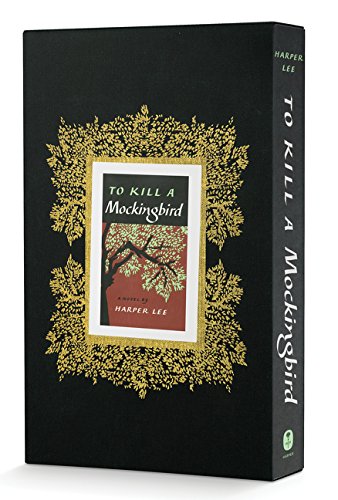
To Kill a Mockingbird Slipcased Edition, by Harper Lee

Free Ebook To Kill a Mockingbird Slipcased Edition, by Harper Lee
"Shoot all the bluejays you want, if you can hit 'em, but remember it's a sin to kill a mockingbird."
A lawyer's advice to his children as he defends the real mockingbird of Harper Lee's classic novel—a black man charged with the rape of a white girl. Through the young eyes of Scout and Jem Finch, Harper Lee explores with rich humor and unswerving honesty the irrationality of adult attitudes toward race and class in the Deep South of the 1930s. The conscience of a town steeped in prejudice, violence, and hypocrisy is pricked by the stamina and quiet heroism of one man's struggle for justice—but the weight of history will only tolerate so much.
One of the best-loved classics of all time, To Kill a Mockingbird has earned many dis-tinctions since its original publication in 1960. It has won the Pulitzer Prize, been translated into more than forty languages, sold more than forty million copies worldwide, and been made into an enormously popular movie. It was also named the best novel of the twentieth century by librarians across the country (Library Journal).
To Kill a Mockingbird Slipcased Edition, by Harper Lee- Amazon Sales Rank: #255170 in Books
- Brand: Lee, Harper
- Published on: 2015-06-16
- Released on: 2015-06-16
- Format: Deckle Edge
- Original language: English
- Number of items: 1
- Dimensions: 8.25" h x 1.09" w x 5.63" l, .0 pounds
- Binding: Hardcover
- 336 pages
Amazon.com Review "When he was nearly thirteen, my brother Jem got his arm badly broken at the elbow.... When enough years had gone by to enable us to look back on them, we sometimes discussed the events leading to his accident. I maintain that the Ewells started it all, but Jem, who was four years my senior, said it started long before that. He said it began the summer Dill came to us, when Dill first gave us the idea of making Boo Radley come out."
Set in the small Southern town of Maycomb, Alabama, during the Depression, To Kill a Mockingbird follows three years in the life of 8-year-old Scout Finch, her brother, Jem, and their father, Atticus--three years punctuated by the arrest and eventual trial of a young black man accused of raping a white woman. Though her story explores big themes, Harper Lee chooses to tell it through the eyes of a child. The result is a tough and tender novel of race, class, justice, and the pain of growing up.
Like the slow-moving occupants of her fictional town, Lee takes her time getting to the heart of her tale; we first meet the Finches the summer before Scout's first year at school. She, her brother, and Dill Harris, a boy who spends the summers with his aunt in Maycomb, while away the hours reenacting scenes from Dracula and plotting ways to get a peek at the town bogeyman, Boo Radley. At first the circumstances surrounding the alleged rape of Mayella Ewell, the daughter of a drunk and violent white farmer, barely penetrate the children's consciousness. Then Atticus is called on to defend the accused, Tom Robinson, and soon Scout and Jem find themselves caught up in events beyond their understanding. During the trial, the town exhibits its ugly side, but Lee offers plenty of counterbalance as well--in the struggle of an elderly woman to overcome her morphine habit before she dies; in the heroism of Atticus Finch, standing up for what he knows is right; and finally in Scout's hard-won understanding that most people are essentially kind "when you really see them." By turns funny, wise, and heartbreaking, To Kill a Mockingbird is one classic that continues to speak to new generations, and deserves to be reread often. --Alix Wilber
From Publishers Weekly Starred Review. Lee's beloved American classics makes its belated debut on audio (after briefly being available in the 1990s for the blind and libraries through Books on Tape) with the kind of classy packaging that may spoil listeners for all other audiobooks. The two CD slipcases housing the 11 discs not only feature art mirroring Mary Schuck's cover design but also offers helpful track listings for each disk. Many viewers of the 1962 movie adaptation believe that Lee was the film's narrator, but it was actually an unbilled Kim Stanley who read a mere six passages and left an indelible impression. Competing with Stanley's memory, Spacek forges her own path to a victorious reading. Spacek reads with a slight Southern lilt and quiet authority. Told entirely from the perspective of young Scout Finch, there's no need for Spacek to create individual voices for various characters but she still invests them all with emotion. Lee's Pulitzer Prize–winning 1960 novel, which quietly stands as one of the most powerful statements of the Civil Rights movement, has been superbly brought to audio. Available as a Perennial paperback. (Aug.) Copyright © Reed Business Information, a division of Reed Elsevier Inc. All rights reserved.
From School Library Journal Spacek, with her lilting Southern accent, perfectly captures the voice of Scout, the young girl whose life is thrown into turmoil when her father, the upright and highly ethical lawyer Atticus Finch, takes on the defense of a black man accused of raping a white woman. Their sleepy Alabama town may never be the same and Spacek's exceptional pacing propels this Pulitzer Prize-winner-a staple of many high school reading lists-to its inexorable conclusion. The 1962 film, starring Gregory Peck (who won an Academy Award for his portrayal of Atticus Finch), was named to the National Film Registry by the Library of Congress in 1995.α(c) Copyright 2013. Library Journals LLC, a wholly owned subsidiary of Media Source, Inc. No redistribution permitted.

Where to Download To Kill a Mockingbird Slipcased Edition, by Harper Lee
Most helpful customer reviews
638 of 674 people found the following review helpful. Still as great as it was 50 years ago By JLind555 It hardly seems like 50 years since I picked up this book late one rainy night when it was first published, after my mom had been raving about the book for weeks, trying to get me to read it. Well, what the heck, the late movie was boring that evening and there was nothing else on the TV... next thing I knew, it was two o'clock in the morning and I had just turned the final page on what was the most magical reading experience of my entire life.From the opening line, "When he was nearly thirteen, my brother Jem got his arm badly broken at the elbow..." Lee hooks the reader with a deceptively simple story of a Southern family and a Southern town caught up in a cataclysmic moral crisis, and keeps us enthralled till the very last word. Lee's writing style is that of the storyteller who mesmerizes her audience telling a tale so simple, yet so compelling, that you never want it to end. Her narrator is Scout Finch, a delightfully devilish little tomboy who sees her world through the all-observant eyes of childhood. Scout is one of the most enchanting characters in modern American fiction. She's bright, funny, totally real; there's nothing contrived about her. She's someone we all knew in first or second grade, or wished we'd known. Scout lives with her brother Jem, four years her senior, her lawyer father Atticus, and their housekeeper Calpurnia, in a sleepy Alabama town where everybody knows or is related to everybody else. Lee spends the first half of the book drawing us into the life of the town and the Finch family, Scout's hilarious and problematic adjustment to first grade, and brings us into the mystery surrounding the notorious-yet-never-seen Boo Radley. The second half of the book is about the moral crisis that tears the town apart.Lee has a way of saying a lot by saying very little, and her laconic statement that the people of Maycomb had recently been told they had nothing to fear but fear itself sets the time squarely in 1933, the depths of the Great Depression. Times were bad for most people in small Southern towns; they were especially bad for poor whites and all blacks. In 1933 the South was rigidly segregated down every possible line, and a white woman's false accusation of rape was enough to get a black man hanged. When Mayella Ewell accuses Tom Robinson of rape, in the eyes of most of the white populace, Tom has been tried, convicted and is awaiting execution. Judge Taylor disagrees, and asks Atticus to take Tom's case.In Atticus Finch, Lee created what would eventually grow to be the best-loved character in all American fiction. Atticus is a loving but not a doting father, an able lawyer, and an individual of towering integrity. He takes Tom's case because he knows Mayella's accusation is full of holes, and he believes Tom is as deserving of good legal representation as anyone else. Atticus knows better than anyone else how his decision to take the case will affect his children, but as he explains to Scout, who wonders how Atticus can be right if everybody else thinks he's wrong, if he didn't take the case, he could never hold his head up in front of his children again.Atticus knows he's fighting a losing battle, but deep inside himself he believes he may lose a battle but win a bigger war. The chapters describing Tom Robinson's trial and Atticus's defense are some of the most powerful in American fiction. On of the most moving passages in the book is at the end of the trial when the town's black minister tells Scout to "Stand up. Your father's passin'."Along with Scout and Atticus Finch, Lee created a host of other memorable characters. Jem is the perfect big brother for Scout, sometimes protective, sometimes antagonistic, always encouraging. Lee only needs to pen a few details about Calpurnia to bring her vividly to life: "She was all angles and bones; she squinted; her hand was wide as a bed slat and twice as hard." Calpurnia isn't the stereotypical Mammy of Tara; she's a no-nonsense maid and housekeeper who dishes out ample amounts of love and old-fashioned discipline in equal doses. And Miss Maudie Atkinson is a delightful creation; funny, ditzy, and wise all at once. Anyone would want her for their next-door neighbor.The two major villains, Bob Ewell and his daughter Mayella, are compelling characters in their own right. Bob Ewell is quintessential white trash, spending the family's relief money on moonshine while his children go hungry. But poor Mayella is as much victim as villain; we can't help but feel for her, ostracized and isolated, knowing only her father's physical violence and sexual abuse; her attempted seduction of Tom Robinson is a desperate cry for love and affection. But, as Lee reminds us, it's all for naught. Tom Robinson was dead the minute Mayella, caught in the act of attempted seduction by her father, opened her mouth and screamed.After the highlight of the trial, the book might have slid into anticlimax, but it's Lee's genius that she keeps the tension heightened after the trial and its denouement, through Ewell's drunken, insane attack on Atticus through his children, and their rescue by Boo Radley. And after everything she, her family, and the town have been through, what has Scout learned from all this? Pretty much what Atticus set out to teach her all along: that you can't get to know a person until you put on his shoes and walk around in them.I turned the final page of "To Kill A Mockingbird", unbelieving that it had come to an end. I opened the front cover and immediately started reading it over again from page one. At two o'clock in the morning. The book had that much of an effect on me. One doesn't just read this book; one experiences it. At best, one lives it. I did.Judy Lind
314 of 335 people found the following review helpful. "Lawyers Were Children Once Too": To Kill a Mockingbird By Will Errickson Oddly, I'd never read To Kill a Mockingbird as a high school student. Nor had I ever seen the famous film with Gregory Peck. Fortunately, I also avoided learning the entire plot through cultural osmosis. Sure, I knew who Boo Radley was-- didn't I? Atticus Finch... yeah, I know who that is... right?Boy, was I wrong. Last week I finally decided it'd been long enough, and I sank into Harper Lee's only novel with high expectations. And I was certainly not disappointed. With its slow, warm and evocative opening chapters, Mockingbird starts off like a sulty summer day in the South. Lee depicts a South of "whistling bob white," biscuits and warm milk, and ladies who on the hottest days bathe twice by noon and then douse themselves in lavender-smelling powder.Jean-Louise Finch, better known as Scout, narrates the story with the keen eye of an adult looking back on a childhood rich with incidents that shaped who she has become. Scout reminded me of some of Carson McCullers's heroines (Member of the Wedding, The Heart is a Lonely Hunter), but without the morbid loneliness and heartbreak. Scout might be described as a tomboy, but that would be doing her a disservice. Her adventures with her older brother Jem, and their dimunitive friend Dill (real name: Charles Baker Harris. "Your name's longer'n you are," Jem points out) evoke the timeless place of childhood.As for Atticus Finch, what can one say about a father who seems to embody the greatest of virtues? He is tolerant, patient, kind, and understanding. He does not meddle with his children's affairs, he speaks to them as fellow adults (he allows them to call him "Atticus"), and his skill as a lawyer is legendary. Lee presents Atticus in a tough and sensitive manner, so that his believability is paramount.The other characters in the book are also depicted with great skill: Aunt Alexandra, bane of Scout's existence; Miss Maudie, who gives as good as she gets when harassed by intolerant neighbors; Calpurnia, the ever-present black maid who has as much a hand in Jem and Scout's well-being as Atticus; and of course the Ewells, whose poverty and ignorance help set the plot in motion.Harper Lee has written a wonderful book that pulses with life, with compassion, and easy good humor. Watching Atticus face down an angry mob set on lynching a black man, or racing with Jem as he escapes gunshots from the Radley house, or sitting with Scout as she forced to join her aunt's church lady reception, or taking that long midnight walk with Jem and Scout, is pure joy; these are scenes that reverberate in the reader's mind and surely in the minds of several generations of readers. I'm glad I can now say I'm one of them.
420 of 461 people found the following review helpful. No wonder it's a classic... By Dianna Setterfield I just finished this book a few moments ago, and I am completely awed by this story. Harper Lee has done an excellent job bringing this 1930s Alabama childhood to life. I can see why To Kill a Mockingbird has won the Pulitzer Prize, garnered an Academy Award for the movie version, and ultimately become a timely classic enjoyed by many generations.To Kill a Mockingbird tells the story of two children, sister Scout and brother Jem, and their childhood during three years in the midst of the Great Depression. Scout and Jem spend most of their summers with their summer-neighbor, Dill, making up plays and spying on the town recluse, Boo Radley. During the school year (minus Dill, who goes back home to Mississippi), Scout finds herself in trouble one too many times and struggles with the concept of being a lady, especially when all she wants to do is wear overalls and beat up her classmates.Then everything changes one fall.... Scout and Jem's father, Atticus Finch, a lawyer in their town of Maycomb, Alabama, is appointed to the defense of Tom Robinson, a black man accused of raping a white woman (although not of the highest caliber), Mayella Ewell. The fact of this case rocks the town of Maycomb, and with Scout and Jem feeling the brunt of their classmates ridicule when they realize Atticus is on Tom's side.I was simply floored while reading this novel. I wasn't expecting a "classic" to be so readable. Now I know what I've been missing! To Kill a Mockingbird is a piece of our American history that depicts racism and prejudice, childhood innocence, and the perseverence of a man who risked it all to stand up for what he believed in. Wonderful portrayal and one I will read again.
See all 9006 customer reviews... To Kill a Mockingbird Slipcased Edition, by Harper LeeTo Kill a Mockingbird Slipcased Edition, by Harper Lee PDF
To Kill a Mockingbird Slipcased Edition, by Harper Lee iBooks
To Kill a Mockingbird Slipcased Edition, by Harper Lee ePub
To Kill a Mockingbird Slipcased Edition, by Harper Lee rtf
To Kill a Mockingbird Slipcased Edition, by Harper Lee AZW
To Kill a Mockingbird Slipcased Edition, by Harper Lee Kindle

Tidak ada komentar:
Posting Komentar