Muse: A Novel, by Jonathan Galassi
This is also among the factors by obtaining the soft data of this Muse: A Novel, By Jonathan Galassi by online. You could not require even more times to invest to go to guide establishment and look for them. Sometimes, you also don't discover the publication Muse: A Novel, By Jonathan Galassi that you are browsing for. It will certainly throw away the time. But below, when you visit this web page, it will be so simple to get and also download and install guide Muse: A Novel, By Jonathan Galassi It will certainly not take often times as we state before. You can do it while doing something else in the house and even in your office. So very easy! So, are you question? Just exercise just what we provide right here as well as review Muse: A Novel, By Jonathan Galassi just what you enjoy to read!
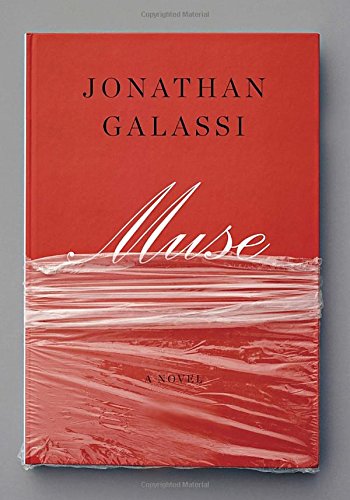
Muse: A Novel, by Jonathan Galassi

Free Ebook Muse: A Novel, by Jonathan Galassi
From the publisher of Farrar, Straus and Giroux: a first novel, at once hilarious and tender, about the decades-long rivalry between two publishing lions, and the iconic, alluring writer who has obsessed them both. Paul Dukach is heir apparent at Purcell & Stern, one of the last independent publishing houses in New York, whose shabby offices on Union Square belie the treasures on its list. Working with his boss, the flamboyant Homer Stern, Paul learns the ins and outs of the book trade—how to work an agent over lunch; how to swim with the literary sharks at the Frankfurt Book Fair; and, most important, how to nurse the fragile egos of the dazzling, volatile authors he adores. But Paul’s deepest admiration has always been reserved for one writer: poet Ida Perkins, whose audacious verse and notorious private life have shaped America’s contemporary literary landscape, and whose longtime publisher—also her cousin and erstwhile lover—happens to be Homer’s biggest rival. And when Paul at last has the chance to meet Ida at her Venetian palazzo, she entrusts him with her greatest secret—one that will change all of their lives forever. Studded with juicy details only a quintessential insider could know, written with both satiric verve and openhearted nostalgia, Muse is a brilliant, haunting book about the beguiling interplay between life and art, and the eternal romance of literature.
Muse: A Novel, by Jonathan Galassi - Amazon Sales Rank: #455362 in Books
- Brand: Galassi, Jonathan
- Published on: 2015-06-02
- Released on: 2015-06-02
- Original language: English
- Number of items: 1
- Dimensions: 7.79" h x 1.00" w x 5.52" l, .73 pounds
- Binding: Hardcover
- 272 pages
Muse: A Novel, by Jonathan Galassi Review “Entertaining . . . The rivalries of the literary world animate this debut novel, which follows Paul Dukach, a rising editor at one of New York’s last independent publishers; his boss, Homer Stern; and Sterling Wainwright, the head of their main competitor. All three are captivated by the same woman, the poet Ida Perkins, who is revered by Paul, pursued by Homer, and published (and occasionally bedded) by Sterling. Paul’s career takes flight when Ida entrusts him with an explosive secret. Muse is a testament to the purity of the written word, and the turmoil that can be required to get it on paper.” —The New Yorker“Excellent. A valentine to a half-remembered, half-imagined world: a tale of two literary publishers who for decades have jousted with each other for the affections—and copyrights—of one Ida Perkins, a modernist master with the shimmering technique of Marianne Moore, the erotic frankness of Anne Sexton, and the massive readership—well, of no poet who ever lived in the 20th century, but we can dream, can’t we? The fulcrum of the story is a young editor-in-chief whose ongoing obsession with Ida’s life and work that leads him into a chain of events that culminates with a bombshell of a gift: a final manuscript whose contents, once published, will transform all their lives . . . A terrific novel—a crackling good story [in] sparkling prose.” —Kevin Nance, USA Today *** “Muse is a song of praise for Galassi’s two loves, publishing and poetry . . . He beautifully represents moments of literary triumph: when the poet finds the words coming just right; when the pristine, unexpected manuscript shows up on the editor’s desk; when the publisher sees a masterpiece he has championed become recognized as such. Galassi makes poetry and publishing feel alive, with complexity and drama and feeling.” —Anthony Domestico, Commonweal “You don’t have to work in publishing to enjoy Muse, a story that draws a lot from the writer’s own experience. In his time at FSG, Galassi ushered some of the most esteemed writers into the literary landscape, including Jonathan Franzen. There are plenty of recognizable characters; Galassi also has a clear love of words and the types of people, both publishers and authors, who are behind them. He’s concerned with the ‘romance of reading,’ and those who ‘were loyal to their own sometimes twisted yet settled natures, modern in the old-fashioned sense.’” —Michele Filgate, Salon “Galassi's debut novel reads with the exuberance of a man half his age and with intellect of a successful businessman. The trend of writers writing about novelists is nothing new, [but] what separates Galassi is that his vast knowledge and experience provides him with chops to fully encompass the literary world. The novel centers around two publishing houses, a revolutionary poet, and an editor who gets caught in between it all. The job of a novelist is to make a world come alive, and by the end of Muse, many will be Googling Ida Perkins to see if she was a real poet . . . Galassi has a treasure trove of information which he supplies to readers in great, and gorgeous detail. Muse is a novel that displays a love and passion for literature by one of the most decorated members of the industry. Call it a passion project, a memoir of sorts, a love letter to beautiful writing: Galassi has been inspired by his Muse.” —Steven Petite, The Huffington Post“Fascinating . . . Muse is built around a charming premise: that an important American poet could become as famous as a pop star, a screen siren or an athlete. Here we are in the midst of fantasy, but a fantasy not far, as Galassi’s novel eloquently illustrates, from the one inhabited by people in the literature business. It is one of the pleasures of Muse to watch Galassi mix his fictional literati with the real ones. Among the deepest themes of this book are the entanglements of love, judgment, business, art, narcissism, craft, and the power. The work [Galassi] gives Ida is strikingly charming and direct—inward-looking and meditative. But I suspect that Ida is less a specific person than the idea of what a writer means to those committed to literary life. It’s not just the literary gift—it’s also the impulse to embrace and surrender to it—this magic knot of art and character. Longing for a vanishing métier and its muse forms the novel’s love story, and the love story of the world it affectionately eulogizes.” —Ann Kjellberg, The New York Review of Books “Compelling . . . Galassi propels his readers forward on a thought-provoking, often hilarious, bittersweet ride. That he manages to keep his literary Uber on the road and out of the ditches is a tribute to his skill as a writer and storyteller. Muse is a kind of mystery: not so much a who-done-it but a more satisfying who-felt-it, who-experienced-it, who-saw-it-for-what-it-really-was . . . It is also a roman à clef, and its pages are populated with characters both real and imagined. Ezra Pound and Ernest Hemingway are mentioned in the same breath with fictional characters, some based on real legendary lions, such as Roger Straus and James Laughlin. Galassi even tips his hat to some of his contemporary confrères, distributing their last names among his characters. Anyone intimate with New York publishing can use Muse as a kind of parlor game for rainy nights; put out the brie, pour the Chablis, and try to find Lynn, Binky, Mort, Esther, and Sonny hiding in the pages. Yet somehow, Galassi prevents his journey from becoming too sentimental, offering instead top-shelf satire in the portrait he paints of the narcissism and pettiness that still is New York publishing—the jealousy and backstabbing among writers, the faux-intellectual preening and dirt-dishing by the editors, the cravenness and hypocrisy of the publishers. While his characters may do foolish things, they are committed to something much bigger than their egos—Literature with a capital L, enduring works that change opinions, politics, culture, and lives . . .The potential unraveling of Paul’s future makes the need to untangle his past, and Ida’s, all the more immediate and meaningful for the reader. Galassi brings an elegiac quality to the novel’s themes of love, loss, and reading in just the right amount, adding depth and richness to a bravura first novel.” —Robert B. Wallace, Los Angeles Review of Books “Unusual and beguiling . . . Galassi imbues his offbeat tale with emotional intensity and a lingering resonance.” —Rayyan Al-Shawaf, Miami Herald“Entertaining . . . Muse’s hero, Paul Dukach, is an ambitious tyro in 21st-century publishing [whose] fascination with his poetic heroine leads him to becomes an acolyte at more than one altar. What he discovers along the way will turn the literary world upside down. But that world is already in turmoil, as the author wittily demonstrates. Galassi knows the territory better than most, since he’s president and publisher of Farrar, Straus & Giroux . . . Can a novel that winks so knowingly at a certain group of readers succeed in broader terms? I reckon so. Galassi’s ventriloquism makes for striking verse. And his riffs on fame itself are spot-on; I kept thinking of Being John Malkovich . . . He gives us an alternate world in which we might, really, listen to a poet. [And] he pokes clever fun at the society that Paul and he himself inhabit . . . Paul’s journey is an honest one—into himself and into the truth of what he loves. Muse is many things: a satire of New York’s social world, a portrait of publishing that is both love song and takedown, and an intriguing mystery. But beneath the book’s sometimes brittle surface lies the belief that literature can change lives. Yes, the business of books is changing. But what’s written on the pages remains just as powerful, just as real—and few know that better than Jonathan Galassi.” —Erica Wagner, The New York Times Book Review“Entertaining, keenly observed, incisive . . . a literary echo chamber haunted by the ghosts of two classics—Philip Roth’s The Ghost Rider and Henry James’s The Aspern Papers. Galassi draws on his own longtime experience to give readers a tactile portrait of the New York literary world in ‘the good old days’ when publishing was a gentlemanly profession, and ‘books were books,’ their contents ‘liquor, perfume, sex and glory to their devotees.’ In Ida [Perkins], Galassi—who is himself an accomplished poet—has created an avatar of a vanished era in which poets could be huge celebrities, and gives us some charming examples of her work . . . Muse—much like John Updike’s early Bech books—leaves insiders with a knowing portrait of the publishing world before the digital revolution, and gives outsiders a gently satirical look at the passions and follies of a vocation peopled by ‘fanatics of the cult of the printed word.’” —Michiko Kakutani, The New York Times“A fictional send-up of New York’s publishing industry, by one of its real-life members. Galassi chronicles the rise of an ambitious young editor [who] must juggle the high-brow pursuits of the literary life with the vulgarity of commercialism. While industry insiders will likely recognize veiled references to key players in publishing, outsiders will giggle at Galassi’s accounts of aggressive agents, arrogant authors and barbaric book fairs.” —Billy Heller, New York Post “Charming . . . an enjoyably incestuous tangle of life and art, with allusions that branch beyond the insular realm of New York publishing into American literary culture . . . The heroes of Galassi’s first novel are a pair of ‘gentlemanly thieves’—which is another way of saying that they are book publishers in New York. Like his heroes, Galassi, who is an accomplished poet and translator, has spent a lifetime in that sordid and sophisticated world; his novel is a camouflaged depiction of the ‘swarming dunghill’ of publishers, editors, and agents who are the power brokers of the literary elite. While the book is laced with nostalgic affection, its primary ingredient is exuberant gossip . . . The tussle between high art and crude commerce, between publishing as a noble calling and a seamy business, generates much comic posing throughout . . . The model of passionate and egotistical publishers shaping the industry has faded by the novel’s end, but the preceding pages preserve the quirks and charms of a colorful era in literary culture.” —Nick Romeo, The Boston Globe “Accomplished, entertaining . . . affecting . . . Muse adds still another gold star to Galassi’s literary report card . . . It is a tribute to the world of book publishing in which he came of age and made his mark, [when] the book, not the bottom line, was the focus . . . In wistful words that sometimes read like sadness set to music, Galassi captures all of this collaborative joy and heartache, and more, in a fond farewell to yesteryear—and a guarded hello to the digital age in publishing.” —Robert Lamb, New York Journal of Books “The first novel from the poet and critic Galassi is a long-awaited, and worthwhile, event. Galassi’s main character is the heir to a prestigious publishing house who becomes the confidante of his favorite writer, a poet whose personal life is as famed as her writing.” —Nicole Jones, Vanity Fair “Witty . . . delicious. Galassi—a publisher, poet and translator with decades of inside knowledge of the publishing industry—uses his background to great effect in this a slyly sophisticated roman à clef. He slips the fictitious poet Ida Perkins into the 20th century literary canon and puts her at the centre of a literary competition between publishers.” —Jane Ciabattari, BBC.com, Ten Books to Read in June “Complex and heartbreaking . . . Galassi’s fictionalized vision of publishing, even subtracting the veneer of satire, is simultaneously romantic and problematic, [an] otherworldly amalgam of the real, the satiric and the entirely imagined . . . a Mad Men world that’s white, wealthy and male. Muse traces publishing’s trajectory from a confident, martini-lunching old boys’ club to a more enlightened industry plagued by the uncertainty brought on by a brave new world . . . It is, in some respects, a love letter for a bygone time, [without] the miserliness of that genre. At the heart of everything these people do is a profound love of literature. The novel leaps to life when we [meet] Ida Perkins, a poetry superstar. Muse reads like a memoir of sorts, told, as befits a sophisticated teller, with all the tools at his disposal—satire, a touch of postmodernism, the roman à clef, and naturally, romance.” —Alana Wilcox, National Post (Canada)“Part satire, part fantasy, and unabashed in its affection for the world of publishing, Farrar, Straus & Giroux president and publisher Galassi's first novel is a captivating roman à clef, written with the insight and wit of a true insider. An accomplished poet, Galassi effectively deploys both his knowledge of that art form and of the business of producing books in this clever story . . . Whether it's a trip to the Frankfurt Book Fair or a dinner with the founder of an Amazon-like e-tailer, Galassi delivers realistic glimpses of pressures that loom over the traditional book business today. Equally pleasurable are his flights of fancy: a world where first editions of poetry books sell 750,000 copies and where the death of a beloved poet spurs the president to declare a national holiday; where literature occupies the center of the cultural conversation, rather than being exiled to the provinces inhabited by academics and a handful of acolytes. For all the wistfulness of its backward-looking glance, Muse is anything but a nostalgia trip. Instead, this gentle, wry novel should reinforce the belief of anyone who loves books that the survival of the world Galassi portrays is worth fighting for. A sharp and affectionate look at the contemporary publishing business.” —Harvey Freedenberg, Shelf Awareness “Galassi’s first novel, which charts the rivalry between two Manhattan publishing houses, is packed with lively secrets and insider gossip from the world of literature." —Entertainment Weekly “An insider's look at book publishing spins a fable of egos, literature, and commerce in which an editor’s obsession with a poet leads to the revelation of a crucial secret. Galassi is a poet and translator and, for his day job, president and publisher of Farrar, Straus & Giroux. In this fiction debut, he imagines the gifted and beautiful poet Ida Perkins, cynosure of men literary and otherwise. A critics’ darling from her first collection at 18, she soon [becomes] that rarest of phenomena, a profitable poet. Her fortunate publisher is a WASP from old New England money, and his chief rival is a savvy, foulmouthed Austrian Jew who racks up more Nobels than any other house—except Farrar. The obsessive is Paul Dukach, whose first meeting with Ida brings him and the story to the ultimate collision of private person and published writing. Galassi conveys the thrill of being dazzled by literature . . . He also has fun with the language of reviewing while delivering a casual seminar on American poetry; an extended riff on the Frankfurt Book Fair bespeaks years of painful firsthand experience . . . A worthy psalm on the pre-Amazon, pre-digital days of publishing that anyone might appreciate. Galassi rates praise especially for choosing to have some knowing fun with his years in the business.” —Kirkus (starred review) “In poet Galassi’s first novel, a book editor navigates the world of 21st-century publishing while unraveling the secrets of his lifelong hero, a poet named Ida Perkins . . . The fun of this book is watching Galassi weave his fictional characters into real literary history and put his considerable gifts as a poet to good use.” —Publishers Weekly“Charming . . . A novel about a world that exists in memory: an industry still spoken of reverentially as a noble calling rather than a business. Its hero is a bookish young man from upstate New York who is drawn to the down-at-the heels glamour of book publishing. Muse is two parts valentine, one part satire, a loving send-up of a very specific culture. [Here] is a world where intrigue takes the form of a decades-long battle over who gets to publish a charismatic, talented and audacious poet, a writer of sensual poetry with an outsized popular appeal. A reader would not be wrong to see parallels between the characters in the book and industry legends.” —Kara Bloomgarden-Smoke, New York Observer“A witty, elegant, tons-of-fun debut novel. Jonathan Galassi has got all the dirt on the publishing industry and he is ready to dish. But he also takes us from Union Square and a hideaway country cottage to Venice, for a love story all his own.” —Gary Shteyngart“We know Galassi as president and publisher of Farrar, Straus & Giroux, as the author of three collections of poetry, and as an icon in the publishing industry. Now we get to know him as a debut novelist. Not surprisingly, Galassi writes about publishing itself, and it will be fun to match fiction with real-life fact. Paul Dukach is heir apparent at Purcell & Stern, hanging on in seen-better-days offices near Manhattan’s Union Square (much like Farrar’s) as one of the few remaining independents. Right now, he’s after Ida Perkins, a dazzling and culturally significant poet (yes, poetry matters!) whose longtime publisher, also her cousin and sometime lover, is a major rival of Paul’s boss. When Paul seeks out Ida at her Venetian palazzo, he learns a startling secret.” —Barbara Hoffert, Library Journal “Jonathan Galassi has accomplished that most difficult of tasks, which is to write a lively and interesting novel about book publishing, many scenes of which brought back to me vividly what book publishing is (or used to be) like: larger than life figures (at any rate in their own minds), impossible authors, intense rivalry, and daily drama. It will explain to hoi polloi what book publishers do when they’re not lunching, and to those in the industry it will present a fascinating roman-a-clef puzzle to solve.” —Michael Korda, author of Queenie and Another Life
About the Author JONATHAN GALASSI is a lifelong veteran of the publishing world and the author of three collections of poetry, as well as translations of the Italian poets Eugenio Montale and Giacomo Leopardi. A former Guggenheim Fellow and poetry editor of The Paris Review, he also writes for The New York Review of Books and other publications. He lives in New York City.
Excerpt. © Reprinted by permission. All rights reserved. viii The Fair The modern-day Frankfurt Book Fair was a postwar phenomenon, a vehicle for easing the readmission of Germany into the company of civilized Western societies. Originally, it had been a phenomenon of the Renaissance, Frankfurt being the largest trading center near Mainz, where Johannes Gutenberg and his fellows had invented movable type in the late 1430s. The fair had been established again in 1949 and had grown into the most important annual gathering in international publishing. Every October, tens of thousands of publishers from all over the world scurried like so many ants among the warehouse-like halls of the fair’s bleak cam- pus on the edge of the city center, rushing to appointments with their counterparts. But books weren’t sold at the modern-day Frankfurt. Authors were—by the pound and sometimes by the gross. What the publishers did at Frankfurt was hump the right to sell their writers’ work in other territories and languages, often pocketing a substantial portion of the earnings for themselves (the ever-paternalistic French were among the most egregious, raking off 50 percent of the take). The days before agents woke up to the potential of international deals were a wild and woolly era, though the seigneurial rituals of fair commerce were punctiliously observed by the players. Rights directors were the most visible players under the Frankfurt bell jar, and the acknowledged queen of them all was Cora Blamesly, FSG’s mace-wielding Iron Maiden, who hailed from the arbor-draped hills of Carinthia and was a past master at brandishing her picked-up Sloane Ranger accent, with its ineradicable Germanic undertone, and her S/M selling techniques to extract outrageous con- tracts from her desperate European “friends.” Cora and her ilk would hold back important manuscripts for sale at the fair and then “slip” them with elaborate fanfare to favored editors in various territories, demanding that they be read overnight and soliciting preemptive offers, often inflated by the expectations and tensions of Frankfurt’s carnival atmosphere. The Europeans were desperate because the postwar cultural economy had dictated that Italian and German, Japanese and Brazilian, and sometimes even French readers needed and wanted to read American books. Not just the big commercial authors, either, the Stephen Kings and Danielle Steels, but the Serious Literary Writers, too. First there’d been the anxiety-ridden, attitude-infused Jewish American novelists; followed by the less interesting, more self-regarding WASPs, the Updikes and Styrons and Foxxes; and the nondescript newbies, the young Turks full of sass and plausibility that Cora and her counterparts whipped up into supernovas for the four days of the fair, sometimes for book after book, year after year. European publishing nabobs like Jorge Vilas (Spain), Norberto Beltraffio (Italy), Matthias Schoenborn (Germany), and the biggest overspender of them all, Danny van Gennep from Utrecht, had been playing this way for years, and were on the hook to Cora for literal millions. When Roger Straus or Lucy Morello brought a new author to Frankfurt, they all jumped, as they did for Rob Routman, the head-turning editor in chief of Owl House—sometimes, it was rumored, without reading all that much (or, let’s be honest, any) of the manuscript—because often, or often enough anyway, the books “worked,” i.e., sold copies back home. Many publishers played “Ready, Fire, Aim” buying foreign books, acquiring titles that sounded hot but often, when the com- missioned translations materialized months later, would have them shaking their heads, wondering how such a dog could have appeared so leonine in the half-light of the smoke-infested Hessischer Hof bar, still packed at two a.m. with drunken, libidinous editors and rights people splayed across each other on the sagging couches. The serial drink dates and langweilisch alcoholic dinners with self-congratulatory speeches by the hosting German publishers, followed by more drinks on into the night (same-time-next-year cohabitation was not unheard of, either) contributed to Frankfurt’s nonstop bonhomie and its open-walleted frenzy. As one grand old man of Danish publishing had told Homer, “We come to Frankfurt every year to see if we’re still alive.” Some, alas, were not. The worst were former bigwigs who had the bad taste to reap- pear, wandering the cavernous halls, buttonholing former colleagues between nonexistent appointments. They were ghosts, revenants, and everyone knew it—including them, perhaps. Frankfurt was anything but social; it was carnivorous- ness at its most rapacious, with a genteel European veneer. The dressy clothes, the parties, the cigars, the jacked-up prices in the hotels and restaurants, the disappointing food were all of a piece. It was exhausting and repetitive and depressing—and no one in publishing with any sense or style would have missed it for the world. Homer was made for Frankfurt. Nowhere was he more relaxed, more full of avuncular wisdom and wisecracking anecdotes. He had refused to come to postwar Germany for years, but had been won over by Brigitta Bohlenball, the vivacious widow of Friedrich Bohlenball, who had almost instantaneously, thanks to a series of shrewd buys, used his Swiss milk fortune and Communist politics (a Swiss Communist: a rara avis indeed!) to become one of Europe’s most stylish publishers. Friedrich had introduced a number of weighty novelists and philosophers before commit- ting suicide at the age of forty, leaving Brigitta and young Friedchen with several hundred million Swiss francs, a villa near Lugano, and a Schloss in the Engadine, not to mention Zurich’s swankiest publishing house. “Come, Homer. You’ll have such a good time, I promise you,” Brigitta cooed over lunch at La Caravelle, and she’d made good on her vow, introducing her new American catch to the greatest, which is to say the most snobbish, editors in Europe. If a snobbish publisher seems like an oxymoron today, it’s only an indication of how the notion of class has degraded in the postwar era. The aristocrats of European publishing, the Gallimards, Einaudis, and Rowohlts, were good old bourgeois who had gotten through the war more or less intact, though sometimes with not-unblemished political affiliations in their back pockets, as was true for numberless European businessmen. They weren’t very different, muta- tis mutandis, from Homer, which is no doubt why he came to feel so at home among them. And he did feel gloriously, chest-thumpingly himself in those smoky, cold fair halls and smoky, overheated hotel bars and restaurants. Membership in Brigitta’s club had long since stilled his qualms about the Krauts, as he still called them, and the saturnalia of Frankfurt had become the high point of Homer’s and Sally’s publishing year. They appeared as a couple, and indeed many of Homer’s foreign colleagues, some of whom enjoyed not-dissimilar domestic arrangements, thought they were married. Paul remembered a dinner at Homer’s town house soon after he’d joined the company with a number of P & S’s better-known foreign authors, including Piergiorgio Ponchielli and his wife, Anita Moreno, and Marianne O’Loane. Norberto Beltraffio, one of Homer’s most exuberant European colleagues, sailed into the drawing room while Homer was seeing to the wine and, throwing his arms wide, asked the assembled crowd, “Where’s Sally?” Luckily, Iphigene was also out of the room. As a rule, Homer and Sally spent a long weekend at a spa on Lake Constance, resting up for the ardors of the fair, and afterward flew on to London or Paris to recover in style for a week or two. They were gone for a month’s vacation, as some back in New York had it, and on the company dime. Over the years, he’d come to be seen by many as the dean of Frankfurt’s gang of literary publishers, “the King of the fair,” as Brigitta had crowned him. His engagement in its rites, his small dinner at the fair’s end every year, for which some leading European publishers stayed late, his charm and mode of dress, which fit right in here and didn’t feel extravagant or slightly garish as it could in New York, even his contraband Cuban cigars—all added to Homer’s stature in the halls and watering holes of Frankfurt. The Spar- tan P & S booth, which echoed his no-frills offices in New York, was tacked onto a large international distributor’s stand and overflowed with visitors from all over Europe, Latin America, and Asia, come to kiss the gold seal ring on Homer’s well-veined hand. There were other Frankfurts going on simultaneously that Homer and Sally and Paul, who had been attending with them for the past few years, had nothing to do with. The Big (i.e., irrelevant commercial) Publishers, the Random Houses and HarperCollinses and Simon & Schusters and Hachettes, wheeled and dealt multimillion-dollar con- tracts among themselves, though increasingly the agents were holding on to their authors’ foreign rights, stalking the halls and booths like hyenas, or even, egregiously, like the upstart McTaggart, setting up their own stands with spiffy little tables and printed catalogs several inches thick handed out by demure young people, aping the publishers themselves (the nerve!). And then there was the religious publishers’ Frankfurt; the techies’ and scientists’ Frankfurt; the illustrated book publishers’ Frankfurt; the university press publishers’ Frankfurt; the developing world publishers’ Frankfurt. Not to mention the hosting German publishers’ Frankfurt, which was not just for one-on-one publisher-to-publisher deal making, but for the authors, the critics and journalists—believe it or not, books and writers were still news in Germany—and, after the first couple of days, the public, too. They gawked and dawdled like the tourists they were, till the aisles were virtually impassable. All these fairs, and others, too, were going on at the same time in the same cavernous spaces, which were like the biggest big-box stores ever built, their denizens streaming into the fairgrounds, riding half-mile-long mobile walkways, hitching rides on commuter trains from the beautiful old central railway station so evocative for Paul of prewar Europe, drinking late into the night in the dangerously crowded lobbies of the hotels, hungover and sleepless and hoarse by day, complaining and fibbing and wheedling and smoking and drinking, gorging and lying and drinking and fucking by night, and having the time of their lives. To the literary publishers, however, Frankfurt was theirs and theirs alone. They set the tone; they published the Authors Who Mattered—and who sometimes unwisely showed up for receptions and speeches, though those with any self- awareness soon realized they were irrelevant encumbrances to the business at hand. The literary publishers were the Lords of Culture, the master parasites sitting on top of this swarming dunghill. Their sense of their own importance showed when they walked the halls, rolling from side to side as if they were on board an ocean liner—which in a sense they were, without knowing it: a slow-moving Ship of Fools behemoth, heading willy-nilly for the great big digital iceberg. They convened in gemütlich private receptions to which the riffraff were not invited (exclusive invitations were a ritual of the fair, sent out months in advance and occasionally even coveted). They eyed each other sharply but unobtrusively as they fibbed about their latest finds, which might conceivably be but most of the time emphatically were not the Major Contributions to World Literature they aimed to pass them off as. The pros among these gentlemanly thieves understood each other perfectly: where amity ended and commerce held sway; where commerce took a backseat and long loyalty asserted its claims. Homer was widely generous with his information, be it good or bad, and he was a past master at spreading the rumors that were the lifeblood of Frankfurt: that McTaggart was moving Hummock from Gallimard to Actes Sud; that Hum- mock had dumped McTaggart for the Nympho; that the Nympho was selling her agency to William Morris lock, stock, and barrel. Homer would make special deals to keep certain authors within the inner circle—the cénacle, or cartel, some might call it—of independent houses that was informally run by him and his partners in crime. It was old-fashioned horse- trading, sure, but it often proved salutary for the authors, for over time, if they truly had the stuff (and some of them did; if not, the whole house of cards would have collapsed long ago), their international stature would gradually mature, and their readership would inevitably spread like their publishers’ waistlines. Quite a few of Homer’s authors—more than from any other American house except FSG, a constant thorn in his side—had ended up with the Big One, the Giant Kahuna, the platinum standard in World Literature, the highest of stakes, for which he was always playing: the Nobel Prize in Literature, awarded by the hypersecretive Swedish Academy. In the United States, the Nobel didn’t quite have the commercial heft it did elsewhere, but its prestige was still unparalleled. In recent years Homer had taken to raking in Nobels the way some collect watches. Seven of the last twelve literature prizes had gone to P & S authors, to the disgruntlement of many. Homer had been heard to boast that he was on familiar terms with the king of Sweden, whose major duty seemed to be handing out the Nobel medals. The prize was traditionally announced on the Thursday of the fair at one p.m., during the frenetic lunch hour. The big cheeses were far too suave to stand around waiting for the announcement; nevertheless, their underlings knew how to reach them at the all-important moment. This year, for the first time in decades, Homer hadn’t come to Frankfurt; he was having a hip replacement that couldn’t be postponed, and Sally had stayed home to help nurse him. So Paul was there on his own to carry the flag, gingerly treading in his boss’s oversize footsteps through the set-in-stone routine of meetings and receptions, trying not to appear like the underdressed hick he felt he must be taken for by Homer’s cliquish crowd. In 2010, as had been the case for the past few years, Ida Perkins was rumored to be on the short list for the Nobel. How accurate such speculation was, was anybody’s guess. The putatively short-listed candidates—nobody knew if there actually was a short list—often failed to emerge as winners; and if a writer was mentioned year after year, she or he could become stale goods, even less likely to garner the ultimate accolade than the dark horses—though stale goods could miraculously become fresh-baked overnight and end up winning, as had happened more than once. This year Ida, who at eighty-four had entered Now or Never territory, was again being actively discussed as a potential winner: it was time for an American, a woman, a poet: why not all three in one? “Now you must tell me, Paul,” whined Maria Mariasdottir, who’d cornered him one evening in the Frankfurter Hof bar, a suite of spacious rooms furnished with lots of, but never enough, sofas and chairs on the ground floor of Hitler’s favorite hotel, though it was larger and dowdier than the more exclusive Hessischer Hof across town. At night the Frankfurter Hof became an even sweatier, smokier mosh pit than the Hessischer Hof, so packed with literary flesh peddlers you could barely move. Paul thought of it as the third circle of Hell. “Who,” Maria kept asking, “is this Ida Perkins?” Maria was a hardworking, sloe-eyed, shapely young publisher from Reykjavik who often appealed to her fellow publishers in other territories for tips since she couldn’t afford the staff to read most of the books submitted to her. “Ida Perkins is to American poetry as Proust is to the French novel. Seriously.” Paul recoiled internally hearing himself talking Frankfurt-speak, a repulsive commercial shorthand he loathed yet had developed a disgusting facility with—even when it came to Ida; though she wasn’t “his” author, he felt compelled to spread the word about her at every opportunity. It was nearing midnight, long past his normal witching hour, but the crowd was just beginning to thicken like a rancid sauce. He knew he’d had far too much to drink and needed to get back to his two-star hotel in the red-light district near the Hauptbahnhof. “Yes, but is she really good? I mean really, really, really good? I need to know.” “Yes, Maria, Ida is really, really, really good—absolutely the top. I’m telling you it’s true—and we don’t even publish her, alas.” “Are you sure, because translating her will be so difficult, so expensive . . .” “Maria, I don’t know your market. All I know is that Ida Perkins is the American poet of our time. And her work is going to last. Ask Matthias Schoenborn if you don’t believe me. He’s bringing out her Collected next year. Ask Beltraffio. Ask Jean-Marie Groddeck. They’re all convinced.” The fact that certain prestigious publishers had an author on their lists often carried irrational weight with their foreign colleagues. “Yes, but is she really, really good?” “Really, really, really good, Maria. Really.” He hoped he wasn’t slurring his words, but feared he just might be. “I’m doubtful,” she said. Paul threw up his hands and planted a smooch on the nonplussed Maria’s forehead (most Europeans were deft practitioners of the air kiss, where lips never touched skin, but Americans often failed to carry it off). At least Maria really, really wanted to know if Ida was worth translating. The truth was, what was hot in New York was often dead on arrival in Reykjavik, and vice versa—that was the terrible truth, and maybe the saving grace, of international publishing. Paul sometimes had reason to wish there were a Frankfurt morning-after pill; but a deal was a deal, even one shaken on when one of the parties—or, better, both—was two or three sheets to the wind. So Paul was feeling cautious when he sat down in Homer’s stead at Matthias Schoenborn’s table in the German hall the next morning for their annual discussion—lecture might have been a better word—about Matthias’s prizewinning, best-selling Mitteleuropean authors. If Homer had been there, he and Matthias, who were mad about each other, would have spent their half hour telling off-color jokes and denigrating their closest collaborators, as happy as pigs in shit, but Paul knew he would have to settle for an actual business meeting. Experience told him that few or none of the writers Matthias would be pitching were likely to make an impact in America, just as he knew in his heart of hearts that Matthias, who was one of the shrewdest showboats among the international publishers, much admired for his ebullience and his nonstop promoting of his writers—a kind of latter-day European version of Homer—had no deep interest in the authors Homer and Paul published. Sure, Matthias would grumble about the fact that Eric Nielsen, now an enormous international presence, was published by Friedchen Bohlenball, though Matthias hadn’t shown the slightest interest when Paul had buttonholed him excitedly about his discovery years ago. The truth was, Matthias didn’t care about what Paul was doing any more than Paul cared about Matthias’s Russian and Iranian émigrés eking out an existence as cabbies in Berlin. Still, they sat and talked animatedly every year—“He lies to me and I lie to him,” as Homer put it—and went to each other’s parties and were the best of Frankfurt pals, listening all the while for signs in each other’s cascading verbiage of that rarest of things, the world-class author who could make a difference for both of them. How to listen, Paul had come to feel, was the real test of Homer’s publishing “truffle hound.” Many, unfortunately, listened only to themselves. Still, over the years, Matthias and Homer and now Paul had shared certain core writers who had had an international impact, among them Homer’s Three Aces. And Matthias, a respected avant-garde writer himself (Homer had published several of his dark, abstruse short novels before giving up the ghost), was Ida’s German publisher, too, and he was well aware of Paul’s passion for her and her work. Being the canny insider he was, Matthias often seemed to have privileged information about deliberations in Stock- holm, and this year was no exception. “It’s possible,” he told Paul. “There are other currents afoot, but it’s possible.” Paul didn’t know what to make of these gnomic tea leaves. All he could do was what everyone else was doing: wait. He was at the booth at one o’clock, but the silence was deafening. After an excruciating wait, word went around that Hendrijk David of the Netherlands had squeaked out enough votes to take the prize. It was said he’d been expecting it for years, sitting complacently by the phone on the appointed morning each October. The rumor, though, turned out to be erroneous. Dries van Meegeren, another, far more obscure Dutch essayist, had won, setting off an unseemly free-for-all for the acquisition of his largely still-available rights. Publishers from nearly everywhere, who before today had never heard of van Meegeren, swarmed the normally empty Dutch hall, anxious to buy themselves a Nobel Prize winner. The booth of De Bezige Bee, The Busy Bee, van Meegeren’s lucky publisher, resembled a rebooking desk in an airline terminal after a canceled flight. (David, meanwhile, never recovered, dying in bitter disappointment a couple of years later.) In any case, the prize hadn’t gone to Ida. Paul consoled himself with the fact that her not having won meant she still could. He phoned Homer once the office was open in New York. “Can you believe Dries won?” he cackled, giddy with dis- belief. Van Meegeren had been campaigning for the Nobel for ages, going on reading tours across Scandinavia, writing articles about the work of Swedish Academy members, even taking up with a Swedish woman reputed to be on a first- name basis with the academy’s secretary. “That gonif has been kissing Swedish ass for years,” Homer answered. “I was hoping for Les or Adam. I need my Four of a Kind, you know.” “It will happen, Homer. All in good time. Everyone here sends love.” Paul relayed greetings from a passel of Homer’s long-standing confreres. “Keep your nose clean and have fun. I’ll see you Monday.” “Not Monday. Remember, I’m going to visit Ida Perkins in Venice after the fair.” “Right.” Paul could hear Homer clearing his throat across the ocean. “Well, give her a slap on the ass for me, and tell her our arms are always open. Keep me posted!” “Will do—at least the second and third parts,” Paul answered, and rang off. The fair had another two days to run, but he could hardly wait for it to be over. He sleep- walked through his appointments and forced himself to put in an appearance at a few receptions, trying to muster the enthusiasm to host the firm’s Friday night dinner in Homer’s stead. He couldn’t help feeling that, like him, Homer’s pals would be on autopilot without their Fearless Leader to mirror back their well-rehearsed performances as cultural grandees—marshals of France, someone called them. Self-importance was ubiquitous, Paul knew, but there was a particular smarmy pungency to the horse-trading in Frankfurt that he found revolting, especially when he was engaging in it. It was a far cry from the poetry of Ida Perkins or the novels of Ted Jonas, sweated out in anguish and solitude. The idea of Ida or Eric Nielsen or Pepita here among these overdressed, overfed word merchants who acted as if they owned their writers’ hides made him faintly ill. On Friday evening he stood in his off-the-rack suit at a long table in an otherwise deserted hotel restaurant as Homer’s crowd—Brigitta, Norberto, Matthias, Beatriz, Jorge and Lalli, Héloise, Gianni, Teresa—sat expectantly, waiting, he was sure, for him to commit an unforced error. He made a stab at imitating Homer’s offhand delivery of one of his risqué toasts, but Paul’s own attempts at public humor usually came off a little forced. All seemed to be going along all right, though, until he made the mistake of mentioning e-books: “Why, before you know it, you’ll be enjoying Padraic and Thor and Pepita and Dmitry on your own devices, just like us!” he exclaimed with ersatz jollity, given that he’d never opened an e-reader himself. It was as if he’d farted at the table or mentioned the Holocaust. Brigitta and Matthias stared at each other bug- eyed and sucked in their cheeks, like specters out of Goya’s Disasters of War, imagining the digital horde advancing from the West like the latest strain of American influenza. Thank God they would be too old to care when it reached their shores. Paul shrank down in his seat. What would Homer and Sally say when word reached them, as it assuredly would, that he’d demonstrated once and for all how unsuited he was for this well-padded, backward-looking world? He couldn’t wait to breathe the fetid air of his beloved Venice, where he often escaped after the mind-numbing hothouse of the fair. He washed down the rest of his veal chop with too much syrupy Rotwein, ushered his last guests out of the funereal restaurant, and caught the midnight train with minutes to spare. He arrived in Venice early the next morning, sleepless but jangly with excitement. He splurged on a water taxi down the Grand Canal, stunned as always to be confronted with how truly strange Venice was. The shut-up palaces fell straight into the oily loden-colored water (what held them up?). The sky alternated between pearlescent and Bellini blue. He felt gusts of enchantment and resistance, elation and revulsion. Venice was a hallucinatory incubus, the most artificial environment in the world: Disneyland for grown-ups. It reeked of sex and its putrescent partner, death. Thomas Mann had caught its rouged, feverish aura perfectly. What was Ida Perkins, the avatar of red-cheeked American expansiveness and optimism, doing here? This was a place to hide, to fade away—not to grab life by the lapels, as she always had. Had Ida become infected by A.O.’s old man’s despondency? Or had she found a new lease on life with Leonello Moro? Was Ida still Ida? Paul spent the morning wandering, struck yet again by the seemingly chance beauty of Italian public spaces, shaken down over time into nonchalant irregularity and aptness. He had always felt lighter in Italy, unburdened by expectations, his own or anyone else’s; he could move at will here, unimpeded and unobserved, as he sometimes could in New York, too, actually, walking anonymous in the noon- time crowd. He had lunch in the autumn sun at a trattoria in the Campo Santo Stefano, and made stabs at resuscitat- ing his dormant Italian. He reread Ida’s Venice book, Aria di Giudecca, which was as alive to the decay and incandes- cence of the city as anything he knew (“city of Jewish saints / of cul-de-sacs and feints / of stains and taints”). Then he started leafing through his transcriptions of A.O.’s note- books while he sipped his espresso: 14 june 1987 8:45 caffè latte, pane al cioccolato 10:15 Dr. Giannotti 14:30 computer 15:40 phone call—U.S. 16:20 Debenedetti 17:00 seamstress 20:00 Celine hair heaven glimmer thread error reflect pillow binding Seamstress? Why would Arnold see a seamstress? Paul shivered a little as the gathering shadows overtook the afternoon sun. Then he returned to his reading. On Mon- day he was going to meet Ida Perkins. He had lots of questions and he wanted to be prepared.

Where to Download Muse: A Novel, by Jonathan Galassi
Most helpful customer reviews
28 of 30 people found the following review helpful. Disappointing 21st-century "Aspern Papers" By Stephen O. Murray I was keenly disappointed that the distinguished publisher (Farrar, Straus & Giroux) and justly acclaimed translator (of Leopardi and Montale) Jonathan Galassi’s attempt to write a novel should be so inept. The first third, beyond which few will penetrate, is a welter of with threadbare-or-less characterization. I presume that it is a roman à clef ostensibly set in 1990s and 2000s literary publishing in New York (though the models for the literary and publishing figures seem drawn from earlier decades), but even if I had the key, I’d still find it boring. (Even at my distance from New York City, I can recognize that the protagonist’s seniors are derived form Roger Straus and James Laughlin.) I doubt that any first-time novelist without Galassi’s connections would have found a commercial publisher for so offputting-at-the-start a novel. (It had an editor, Robin Desser, so there is blame to spread around.)I cannot conceive a contemporary United States in which a poet could attain the level of celebrity and volume of not just sales but readers that the book’s octogenarian Ida Perkins has. The premise of such a widely known and universally admired poet with such epic sales in these United States exceeds my ability to suspend disbelief. And the samples of her purportedly earth-shaking poetry Galassi has written for her make feverish vying to publish her even more difficult to believe.
22 of 26 people found the following review helpful. Give it a chance - the story blooms By Nathan Webster I like books about books, and especially the publishing industry, and I - really - like backstage gossip. While I think I would have appreciated this book more if I could put real names to the characters they inspired, I think I got a pretty good look at an (exaggerated?) version of some of the NYC publishing scene.For the first 75-100 pages or so, it - might - seem inaccessible. Author Jonathan Galassi gives all the background and history almost as an extended prologue, and for awhile there doesn't seem to be a true "story" [which shouldn't be interpreted as not "getting into it" - it simply feels like a prologue]. However, that's deceptive, and when the story begins in earnest you will appreciate all the effort to bring you up to speed. It had a certain "Martin Dressler/Stephen Millhauser" vibe - especially the first half, so fans of that book might want to take a look.I felt like this narrative is deliberately wishful thinking - an alternate universe where a poet sells 750,000 copies of her book, and is simulatanously on different magazine covers, and revered by one and all. Where literature is the only culture that matters, and Galassi's fictional authors mix with real figures. Maybe if you're entrenched in the industry, that's how it actually feels? So Ida Perkins - his poet - is a superstar known across the world, or at least the world of his main characters.The story itself has everything you'd want - betrayal, secrets, revelations. But written with Galassi's clear, careful and elegant language - using his own experience as a published poet before this, his first novel. One element that sort of seemed a bit much was when Ida Perkins' poetry appears in the narrative toward the end - of course Perkins is fictionally regarded as one of the best poets in recent history, and of course Galassi wrote her fictional poems. So the reader has to accept that Galassi's poetry - written in Perkins' voice - is as good as the characters in his fictional world are saying it is. Does that make sense? What I liked, though, and why this worked for the story is because the narrator provides exposition to explain the poetry - it reminded me a little of grad school literary analysis, where we'd break down a text and all of a sudden you have that "wait, that's what he's saying here," moment. It's not like the poetry is dropped in to 'look at me!" but it's a pivotal part of the story. And I liked the poetry - I understood it both in the story level, and as standalone poetry, and I think a reader will appreciate that.I quite liked this world where literature is taken so seriously, and publishers feel there's so much at stake in the written word. Maybe this world doesn't exist for real, and people don't care nearly this much - but after reading this I certainly wished we did. It's so fun and snarky, and yet directed to a higher purpose.You have to give the story a chance - that first 100 pages, it may very well seem like Galassi's vanity project (and in a way, that's how it's advertised) to settle old scores that are hard for outsiders to understand, but once the story kicks into gear, I really liked it. And I liked the beginning too - I had no clue who the inspirations were, but the world itself was so catty and funny that I didn't care. I was very amused.The cast of characters - the publishers, their hanger's-on, the Nick Carraway-style narrator - came to life in a dramatic, funny and emotionally satisfying narrative. Oh, Ida. I know the feeling.
6 of 6 people found the following review helpful. What Jonathan Galassi doesn't know... By Santiago Lafcadio What Jonathan Galassi doesn't know about writing a novel...could fill a book. And it does! This book.Not, presumably, the many wonderful books (presumably some of them fiction) he's edited.His own novel, however, mostly summarizes action (I use the term generally; not much actually happens, though this is fine for a book like this set in an industry like book publishing, where most of the action, such as it is, appears to be sexual). There are very few actual scenes in the novel, and when the big one comes--Paul's meeting with Ida Perkins--it is so stiff and so stilted in its dialogue that the reader belatedly realizes why there have been so few actual meetings between and among the characters; the author is can't really write believable people actually talking to each other and one another.And that particular scene, which passes for a main element of plot in a novel that doesn't actually have a plot (also fine for a book like this...), delivers what the flap copy calls Ida's "greatest secret--one that will change all of [the main characters'] lives forever."* (Whoever wrote that should be given a medal and then shot.) I wouldn't want to spoil any potential reader's pleasure by mentioning what this secret (actually, there are two secrets) is, but I will say that it's so lame (and so ultimately inconsequential) that I kept hoping that it wasn't the secret and continued reading hoping that there would be another, greater, better, more illuminating secret. Alas, there is not.I will say, again hoping I'm not spoiling the novel for other innocents, that the part of the secret that is sexual is typical of a book in which sexual (hetero and homo) secrets are handled as if the book were set at a time when the worst thing you could say about someone that he/she is...well, gay (and/or adulterous). The novel is a closet in more ways than one.The writing (prose) itself is generally more than serviceable and sometimes brilliant. There are a few clichés (for which I don't know whether to blame the author of Paul Dukach, in whose point of view it is rendered: "like catnip to Paul;" "...[]he] fell book, line, and sinker..."The descriptions of Venice are superb. The Frankfurt Book Fair is rendered in a way that make you want to read much more about it and never have to go there in your entire life. There's an amazing, immensely insightful description of (family) genius (p. 210) that, I would submit, makes it imperative that everyone read this book, or at least this part of p. 210 (for sometimes one or two sentences out of thousands make a book worthwhile).Of course, if you read the compendium of "Editorial Reviews" on this website, you will find many significant reviewers who find this novel worthwhile and more. It's as if some or all of them are hoping to be published by Farrar, Straus and Giroux. This used to be called back-scratching and is probably more accurately rendered as ass-kissing. So is such a Customer Review herein as Albert Vitale's, which says in its entirety, "A great book and a real treat!" this considered judgment from the man who used to run Random House (of which the publisher of this novel is a division).I doubt Jonathan Galassi would have published so wanting a novel at the house he so ably and prominently commands. He's lucky to have found another great house to do the (dis)honors.*This is somewhat analogous to Ida's last book being called, within the text, "the literary find of the century." I realize the author's rendering of a poet as perhaps the supreme (and, more significantly, supremely popular) writer of her time is both satirical and a challenge to our debased literary culture, but why so extreme? It would have been much more effective if it had been called "the second most significant literary find of the century," without the first being mentioned (so readers can dream of whatever poet might have written that one, presumably not poor John Ashbery, who is dismissed in the text: "...young John Ashbery. Yawn."
See all 46 customer reviews...
Muse: A Novel, by Jonathan Galassi
Muse: A Novel, by Jonathan Galassi PDF
Muse: A Novel, by Jonathan Galassi iBooks
Muse: A Novel, by Jonathan Galassi ePub
Muse: A Novel, by Jonathan Galassi rtf
Muse: A Novel, by Jonathan Galassi AZW
Muse: A Novel, by Jonathan Galassi Kindle
Muse: A Novel, by Jonathan Galassi
Muse: A Novel, by Jonathan Galassi
Muse: A Novel, by Jonathan Galassi
Muse: A Novel, by Jonathan Galassi






![Children's Books: Kittens Books for Kids [cat picture book], by Kevin Smith](http://ecx.images-amazon.com/images/I/51muVA-x-jL.jpg "Children's Books: Kittens Books for Kids [cat picture book], by Kevin Smith")