Sisters of Treason: A Novel, by Elizabeth Fremantle
Downloading and install guide Sisters Of Treason: A Novel, By Elizabeth Fremantle in this web site listings can provide you much more advantages. It will certainly reveal you the best book collections and also finished collections. Many books can be found in this website. So, this is not just this Sisters Of Treason: A Novel, By Elizabeth Fremantle However, this book is described read because it is an inspiring publication to offer you more chance to get encounters and ideas. This is easy, review the soft data of the book Sisters Of Treason: A Novel, By Elizabeth Fremantle and you get it.
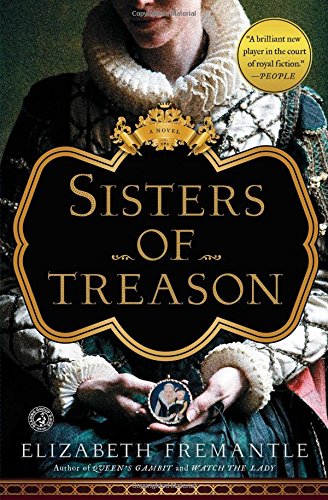
Sisters of Treason: A Novel, by Elizabeth Fremantle

Best PDF Ebook Online Sisters of Treason: A Novel, by Elizabeth Fremantle
From the author People called “a must-read for Philippa Gregory fans,” a “terrifically entertaining” (The Sunday Times, London) novel about two sisters who must survive life in the Tudor court after the execution of their sister Lady Jane Grey who was queen for just nine days.Early in Mary Tudor’s turbulent reign, Lady Catherine and Lady Mary Grey are reeling after the brutal death of their elder seventeen-year-old sister, and the succession is by no means stable. In Sisters of Treason, Elizabeth Fremantle brings these young women and their perilous times to vivid life. Neither sister is well suited to a dangerous career at court. Flirtatious Lady Catherine, thought to be the true heir, cannot control her compulsion to love and be loved. Her sister, clever Lady Mary, has a crooked spine and a tiny stature in an age when physical perfection equates to goodness—and both girls have inherited the Tudor blood that is more curse than blessing. For either girl to marry without royal permission would be a potentially fatal political act. It is the royal portrait painter, Levina Teerlinc, who helps the girls survive these troubled times. She becomes their mentor and confidante, but when the Queen’s sister, the hot-headed Elizabeth Tudor, inherits the crown, life at court becomes increasingly treacherous for the surviving Grey sisters. Ultimately each young woman must decide how far she will go to defy her Queen, risk her life, and find the safety and love she longs for. “An enthralling story of love and tyranny, Sisters of Treason brings the Tudor Courts to life again, in all their romance and horror” (Leanda de Lisle).
Sisters of Treason: A Novel, by Elizabeth Fremantle- Amazon Sales Rank: #435393 in Books
- Brand: Fremantle, Elizabeth
- Published on: 2015-06-30
- Released on: 2015-06-30
- Original language: English
- Number of items: 1
- Dimensions: 8.37" h x 1.20" w x 5.50" l, .0 pounds
- Binding: Paperback
- 480 pages
Review "If you love historic royal fiction (with a dash of romance) you'll want to pick up Elizabeth Fremantle's Sisters of Treason, about two sisters reeling after the execution of their teenage sister, having been on the throne for just days." (PopSugar)“Fremantle manages to combine pacey storytelling with superb background…terrifically entertaining.” (The Sunday Times)“Tudor fiction fans will enjoy Fremantle’s fresh take, marked by solid writing and absorbing detail, on a rather well-told tale.” (Library Journal)"Inventive, finely detailed." (Kirkus Reviews)“An enthralling story of love and tyranny, Sisters of Treason brings the Tudor Courts to life again, in all their romance and horror.” (Leanda de Lisle, author of Tudor: The Family Story)“Passionate, compassionate, intricate, sharp, clever and utterly compelling.” (M.C Scott, author of Rome: The Art of War)“Fremantle’s story is vivid and tense, rich in all the drama that defined the Tudor Era, particularly the question of its future.” (AreCafe.com)“Sisters of Treason is thrilling historical fiction… Well-paced and highly entertaining...nearly impossible to put down.” (CompassBooksRatings.com)"Fantastic...engrossing...Elizabeth Fremantle does a superb job, giving us a rich, psychological dimension to all the characters in this novel...displays the hidden, rich lives of women...which are sometimes...left understated in the history books." (A Bibliophile's Reverie)
About the Author Elizabeth Fremantle is the author of Sisters of Treason, Queen’s Gambit, and Watch the Lady, and has contributed to Vogue, The Wall Street Journal, Vanity Fair, The Sunday Times (London), and other publications. She has also reviewed fiction for The Sunday Express. She lives in London, England.
Excerpt. © Reprinted by permission. All rights reserved. Sisters of Treason
Prologue
February 1554 The Tower of London Levina Frances is shaking. Levina takes her arm, tucking it firmly into the crook of her elbow. A bitter wind hisses through the naked branches of the trees and smacks at the women’s clothes, lifting their hoods so the ties cut into their throats. The winter sky is blotched gray, like the inside of an oyster shell, and the White Tower is a dark shape against it. A hushed collection of people shuffles about beside the scaffold, rubbing hands and stamping feet to keep warm. A couple of men trundle past pulling a cart, but Levina does not really see for she is gazing up towards a window in a building across the yard, where she thinks she can see the outline of a figure. “Oh Lord!” murmurs Frances, slapping a hand over her mouth. “Guildford.” Levina looks, understanding instantly. In the cart is a bloody bundle; it is the body of Guildford Dudley. Frances’s breath is shallow and fast, her face pallid, not white as one might imagine, but green. Levina takes her by her shoulders, narrow as a girl’s, facing her, holding her eyes with a steady look, saying, “Breathe deeply, Frances, breathe deeply,” doing so herself, in the hope that Frances will mimic her slow inhalations. She cannot imagine what it must be for a mother to watch her seventeen-year-old daughter die and be powerless to stop it. “I cannot understand why Mary—” She stops to correct herself, “why the Queen would not let us see her . . . Say good-bye.” Her eyes are bloodshot. “Fear has made her ruthless,” Levina says. “She must fear plots everywhere, even between a mother and her condemned daughter.” She reaches down to her greyhound, Hero, stroking the peaked landscape of his spine, feeling the reassuring press of his muzzle into her skirts. Levina remembers painting Jane Grey in her queen’s regalia, not even a year ago. She was mesmerized by the intensity of the girl’s gaze, those widely set, dark eyes flecked with chestnut, her long neck and delicate hands, all somehow conspiring to give the impression of both strength and fragility. “Painted” is perhaps not quite the word, for she had barely the chance to prick the cartoon and pounce the charcoal dust through onto the panel before Mary Tudor arrived in London with an army to pull the throne out from under her young cousin, who will meet her death today on this scaffold. It was Frances Grey who helped Levina break up that panel and throw it on the fire, along with the cartoon. The wheel of fortune turns fast in England these days Over her shoulder Levina notices a gathering of Catholic churchmen arrive; Bonner, the Bishop of London, is among them, fat and smooth, like a grotesque baby. Levina knows him well enough from her own parish; he has a reputation for brutality. There is a supercilious smile pasted on his face; pleased to see a young girl lose her head—sees it as a triumph, does he? Levina would love to slap that smile away; she can imagine the ruddy mark it would leave on his cheek, the satisfying smart on her palm. “Bonner,” she whispers to Frances. “Don’t turn. If he meets your eye, he may try and greet you.” She nods and swallows and Levina guides her away, farther from the men so she is less likely to have to confront any of them. Not many have come to see a girl who was queen for a matter of days die; not the hundreds, it is said, that came to jeer at Anne Boleyn—the one whose death started the fashion for decapitating queens. No one will heckle today, everyone is too horrified about this, except Bonner and his lot, and even they are not so crass as to overtly assert their pleasure. She thinks of the Queen at the palace, imagining how she would paint her. She must be with her closest women; they are likely at prayer. But in Levina’s mind the Queen is alone in the empty expanse of her watching chamber, and has just been told that one of her favorite young cousins has been murdered at her bidding. The look on her face is not one of carefully suppressed triumph like Bonner’s, nor is it one of fear, though it should be, for after all it is only days since a rebel army sought, and failed, to depose her and put her sister Elizabeth on the throne—no, her pinched face is blank as a sheet of new vellum, eyes dead, detached, suggesting that the killing has only just begun. “This is her father’s doing,” Frances mutters. “I cannot help but blame him, Veena . . . His mindless ambition.” She spits the words out as if they taste foul. Levina glances once more towards that tower window, wondering if the figure there, watching, is Frances’s husband, Jane’s father, Henry Grey, who also awaits a traitor’s fate. The cart has come to a halt beside a low building some distance from them. Its driver leans down to chat with a man, seeming just to pass the time of day, as if there were not a butchered boy in the back. “It is a house of cards, Veena, a house of cards.” “Frances, don’t,” she says, putting an arm round her friend’s shoulder. “You will drive yourself mad.” “And the Queen, where is her mercy? We are her close kin. Elle est ma première cousine; on était presque élevée ensemble.” Levina grips her more tightly, without speaking. Frances often forgets that she doesn’t understand much French. Levina has never asked her why, given she is English to the bone, she favors that language in spite of its being quite out of fashion at court. She assumes it has something to do with her Tudor mother, who was a French king’s widow. A man approaches, his cape blowing out in the wind, giving him the look of a bat. He stops before the two women with a polite bow, removing his cap, which he holds crumpled in both hands. “My lady,” he says, with a click of his heels. “Sir John Brydges, Lieutenant of the Tower.” There is a sternness about him, he is a guardsman Levina supposes; but then his formality drops. “My heart goes to you, my lady. My wife and I . . .” He falters, his voice quivering slightly. “We have become fond of your daughter these last months. She is a remarkable girl.” Frances looks like a woman drowning and seems unable to form a response, but takes one of his hands and nods slowly. “She is to be brought down now.” He drops his voice to little more than a whisper. “I can give you a moment with her. She refused to see her husband before he—” He means “before he died,” but has the tact not to say it. “She has asked for you.” “Take me to her,” Frances manages to mumble. “The utmost discretion is required. We do not want to attract any attention.” It is clear he refers to Bonner and the pack of Catholic hounds. “I shall leave now. You follow me in a few moments. Take the back entrance of the building yonder.” He waves an arm towards a diminutive house tucked under the Bell Tower. “We shall await you there.” He turns to leave and the women follow on after a time, giving the impression of seeking shelter from the wind. The door is low and they have to duck under the lintel, closing it behind them, finding themselves in darkness. It takes a moment for their eyes to adjust. There is a further door opposite, and Levina wonders whether they should enter, feeling that she must take the initiative, as Frances seems incapable of anything. As she moves towards it, the door creaks open and Brydges peeps round. Seeing the two women, he opens it further and there is Jane, head to toe in black, holding a pair of books in her tiny white hands. She wears a smile and says, “Maman!” as if it is any ordinary day. “Chérie!” exclaims Frances, and they fall into one another’s arms, Frances whispering, “Ma petite chérie,” over and over again. The French gives the moment a dramatic quality, as if it were a scene from a pageant. It strikes Levina, too, that Jane seems more the mother than Frances; she is so very poised, so very in control of herself. Levina steps to one side, half turning away for decency’s sake, not that they seem to even remember she is there. “I am sorry, chérie . . . so, so very sorry.” “I know, Maman.” Jane breaks away from the embrace, gathering herself, straightening her dress. “Ne vous inquiétez pas. God has singled me out for this. I go willingly to Him, as an envoy for the new faith.” The girl Levina remembers drawing just a few months ago is all gone; this is a woman before them, standing straight, polished, calm. It strikes her, with a painful twist of irony, that Jane Grey would have made a far better, wiser queen than Mary Tudor will ever be. If the people had seen her as she is now, they would never have thought to raise an army to depose her and put her Catholic cousin on the throne. “If I had but a salt-spoon’s measure of your courage,” murmurs Frances. “It is time, Maman,” Jane says, glancing towards Brydges, who nods solemnly. Then she passes one of her books to Frances, whispering the words, “There is a letter for you within, and one for Katherine; hers is written in the book itself, for she is sure to lose it otherwise—my sister never was one for holding on to things.” She laughs, a tinkling sound that even raises something approximating a smile from Frances, and for an instant they look so like one another that Levina finds herself smiling too. But Jane’s laughter drops away as quickly as it came, and she adds, “Protect Katherine, Maman. I fear she will not stand it so well.” Levina is struck by the horrible inevitability of Jane’s younger sister becoming the new focus of reformist plots—someone will surely seek to depose Catholic Mary Tudor and put one of their own faith on the throne—like a line of dominoes, set to fall one after the other. “And Mary? What shall I tell her from you?” Frances refers to the youngest of her three daughters. “Mary is clever. She has no need of my advice.” Then, with a flutter of her birdlike hand, she is gone and the inner door is closed behind her. Frances, gripping the book, puts out her free hand to the wall to steady herself. “Come,” Levina says, grasping her upper arm, leading her out, back into the wind and the waiting scaffold where a few more have gathered, though still it could not be called a crowd. They appear then, Brydges first, ashen-faced, after him the Catholic man who was unable to convert her, both with their eyes cast down. And there she is, bold and straight, her psalter held open before her, lips moving in prayer, flanked by her two women who are barely holding back their tears. The scene engraves itself on Levina’s mind: the jet black of Jane’s dress against the drab stone of the Tower behind; the way the wind lifts the edges of everything, suggesting flight; the almost weeping ladies, their gowns lurid splashes of color; the exact pallor of Brydges’s skin; the look of solemn serenity on Jane’s face. She is compelled to render this in paint. A great gust of wind sends a branch of a nearby tree crashing to the ground, close enough to Bonner and his acolytes to make them jump back and scatter. She wonders how many are wishing, as she is, that it had struck a softer target. Jane Grey mounts the few steps and stands before the onlookers to speak. She is close enough that were Levina to reach up she could touch the edge of her skirts, but the wind takes the girl’s words and only snippets reach them. “I do wash my hands thereof in innocency . . .” She makes the action, rubbing those small hands together. “I die a true Christian woman and that I do look to be saved by no other mean, but only by the mercy of God.” She is cleaving to the new faith to the last, and Levina wishes that she had a pinch of this girl’s unassailable fortitude. When Jane is done she shrugs off her gown, handing it to her women, and unties her hood. As she pulls it away from her head her hair looses itself from its ribbons and flies up, beautifully, as if it will lift her to the heavens. She turns to the headsman. Levina supposes he is begging her forgiveness; she cannot hear their exchange. But his face is utterly stricken—even the executioner is horrified by this, then. It is only Jane who seems entirely composed. Jane then takes the blindfold from one of her ladies and, refusing help with a small shake of her head, wraps it about her eyes, then drops to her knees, pressing her hands together swiftly and mouthing out a prayer. All of a sudden, the prayer finished, her composure seems to fall away as she flounders blindly, reaching for the block, unable to find it in her sightless state. Levina is reminded of a newborn animal, eyes still welded shut, seeking, in desperation, its source of succor. Everybody watches her but nobody moves to help. All are paralyzed with horror at the sight of this young girl groping for something solid in a dark world. There is barely a sound; even the wind has dropped to a deathly hush, as if Heaven holds its breath. Still Jane seeks for the block, arms flailing now in space. Levina can bear it no longer and scrambles up onto the platform, guiding those cold little hands, a child’s hands really, to the place; tears sting at her eyelids as she clambers back down to Frances, who is blanched with shock. Then it is done, in a flash of steel and a brilliant crimson spurt. Frances collapses into Levina, who holds her upright and covers her eyes for her as the executioner holds up Jane Grey’s head by the hair, to prove his job is done. Levina doesn’t know why she looks up then, but what she sees when she does is not reality; it is a scene conjured in her imagination: the Queen in the place of that headsman, her fingers twisted through the bloody hair of her young cousin, her face placid, oblivious to the spill of gore over her dress. The gathering is silent, save for the desperate gusting wind, which has started up again as if in protest. Levina steps to the side and vomits into the gutter.
Where to Download Sisters of Treason: A Novel, by Elizabeth Fremantle
Most helpful customer reviews
39 of 39 people found the following review helpful. Sisters of Treason is your next read if you delight in a story where history comes alive before your eyes By Elspeth G. Perkin Multifaceted viewpoints of the bloody game for power that consumed 16th-century England create this gripping tale of poisonous fate, consequences of choices and battles for survival. The reader follows the keyhole views of Mary and Katherine Grey who live with the daily fear of being sent to the executioner's block as their brother-in-law, older sister and father before them for treason. An outsider's view is also supplied by following Levina Teerlinc a talented artist who paints miniature portraits of the English court, forms a unique bound with the Grey family and allows the reader a commoner's view of the shifting decrees and opinions of the widespread public. These three women must somehow transverse the narrow razor edge of favor with the Grey's fickle ordained cousins who with one word and flourish of a sharpened quill pen could sentence all three to the dreaded Tower, banishment or send them to their grisly deaths at the hand of the executioner. With these looming threats the sisters must make choices that will ultimately affect everyone involved but what are the right choices? Katherine Grey wants to be loved, her younger sister Mary wants her freedom from the gilded cage of palace life and Levina Teerlinc wants to keep her family safe and untouched by the danger that surrounds them. This is the ultimate game of survival where it seems no one can be trusted, there may not be any easy solutions and the simple fact that if a drop of Tudor blood flows in a man, woman, or child in 16th-century England they could be next to kneel to the axe.I was pleasantly surprised with Sisters of Treason. I will be honest, I was envisioning only a brushed over flimsy history lesson with weak characters and anachronistic language, terminology and actions. While I did find a few modish scenes in the beginning that did cause a brief interruption the second part to the novel had me barely remembering those few scenes and overall applauding such a creative and historically polished work. The depth the novel went with the characterizations of the central figures, minor characters and the smooth transition of the shifting narrations and views never confused this reader and I knew exactly who I was following, listening to, or who was in the room in each chapter so any curious reader who may not be familiar with the multiple names from history be assured that Ms. Fremantle has spun every Mary, Jane, Elizabeth, Kate, John, Henry, Thomas and Edward into a vibrant fleshed out entity that really brings history to life for her audience. Details are also shared with the reader that leaves a clear distinction what era we are experiencing and even explains the conflicting religious turmoil and court politics in a clear entertaining fashion. I did find the action a little slow in the beginning but then the second part made up for this when the risks escalate and well you will just have to wait and see. Overall, this was an unexpected engaging read that I recommend to those who are just finding a fascination with 16th-century English history, delight in a story where history comes alive before their eyes or those who are familiar with the maelstrom of events and are curious to further explore the other side of the Tudor family tree.*I would like to thank Simon & Schuster and NetGalley for the opportunity to read and enjoy Sisters of Treason
20 of 20 people found the following review helpful. An Exceptional story of the noble Grey Sisters By Great Historicals Sisters of Treason by Elizabeth Freemantle is set in 16th century England during a time of political upheaval. At the heart of the story are three women, the sisters Mary and Catherine Grey, and painter Levina Teerlinc. Through their collective points of view, the story unfolds. The main story plot are the struggles of the two sisters to avoid court intrigue and politics. Still reeling after the beheading of their Sister, Lady Jane Grey, Catherine and Mary find themselves pulled into court intrigue despite their attempts to keep their distance, where a single swipe of the quill or a few angry words, or even worse, the truth, will spill out and see them imprisoned in the Tower or executed.Although I had not read the previous book, The Queen's Gambit, it made no difference – this story definitely stands alone. At first I was a little apprehensive because of the over-abundance of Tudor novels on the market currently, and I am getting a little weary of them, but I have to admit I was pleasantly surprised. The author has taken us deep into the viewpoint of two lesser known women in England’s history. So for that aspect alone, I found this book unique and refreshing. Brava Elizabeth Freemantle for bringing to life women other than those married to Henry VIII!I did not expect to become so involved in this story, but I did. Lots of detail, spectacular writing, and an engaging plot kept me involved right to the very last page. Definitely a book not to overlook, especially if you are a fan of English history! I'm definitely looking forward to reading The Queen's Gambit!
23 of 24 people found the following review helpful. Historical fiction at its best... By jaffareadstoo In Sisters of Treason, the author weaves together historical fact and fiction and brings to life the story of the enigmatic Grey sisters, who along with their more tragic sister, Jane, were forced to live within the shadow of the Tudor crown, and who were destined to leave their own mark on Tudor history. In the aftermath of the execution of Lady Jane Grey, Mary Tudor’s court is a scheming hive of plot, counterplot and malice, and for the Grey sisters keeping close to the Queen is not a comfortable arrangement. However, keeping your enemies close is a theme which will reverberate throughout the reigns of both Tudor queens.Told in the combined voices of sisters Katherine and Mary Grey and also of Levina Teerlinc who is a court painter we are given an insight into just what life was like at the centre of Tudor politics and of how both Katherine and Mary were always kept within a hair’s breadth of the Tudor crown. Both sisters lived a tragic life and this is sensitively and emotionally explored in a novel which covers both the reigns of ‘bloody Mary’ and her more charismatic, but no less terrifying sister, Elizabeth.There is no doubt that this new voice in historical fiction really knows how to bring the royal court alive in a believable and realistic way. Beautifully written and meticulously researched Sisters of Treason abounds with danger and political skulduggery, and offers a unique insight into a royal court where being a potential Tudor heir and female was fraught with danger, and which ultimately would have no happy ending for any of the trio of Grey sisters.
See all 130 customer reviews... Sisters of Treason: A Novel, by Elizabeth FremantleSisters of Treason: A Novel, by Elizabeth Fremantle PDF
Sisters of Treason: A Novel, by Elizabeth Fremantle iBooks
Sisters of Treason: A Novel, by Elizabeth Fremantle ePub
Sisters of Treason: A Novel, by Elizabeth Fremantle rtf
Sisters of Treason: A Novel, by Elizabeth Fremantle AZW
Sisters of Treason: A Novel, by Elizabeth Fremantle Kindle

Tidak ada komentar:
Posting Komentar