I Saw a Man: A Novel, by Owen Sheers
Yet right here, we will show you astonishing thing to be able always read guide I Saw A Man: A Novel, By Owen Sheers wherever and also whenever you occur as well as time. Guide I Saw A Man: A Novel, By Owen Sheers by only could help you to understand having guide to review every single time. It won't obligate you to always bring the thick e-book any place you go. You could just keep them on the device or on soft data in your computer to constantly read the enclosure during that time.
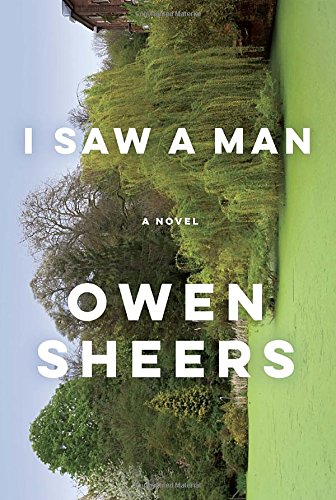
I Saw a Man: A Novel, by Owen Sheers

Read Ebook I Saw a Man: A Novel, by Owen Sheers
An utterly stunning novel of love, loss, the insidious nature of secrets, and the transformative power of words. I Saw a Man fulfills the promise of Owen Sheers's acclaimed novel, Resistance. When journalist Caroline Marshall dies while on assignment in Pakistan, her grief-stricken husband, Michael, leaves their cottage in Wales and returns to London. He quickly develops a friendship with his neighbors, Josh and Samantha Nelson, and their two young daughters. Michael’s becoming close with the family marks the beginning of a long healing process. But Michael's period of recovery comes to an abrupt end when a terrible accident brings the burden of a shattering secret into his life. How will Michael bear the agonizing weight of guilt as he navigates persistent doubts on the path to attempted redemption? The answer, revealed poignantly in Sheers' masterly prose, is eloquent, resonant, and completely unforgettable.
I Saw a Man: A Novel, by Owen Sheers - Amazon Sales Rank: #301080 in Books
- Published on: 2015-06-09
- Released on: 2015-06-09
- Format: Deckle Edge
- Original language: English
- Number of items: 1
- Dimensions: 9.50" h x 1.10" w x 7.00" l, 1.25 pounds
- Binding: Hardcover
- 272 pages
I Saw a Man: A Novel, by Owen Sheers Review "The suspense is almost physically frustrating ... Mr. Sheers knows when to let the line out and when to reel it in ... an extended examination of grief, responsibility, guilt and redemption." —The New York Times"[I]mmensely pleasurable ... From the start you feel Sheers knows exactly what he is doing ... This is an exemplary thriller, clever, classy, slick — and always one step ahead of the reader." —The Sunday Times [UK] "[A] gripping and stylish thriller ... Moving smoothly back and forth in time, Sheers’s narrative is one of finely tuned suspense that erupts into visceral drama. An award-winning poet, his honed prose is full of images of photographic sharpness that leap from the page. But this is also a novel driven by ideas, which, in keeping with its central theme, spins out across the world. As the connections between its characters become clear, and they struggle with the ripple effect of their tragic actions, so pressing questions about art and war, culpability and atonement are raised.The manner in which they’re ultimately resolved is bold and satisfying." —Daily Mail [UK] "[D]eeply poignant ... A profound meditation on memory and mourning, Sheers’s novel captures the 'unbearably fragile' nature of joy." —Observer [UK] "[E]xtraordinarily tense and powerful, and beautifully written." —Mail on Sunday [UK]"Sheers’ thriller is driven as much by subtle ideas as suspense ... [P]sychologically astute ... Sheers writes carefully about careless people and the results present the reader with a reflective window on to self-deception." —Independent [UK] "A powerful moral thriller ... Sheers skilfully drip-feeds the reader his characters' secrets and lies, including a remarkable sequence leading up to the book's central, shocking moment of revelation. I Saw a Man's ending is similarly bravura, elegantly throwing into new light much of what has gone before." —Literary Review [UK]"The stately prose and cool omniscience in I Saw A Man provide the perfect cover for the roiling sea of emotions under its surface. One of the book’s great strengths is how difficult it becomes to tell the good guys from the bad as the story progresses ... and the moral landscape grows ever murkier. Settled domesticity gives way to a quietly charged, Dostoyevskian psychic chaos whose outcomes are thrillingly uncertain." —Matthew Thomas, New York Times bestselling author of We Are Not Ourselves
About the Author Owen Sheers is a poet, author and playwright. His first novel, Resistance, was translated into ten languages and adapted into a film. The Dust Diaries, his Zimbabwean nonfiction narrative, won the Welsh Book of the Year Award. His awards for poetry and drama include the Somerset Maugham Award for Skirrid Hill, the Hay Festival Medal for Poetry and Welsh Book of the Year Award for Pink Mist, and the Amnesty International Freedom of Expression Award for his play The Two Worlds of Charlie F. He lives in Wales with his wife and daughter. He has been a New York Public Library Cullman Fellow and is currently Professor in Creativity at Swansea University.
Excerpt. © Reprinted by permission. All rights reserved. OneThe event that changed all of their lives happened on a Saturday afternoon in June, just minutes after Michael Turner—thinking the Nelsons’ house was empty—stepped through their back door. Although it was early in the month, London was blistered under a heat wave. All along South Hill Drive windows hung open, the cars parked on either side hot to the touch, their seams ticking in the sun. A morning breeze had ebbed, leaving the sycamores lining the street motionless. The oaks and beeches on the surrounding Heath were also still. The heat wave was only a week old, but already the taller grass beyond the shade of these trees was bleaching blond.Michael had found the Nelsons’ back door unlocked and ajar. Resting his forearm against its frame, he’d leant in to the gap and called out for his neighbours.“Josh? Samantha?”There was no reply. The house absorbed his voice without an echo. He looked down at his old pair of deck shoes, their soles thick with freshly watered soil. He’d been gardening since lunchtime and had come straight over to the Nelsons’ without washing. His knees, showing under his shorts, were also smudged with dirt.Hooking the heel of his left shoe under the toe of his right, Michael pulled it off. As he did the same with the other, he listened for signs of life inside the house. Again, there was nothing. He looked at his watch—it was twenty past three. He had a fencing lesson on the other side of the Heath at four. It would take him at least half an hour to walk there. He went to push the door wider, but on seeing the soil on his hands, nudged it open with his elbow instead, then stepped inside.The kitchen was cool and dark, and Michael had to pause for a moment to allow the sunlight to dissolve from his vision. Behind him his neighbours’ garden sloped away between a pear tree and a shrunken herbaceous border. The parched lawn tapered to a wooden fence shot through with reeds. Beyond this fence a weeping willow bowed to one of the ponds on the Heath. In the last month these ponds had grown a skin of green duckweed, surprising in its brightness. Just a few minutes earlier, while resting on his heels, Michael had watched a coot as she’d cut her way through it on the far side, her nun’s head pumping her forward, a cover of chicks crisscrossing over her wake.Standing in the kitchen, Michael listened once more. He’d never known Josh and Samantha to leave their house unlocked and not be home. He knew Samantha was away with her sister, Martha, for the weekend. But Josh and the girls, he’d thought, had stayed. The house, though, was silent. The only sounds Michael could hear were from the Heath at his back: a dog barking, the chatter of distant picnics, the splash of a diver from the swimming pond beyond the walkway. Closer, in a nearby garden, he heard a sprinkler begin chopping at the afternoon. Such was the stillness of the house that from where he stood in the kitchen these sounds already had the texture of memory, as if he’d crossed a threshold in time, not of a home.Perhaps Josh had left a note? Michael went to the fridge to look. It was a broad-shouldered American model in brushed steel, an icemaker embedded in its door. A desk’s worth of papers jostled for position across its surface, pinned under a collection of Rothko fridge magnets. Michael scanned the takeaway menus, shopping lists, school notes, but none of them gave any clue as to where Josh might be. He turned from the fridge and looked around the rest of the room, hoping to find something that might explain why the back door was open but no one at home.Like the rest of their house, Samantha and Josh’s kitchen was solid and generous. At its centre the slatted shadow of a venetian blind fell across an island work surface. Around this were an oven, two hobs and a chef’s array of utensils. On the other side of a breakfast bar, potted plants fringed a sagging sofa and two armchairs in the conservatory, ochre blinds drawn over its glass. Back within the kitchen itself, an oval dining table occupied the far end of the room, and there, hanging above it, were the Nelsons.The portrait was in black-and-white, a studio shot taken when Rachel was still a toddler and Lucy a baby. The two children, wearing matching white dresses, sat on their parents’ laps. Samantha laughed down at her daughters, her eyes averted from the camera. Josh, however, smiled directly into its lens, his jaw more angular than that of the man Michael knew now. His hair, too, was darker, cut in the same boyish style he still wore, but without the dustings of grey spreading at his temples.Michael met the gaze of this younger Josh for a moment. He wondered if he should call him and let him know about the open back door. But his phone was in his flat, and Michael didn’t know either Josh or Samantha’s numbers. And perhaps he shouldn’t worry them, anyway? From what he could tell there were no signs of disturbance. The kitchen looked just as it always did.Michael had known the Nelsons for only seven months by then, but their friendship, once made, had been quick to gather momentum. Over the last few weeks it had felt as if he’d eaten at their table more often than at his own next door. The path that led from their lawn through a break in the hedge to the communal garden of his own block of flats had been indiscernible when he’d first moved in. But now there was already the faint tracing of a track, worn by his feet when he dropped by in the evenings and those of Samantha and the girls when they called for him on the weekends. As a family, the Nelsons had become a settling presence in his life, a vital ballast against all that had gone before. Which is why Michael could be so sure the kitchen hadn’t been searched or disturbed. It was the room in which he’d spent the most time with them, where they’d eaten and drunk and where so much of his recent healing had happened. The room where for the first time since he’d lost Caroline he’d learnt, with the help of Josh and Samantha, to remember not just her absence, but also her.Looking past the family portrait, Michael glanced over the chairs and sideboards in the conservatory. He should probably check the rest of the house, too. This is what he told himself as he went over to the phone and browsed the Post-it notes scattered around its handset. Samantha and Josh wouldn’t want him to leave without doing so. But he’d have to be quick. He’d come round only to retrieve a screwdriver he’d lent Josh a few nights before. He needed it to fix a blade for his lesson. Once he’d found it and had checked the other rooms, he’d be gone.Michael looked at his watch again. It was already almost twenty-five past three. If anything looked amiss he could always call Josh as he walked to his lesson over the Heath. Wherever he was, Michael figured, he and the girls couldn’t be too far from the house. Turning from the phone and its scribbled notes, Michael walked towards the door leading into the hallway. As he crossed the kitchen, its terra-cotta tiles cool against his feet, his damp socks left a trail of moist footprints, slow-shrinking behind him as if a wind were covering his tracks.TwoIt was Josh whom Michael had first met, on the same night he’d moved onto South Hill Drive seven months earlier. Michael had never thought he’d live in London again. But when his wife, Caroline, hadn’t returned from what should have been a two-week job in Pakistan, he’d eventually decided to sell their cottage in Wales and move back to the capital.Coed y Bryn was an old Welsh longhouse, a low-ceilinged cottage and barn built into an isolated hillside outside Chepstow. The nearest other building was a rural chapel, used only for weddings and funerals. Woods and sky filled the views from its windows. It was not, Michael was told by his friends, a place to be alone. With Caroline gone, they’d said, he needed people, distraction. Eventually one of her work colleagues, Peter, had offered him a flat to rent in a fifties block overlooking Hampstead Heath. When Peter sent through the details, Michael didn’t open the email for days. But then one night, after another long day on his own, he’d uncorked a bottle of red and sat down with his laptop beside the fire. Opening his browser, he’d clicked on Peter’s message and looked through its attachments.The first photograph was of a pair of wide windows, their frames filled with trees and the undulations of the Heath. As an autumn wind buffeted the back of the cottage, the fire crackling beside him, Michael scrolled through the other images—a broad street of Georgian town houses, occasionally interrupted by modern blocks; two sparsely furnished bedrooms; a living area, the carpet stained and worn; an outdated galley kitchen in magnolia and pine.It was a flat of many lives. Many people had stood at those windows and lain on those beds. With Caroline gone, Michael needed to start again. But he also did not want to start again. So he’d replied to Peter and said yes. Partly because the flat looked more like a holding pattern than a new beginning. But also because he knew Peter was only doing what Caroline had asked of him. Trying to take care of her husband, to help. Michael hoped perhaps once he was settled back in London, Peter might feel less diligent about his duty; that, having housed Michael, he might feel able to leave him alone.―When Michael and Caroline had moved from London to Wales they’d hired the removal company’s largest lorry to bring their combined belongings to Coed y Bryn. They’d both led independent, largely single lives into their thirties and although neither had been rooted for long, both had been keepers rather than leavers. Michael’s books and belongings were scattered in storage lockers and friends’ spare rooms on both sides of the Atlantic, while the detritus of his teenage years was still in the attic of his late parents’ house in Cornwall. Caroline, despite her nomadic lifestyle, had fostered a magpie’s attraction for artefacts, shoes, and furniture. Between them, through a decade’s succession of apartments and flats, they’d accumulated enough belongings to fill a house twice the size of the cottage.The addresses that had led Caroline to Coed y Bryn were a paper trail of the regions she’d covered as a foreign correspondent for a U.S. satellite station. Since leaving university she’d had homes on several continents. Often they were no more than places to pass through. A series of studios, company flats, rooms in shared houses in Cape Town, Nairobi, Sydney, Berlin, and Beirut. In 2001, still in her twenties, she’d been embedded with an Uzbek division of the Northern Alliance as they’d fought their way towards Kabul. In 2003 she’d celebrated her thirtieth birthday with a bottle of Jack Daniel’s and an American marine in the back of an armoured car on the outskirts of Baghdad. Until she met Michael, her life had been a sequence of erratic excitements. Airports relaxed her, as if transit was her natural domain. Arrivals and departures were her strongest memories, bracketing, as they did, the chapters of her life. For Caroline, giving herself to the rhythm of events was a kind of freedom. Being sent on a story at short notice, having no say in where she went, or when. And it was familiar, too. Born in Cape Town, brought up in Melbourne, university in Boston. She’d always been the newcomer, the outsider, her belongings left in storage while she moved on again.As Caroline grew into her job through her twenties she began to pride herself on her ability for assimilation, on her detachment from attachment. When she changed planes on a grey day in Amsterdam her tanned skin spoke of rocky deserts, souks, and bazaars. In clubs and bars men sensed her transience like a pheromone. She would soon be gone. This is what she tried to communicate in the directness of her stare, which somehow gave her petite frame presence. She rarely wore makeup and her blonde hair was seldom as sleekly groomed as that of the other women perched along a hotel bar. Sometimes, if she’d just landed, a hint of stale sweat lingered on her clothes.But still they came to her. Men who worked in offices, whose bodies remained structured by suits, even when they no longer wore them. In cafés, crowded pubs, sometimes even on the street, they came to her, recognising her brevity, as if she were a comet they knew would trace their nights only once in a lifetime. She witnessed the aftermath of horrors. She saw what humans could do to one another. She lost friends. In Bosnia, Afghanistan, Lebanon, Sri Lanka, Iraq. One night in Kabul the body of her interpreter was found eyeless and tongueless on a sofa in his home. She grieved, and her family worried. But for Caroline these deaths, although felt, were another passing through. They and the grief in their wake were the price of life. She took them, like all the other leavings and lost friendships, in her stride.She was not always happy. As she edged into her thirties she recognised she was becoming cursory; how depths—of time, connection—had a tendency to unnerve her. But she was comfortable. Life, she felt, was an instrument, and the trick was to find the tune you could play on it. In this respect she considered herself lucky. She’d found her tune early, and she was playing it well.And then, one day, waking alone in a hotel room in Dubai, she’d felt differently. As if the same chain of experiences that had taught her the price of life had finally, on that morning, revealed its value, too. It was a lesson of omission. A learning from what she didn’t know, not from what she did. Her aunt had died the week before and she hadn’t travelled back to Australia for the funeral. Her mother had said it was fine, that everyone would understand. Caroline was never sure if it was this phone call that had been the catalyst. At the time she’d have said it wasn’t. But whatever the impetus, she’d wanted it to stop, to play a different tune. She’d wanted to wake up and know, straightaway, where she was. She’d wanted to be wanted, to be missed and needed, not merely understood.When she returned to Beirut from Dubai, Caroline applied for a transfer to the London office. London was on the other side of the world from her family in Melbourne, but she didn’t want home. And she didn’t want America, either. She wanted something older than both, so she opted for London. Her scattered acquaintances—cameramen, photojournalists, editors, reporters—all passed through the city at some point on their travels. And there, on London’s doorstep, was the rest of Europe too, as a fallback, a safety net for when the impulse rose in her, as she knew it would, and she needed to leave and arrive again.In contrast to Caroline’s movements across the globe, all Michael’s previous addresses, except for his childhood home and one apartment in Manhattan, had been in London. Having left Cornwall to study in the capital, he’d stayed on after graduation, joining the Evening Standard as an intern. Over the next five years of jobbing journalism—diary pieces, reviews, news features, and comment—Michael had steadily increased his word length and salary until, in his late twenties, fearing the ossification he’d detected in some of his older colleagues, he’d left the Standard and moved to Manhattan. He’d arrived in the city holding a journalist’s visa and equipped with a list of British editors who’d agreed to use him as a stringer, feeding their publications’ appetites for all things New York. Which is exactly what Michael did. But he hadn’t moved to America to follow the same path he’d been cutting in Britain. The distance he’d flown from London to New York had been about attempting another journey, too: from being a journalist, which he’d called himself ever since university, towards becoming an author.Michael’s first book, BrotherHoods, was the story of Nico and Raoul, two Dominican brothers from Inwood. A close portrait of their lives and world, the book was a narrative of thwarted ambition, of failure. For Michael it was the consequence of one, too. All through his first year in America, as he’d written reports on parties, observational pieces about the Super Bowl, travel articles on the Hudson Valley painters, Michael had harboured aspirations of becoming a novelist. But fiction had continued to elude him. For reasons he never fathomed, regardless of how many hours he spent at his desk, or in how many cafés he made notes, his imagination kept falling short at the border of the invented. The prose of the writers he admired—Salter, Balzac, Fitzgerald, Atwood—remained unattainable to him. He could register their effect when he read them, he could see how their novels and stories worked, how their moving parts fitted together. But like the engineer skilled at dismantling a plane’s engine, and yet unable to make it fly, Michael found his own words remained stubbornly grounded on the page.Michael had been convinced that New York would unlock the novel he’d failed to write in London. The Hudson gleaming magnesium of a morning; the taillight rivers on Lexington and Third; the city’s scale, at once intimate and grand. Manhattan already felt like a novel to him, as if all he’d have to do was take dictation from its streets. But he’d been wrong, which is why halfway through his second year of living in the city, in the wake of his failure with fiction, Michael started splicing the taste of it into his journalism instead.He began on his own doorstep, telling the story of Ali, the Armenian deli owner on the corner of his block, from his early-morning washing of the sidewalk to his midnight serving of condoms and chewing gum to coked-up SoHo models. When this piece was taken by The Atlantic, the editor asked him for another. So Michael moved his attention across the street to Marilia, the black mother of six who’d volunteered at the school crossing every morning and evening for the last twenty years. Through Marilia he’d gained an introduction into the school itself, where he’d found his next subject in its harrowed headmaster, shadowing him as he juggled the timetable, staff shortages, gun detection, and the demands of downtown parents.In researching these early stories, Michael found his Englishness opened doors for him. Not in institutions, but in people. There was, in all his subjects, an assumption of his integrity, drawn, he supposed, from associations with the BBC and films by Merchant Ivory. Combined with his natural manner—a calm patience laced with pressing curiosity—this cultural assumption allowed Michael to get close quickly. The people he interviewed trusted him, and in return he took their trust seriously, listening, recording, and taking notes as they talked; trying, as best as he could, to see the city through their eyes and feel it through their skin. With every story he took on, from the Central Park millionaire to the street-sleeper in the Bronx, Michael’s technique was immersive. His initial approach was time: the willingness to spend it, to be there and observe at even the most mundane of events until, despite his height and his accent, people began to forget his presence. He took to cutting hundreds of strips of white card, slender enough to fit into the inside pocket of his jacket. These, he found, were less obtrusive than a notebook and somehow less threatening, too, as if what he wrote on them wasn’t being recorded but merely jotted down and would, like any other scrap of paper, not be around for long.When, after months of such research, Michael felt he’d seen and heard enough—and it was always a feeling more than a knowing, a sense at the edges of his vision—he would leave his subjects’ lives as suddenly as he’d entered them. Taking their stories to his desk in his SoHo apartment, he’d immerse himself again, this time borrowing a novelistic style to disappear himself not just from his subjects’ lives, but also from the paragraphs he wrote about them. Even though he’d been there at their sides when the events he described happened—when the health inspector had seen a rat, when a kid attacked his maths teacher, when the millionaire’s dog was put down—in the finished published piece, Michael was never there. Just the characters remained, living their lives in third person through the hours of the city as if through the pages of a novel.His style became the antithesis of Gonzo journalism, an eradication of the writer in the writing. A disappearing act of saturation that was informed by the immersive nature of his research, but unfettered, too, by direct experience. So although he hadn’t been with them, Michael still described Ali waking in bed, Marilia singing in the shower, or the way the millionaire picked up his coffee at a morning meeting in Brazil. Such moments, although unseen by Michael, were written from what he’d learnt about his subjects at other times, in other places, upon not just what he knew was true, but also what he knew to be true. And this is what he’d hoped to achieve in those early New York stories: to find a way of using the freedoms of descriptive fiction to make the real lives he wrote about even more real.By the time Michael met Nico and Raoul he’d already begun looking for a subject through which to extend his writing from the pages of a magazine to the pages of a book. His desire to be an author hadn’t ebbed when he turned his back on a novel. With a clutch of respected pieces under his belt, and a cast of characters rendered through his immersive style, he was ready to try again.It was a policeman who’d put Michael in touch with Nico and Raoul. They were chatting outside the subway entrance on Broadway and 201st, a couple of take-out coffees steaming in their hands. It was February and smudged banks of snow still bordered the street. A flat winter light fell upon the storefronts. Men and women commuted to work in padded coats, wearing gloves and hats made for the mountains.Michael had travelled up to Inwood Hill Park that morning to see the site where Dutch traders first bought Manhattan, trading it from the Lenape Indians for a bag of trinkets worth twenty-four dollars. He’d only recently got to know the area north of Washington Heights, but its rawness had already got under his skin. The street theatre he’d discovered up there in the blocks off Inwood, Dyckman, and Broadway seemed more varied than that a hundred blocks south, more explicitly immigrant in its nature. Dominican men played dominoes outside O’Grady’s, The Gael Bar, The Old Brigade Pub, their walls still painted with shamrocks and IRA flags. Dark-windowed Yukons throbbed with Reggaeton at the stoplights. Puerto Rican drag queens drank cocktails in the salsa clubs, youths in thug nighties to their knees catcalling them from the corners. Farther off, in the park itself, rangy black kids surged between the hoops of basketball courts while Italian grandfathers watched Little League baseball, the hollow punts of a Mexican soccer game filtering up from the field below.Up there, above 200th, as he’d wandered the streets, Michael had felt he was within touching distance of Manhattan’s original desire. That whatever had driven those Dutch traders could still be tasted in the air, and unlike farther south in the city, where origin had been diluted by money, the island’s history of immigrant fuel was still on display. Each community he saw up there—the Dominicans, the Mexicans, the Irish, the African—seemed like the rings of a tree to him, ethnic watermarks of the island’s growth and change.Michael had got talking to the policeman at a coffee stand on the edge of the park. As they’d stirred in their sugars he’d asked him if he’d seen much change in the neighbourhood. The cop had laughed, shaking his head. “Oh, man,” he’d said. “Like you wouldn’t believe. Always changin’ up here.” They’d carried on talking as they’d strolled back towards his position at the subway entrance, Michael asking him if they got much trouble in the area. The cop had shrugged. “Some,” he’d said. “Mostly drugs, domestics.” Then, blowing on his coffee and stamping his feet, he’d told Michael about “a couple of punks,” two Dominican brothers who’d walked the length of Arden at four in the morning the night before, smashing the roadside window of every car. They’d left the street thick with alarm sirens, shirtless men shouting down at the sidewalks from tall apartment blocks swirling with car lights.As Michael had listened to the policeman describe the scene, he’d known immediately that he wanted to meet these boys, to find out who they were and why they’d landed on such a dramatic gesture of vandalism. He could already sense the hinterland behind the act, the stories emanating either side of the moment. He asked the policeman if he could meet them, these brothers. The cop raised his eyebrows, then sucked in the air through his teeth. He was Latino, broad-faced, with a full moustache. Michael pulled a fifty from his wallet and folded it twice. The policeman looked at it for a moment, then took it, shrugging again as he slipped it into his pocket, as if to say who was he to change the order of things? The following morning, in the office of their caseworker, Michael came eye-to-eye for the first time with the mistrusting stares of Nico and Raoul.For the next three years, sometimes as often as four times a week, Michael rode the A train north, immersing himself in the lives of the brothers. He began spending days at a time in the neighbourhood, staying at a guesthouse overlooking the wooded slopes of the park. From his top-floor bedroom he witnessed three autumns burnish its trees, among which the island’s original Lenape inhabitants had once made their cave dwellings. After a year of regularly checking him in, the owner supplied Michael with a desk, an old pine table notched and scarred with the cuttings of a kitchen knife. As he wrote up his notes in that room over those three falls, he witnessed the beginnings of gentrification take root in the area. Temporary Sunday market stalls evolved into permanent secondhand bookstores and cafés. Real estate offices moved in to occupy the premises of launderettes and cobblers. Young white couples began painting the exteriors of boarded-up houses. The bright colours of baby buggies and infant slings began dotting the pathways of the park on midweek afternoons.―At first, Michael’s ignorance of the brothers’ world in the streets and blocks west of this park was in his favour. He was an oddity: a tall English guy with a preppy haircut and an accent like from one of those British sitcoms. Handy to have around for a word to a social worker, or to touch for money. At times he was like a child to them, eager to learn, to harvest what they knew. But gradually, over the months and then the years, the scales of knowledge began to tip. After the apprenticeship of his magazine stories Michael had become adept at fitting himself to the lives of others. He never blended as such, but he did begin to stick. Among Nico and Raoul’s friends an appreciation for his stubbornness began to grow, and with it an acknowledgement that at least he wanted to listen, at least he wanted to try and see things from their point of view. In the goldfish bowl of Inwood’s street life he even began to be sought after, for advice or confidence. When Nico’s girlfriend got pregnant, Michael knew before he did. When Raoul ran for a rival dealer, he made Michael swear he’d never tell his brother. But his learning of their world was not always helpful. The police pressured him to give them leads, while the growing currency of his knowledge began to unnerve some of the older boys. Michael in the dark was one thing. Michael knowing too much was another thing altogether.The A train Michael took from SoHo up to Inwood followed the route of a Lenape hunting path that once traced the length of Manhattan’s forests and hills. One morning, as if he’d sensed a regeneration of that route’s purpose in Michael’s visits, Nico had called him on what he was doing. They were hanging out at their aunt’s apartment at the time, a studio high in the projects on Tenth Avenue.“El tronco’s a hunter, bro, I tellin’ you,” Nico said from the couch, speaking to Raoul but holding Michael’s eye. “Ain’t you, Mikey?” he continued, flicking a toothpick at him. “A lootin’ puta. Ain’t that you? Jus’ divin’ on us wrecks up here.”Michael laughed it off at the time, but for a few seconds he’d felt the air tighten between them. Not so much because of the threat in Nico’s voice, but because they all knew, whether intentionally or not, what he’d said was true.―Five years after first meeting Nico and Raoul in their case-worker’s office, Michael published BrotherHoods. He’d hoped the book would help the brothers, but it didn’t. HBO bought their life rights, for $25,000 each. They said they wanted to make a series. That they wanted to use their characters to build a long-running franchise. Box sets, advertisements on the sides of city buses. But nothing came of it. For a brief period the two of them basked in their newfound notoriety. But in the end the attention, the money, fanned their troubles more than doused them. As the book became the talked-of publication in Manhattan, Nico, its central character, began a sentence upstate for unlawful possession of a firearm. Raoul, in trouble with a dealer and without his brother’s protection, went to stay with a cousin in a one-bed in Pennsylvania. At the same time as they left the city, readers across Manhattan were being introduced to them. On subway trains, park benches, under duvets by the light of bedside lamps. Throughout New York and beyond—in Vermont, San Francisco, across the whole country—students on college lawns, commuters on trains, middle-aged couples on sofas were all embarking on the small tragedies of the brothers’ lives.Within weeks of publication Michael was receiving requests for interviews and to appear on talk shows. The New York Times, which had once run his pieces, now ran a profile on him instead. While he was researching and writing the book he’d neglected his personal life. Although he’d begun a couple of relationships, none of them had withstood the intensity of his research, nor his split existence at each end of the island. Increasingly his thoughts had been taken up with the brothers, and then with the writing of the book, with their lives in its pages. For five years he’d lived not just alongside Nico and Raoul, but also often through them, his own life becoming a shell of routine and observation. Now, though, on the other side of the book’s publication, women suddenly seemed available to him. He was thirty-five and single, and had been anointed by New York success. He started seeing his publicist. Then there’d been a Dominican journalist. Her interview with him had been challenging, even aggressive. But afterwards she’d invited him to dinner and they’d soon become a couple. When that had eventually ended, in the weeks following a reading at Columbia, Michael had gone home with not one but two of the students who’d been in the audience. He was aware of the clichés he was living, of how predictable it looked. But, he told himself, he wasn’t harming anyone, and wasn’t this, perhaps, part of what he’d earned during those three years of riding the A train the length of the island and then another two sitting alone at his desk? But above all Michael had known it wouldn’t last, and that’s why he’d given himself so willingly to his unlikely present, half expecting every day to wake and find it already transfigured into his past.For Nico and Raoul, BrotherHoods and its author became another disappointment in their lives, confirmation, as they’d always suspected, that the world was set against them. Michael tried to keep in touch with them, but with the appearance of the book their already diverging paths accelerated. While Nico served his time upstate and Raoul sat out his self-imposed exile in Pennsylvania, Michael’s publisher sent him on a national book tour. In a series of events across the country, despite his uneasiness in front of an audience, Michael began to discover a public persona—a diffident, dry humour that journalists and publicists billed as “British.” On the underlying issues of the book, though, he was never anything other than serious. The title, he’d explain to smatterings of readers in Ohio and Carolina, and then again to capacity auditoriums in Los Angeles and Austin, referred to us all. Not just to Nico and Raoul and the territories over which they and their peers fought, but also to the cheek-by-jowl neighbourhoods of Manhattan, of America, the world. Look about you, he’d told them. These people and their stories are happening under your nose. Their story is our story. No man, woman, or child is an island. Yes, the book was about two young Dominican men in Inwood, but it was also, through them, about us all, about our ability to live close, and yet so far from one another.The audiences had nodded, applauded, and afterwards asked for Michael’s signature on the title page of the book. When the paperback was published he donated a percentage of his royalties to education projects in Inwood and Washington Heights. But still, every time he said his sentence about neighbourhoods, about living close and far, he knew he himself was moving further away from the brothers who’d first lent him their lives. As he’d moved across the country on his tour, from hotel to airport to university, so Nico and Raoul had moved, too. Nico from cell to refectory to exercise yard and back to his cell again. Raoul from his cousin’s bedsit in Pennsylvania to another in Albany, to the room of a girl he’d met on the street, to the couch of her friend. Within just a few months the years Michael had shared with the brothers had become undone, unravelled by the publication of his story about their time together.―The last time Michael had heard Nico’s voice was on a collect call from his correctional facility upstate. Michael was finally moving back to London. His mother, widowed three years previously, was ill. BrotherHoods was due to be published in Britain. It was time for him to leave New York. If he stayed any longer he was worried it would never let him go. Although he’d found his voice in the city, and his story, to remain would have felt like treading water. New York had been about transition. Now that transition had been made, he wanted to move on, which, for a reason he couldn’t quite fathom, meant moving back.When the phone rang Michael had been on his knees among packing boxes and bubble wrap scattered across the floor of his Sullivan Street apartment. He’d accepted the call, but before Nico came on the line he’d flicked the phone to answering machine. He’d already spoken to Nico twice that week and he couldn’t take another stilted, awkward conversation. Not now, as he was preparing to leave. So instead he’d just listened, standing in his half-empty apartment, a fire truck’s siren insistent on Sixth, as the voice of a man he’d once known as a boy filled his living room.“Hey, Mikey?” Nico said. He sounded lost in a large space. His voice deep, but somehow shallow, too. “It’s me, Nico. You there? Man, it’s Nico, pick up.”Michael heard the clang of a door, the crackle and fuzzy speech of a guard’s radio.For a second or two Nico breathed on the line, deliberate and slow. “Huh, well,” he’d said eventually. “Hasta luego, bro. Take it easy, yeah?”The line went dead. The message light began to blink. Michael watched it pulse for a moment, then, sliding his keys off the kitchen table, left the apartment. He pushed through the lobby doors downstairs and crossed the street into the spring light of the morning and walked north towards Washington Square. The higher windows of the buildings were catching the sun, making them flash in the corner of his eye. As he crossed over Prince a cooling breeze ushered a scent of cinnamon and bagels down the street. Michael walked faster into it, as if he were trying to outpace the memory of Nico’s voice behind him, or discover some kind of a promise in the sweetness ahead.

Where to Download I Saw a Man: A Novel, by Owen Sheers
Most helpful customer reviews
13 of 13 people found the following review helpful. The Weights and Secrets That People Carry By Fairbanks Reader Michael and Caroline have been married for a very short time when Caroline, a reporter, is killed in error by a United States operated drone on the border of Pakistan and Afghanistan. Michael, a writer of biopic non-fiction, is devastated by grief and moves from his house in Wales to London. Shortly after arriving in the city, he meets Josh and Samantha who take him under their wing and they become fast friends. Josh works for Lehman Brothers at a high pressure job. Samantha studied photography in New York but has mostly given it up. They have two children, Rachel and Lucy, who Michael becomes very fond of.Michael decides to return a screw driver that he has borrowed from Josh and enters their home when no one is there. While in the home, he thinks he sees Caroline's ghost beckoning to him and he decides to go after this 'ghost' or otherworldly sense that appears to be summoning him. What happens then is a tragedy that he will spend his life trying to make amends for.The narrative also involves Daniel, the retired Colonel who is responsible for firing the drone that has killed Caroline. His guilt is so immense and intense that he has to leave his job and family to take stock of what he is and who he has become. He begins to write to Michael, trying to let him know what transpired on the day that Caroline was accidentally but brutally killed in error.The interaction of this cast of characters makes for fascinating reading. I have to admit that I found the first half much more intriguing than the second part. I felt like the second part was a bit too repetitive and dragged out issues that could have been resolved better with tighter editing. The characterizations are excellent and I feel like I knew each of the protagonists in the interesting and thought-provoking novel. I rate this a 4.5.
16 of 18 people found the following review helpful. Unforgettable - one of the best novels I've read. By Barbara McArthur Five stars for a novel that is beautifully written, a plot that is refreshingly original, and characters that inspire. Rarely have I found an author who is so skilled in writing about the wide range of human emotions and particularly, a characters' introspection. After reading the description on the back of the book, I didn't expect a page-turner - but, it was.Without giving any part of the surprising plot away, I was totally intrigued by the detailed description of drone warfare, and a step by step description of the entire process - and the effect on those involved, from the man who presses the button to the team that participates, and the families who wait at home. Never again will I take that military action so casually.The settings, in Wales and London, are transporting. I would like to have stayed in that cottage in Wales a lot longer! In London, much of the action takes place on and around the Hampstead Heath, which inspired me to google it for more information. I would love to give you a summary of the high points, but, frankly, I enjoyed this novel with no pre-knowlege, and I'd like everyone to discover the twists and turns for themselves.This novel is 260 pages packed with intrigue - in the human condition, in truth and lies, in love and loss, in friendship and betrayal - all packaged to provoke thought and contemplation - and to provide a great reading experience. I'll be watching for Owen Sheers next novel.
11 of 12 people found the following review helpful. Beautiful prose frame a harrowing tale of responsibility and moral dilemma By Laurence R. Bachmann I Saw a Man by Owen Sheers is a jewel of a story with facets both brilliant and varied. Here are the four I thought most noteworthy.1) Memorable writing you find yourself reading again, and at the end of a chapter, circling back for a double or triple dip: "He couldn't place her accent. Her words began in Europe, but then migrated, like a swallow, mid-sentence to Africa." Or: "...it was impossible to live in New York and not feel the slipstream of the money flowing through its veins, to escape either its residual heat or the shadows cast by its light." And: "...they reminded him more of gangsters than professors. As if a faculty had been passed through the prism of Grand Theft Auto, emerging with a hint of danger to their tailoring, a threatening air to their polish," and my personal favorite: ..."after a death, men tend to change their place, women their appearance." There are dozens of passages throughout I Saw a Man just as marvelous.2) Economy: In the 90s and 00s marvelous wordsmiths (Chabon, Morrison, Helprin) seemed incapable of constructing a tale under 400-500 pages (in Helprin's case, under 700 seemed like a novella). Lately, happily, writers are masterfully bucking that trend (Richard Wagamese, Quan Barry and of course Marilynne Robinson). Add Owen Sheers to this list. In less than 260 pages the author introduces four characters who become connected. There is no "main" characters or "supporting" cast (whose sole purpose is to expound upon the protagonist). Each is substantial, individual and fully drawn. It's a remarkable and welcome talent that any reader can appreciate. Sheers's ability as a poet is on full display honing, parsing without ever sacrificing the essentials of great-story telling.3) Detail: In just a bit more than 250 pages, I have learned more about America's drone missile program than I've read in the NY Times; the neighborhood of Inwood, NYC (only a few miles from where I reside, but apparently Sheers knows it better than I) seems more real than a ride on the 2 Train; Lehman Bros' wink-wink relationship with the military industrial complex is on full display, and the dual purpose of joysticks--they're not training your kids for Xbox, mom and dad. They're all stitched together as brilliantly as a Bayeaux tapestry. Seamlessly integrated into the story; never ponderous, never pedantic. Details that add depth, texture and resonance to our understanding.4) Moral Dilemmas: if you like pat choices and black and white morality, don't both reading I Saw a Man. Life in Sheers's story is painful and conflicted, without easy, comfortable answers. Victim's become victimizers; innocence and responsibility shift or depend upon a point of view. Truth is not a moral certitude, sometimes it's a matter point of view. I Saw a Man is not an equivocal, denying what is good or bad. It is honest, noting and confirming that each of us is neither one nor the other: Michael, Josh, Daniel and Samantha are all a very fair, human sampling of what makes people admirable and despicable, victim and victimizer. The author will make you sympathize with a character you despised only a few chapters earlier; he will make you rethink your embrace of you thought you knew.I would not presume to say I Saw a Man is what everyone looks for in a novel. I can say though it's everything I do. I think Lear is both a victim and deserved what he got; Isabel Archer is brave and a coward; Gatsby the American Dream and a nightmare. And I think I Saw a Man is great. I hope it finds a wide audience.
See all 90 customer reviews...
I Saw a Man: A Novel, by Owen Sheers
I Saw a Man: A Novel, by Owen Sheers PDF
I Saw a Man: A Novel, by Owen Sheers iBooks
I Saw a Man: A Novel, by Owen Sheers ePub
I Saw a Man: A Novel, by Owen Sheers rtf
I Saw a Man: A Novel, by Owen Sheers AZW
I Saw a Man: A Novel, by Owen Sheers Kindle
I Saw a Man: A Novel, by Owen Sheers
I Saw a Man: A Novel, by Owen Sheers
I Saw a Man: A Novel, by Owen Sheers
I Saw a Man: A Novel, by Owen Sheers